





Wormwood
$4.95
Artemisia Absinthium
- Seed Count 10,000
- Insect Repellent
- Perennial
In stock
Description
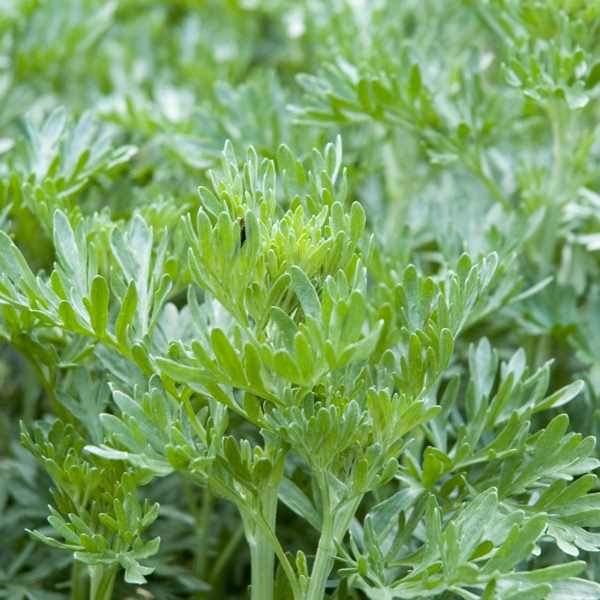
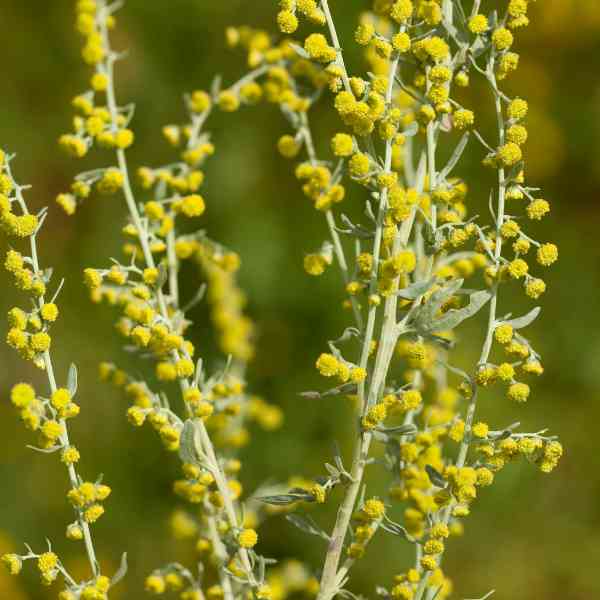
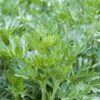
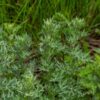
A mature Wormwood plant is an impressive feature, often forming a shrubby mound that looks soft and airy from a distance. The foliage is feathery, almost lace-like, with tiny yellow flowers that appear in late summer. While the blooms are not showy, they add to the plant’s charm and usefulness, providing food for certain beneficial insects and contributing to the overall texture of the garden.
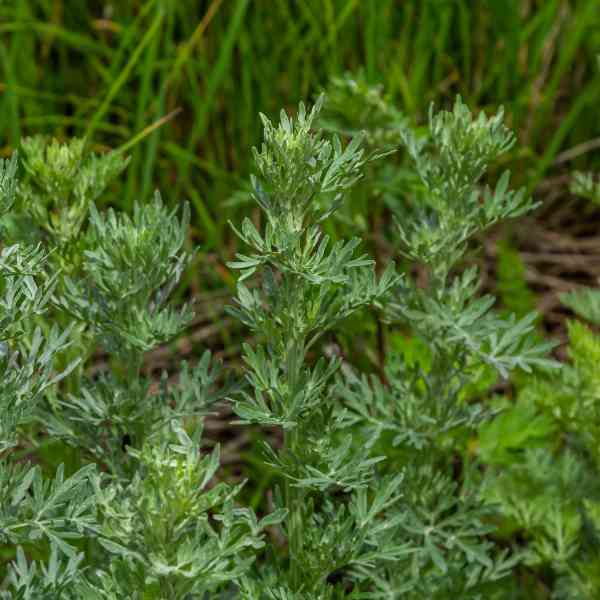
In the garden, Wormwood is instantly recognisable for its silvery, finely divided leaves that shimmer in sunlight and glow softly under the moon. The effect is striking, especially when planted among darker greens or near a garden path where that pale foliage can catch the eye in the evening causing many gardeners call it a “moonlight plant.
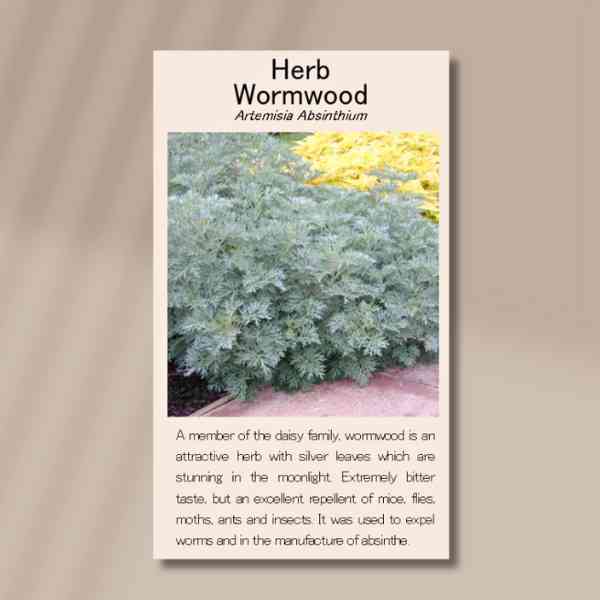
For centuries, it has been valued for its strong aroma and powerful bitterness, traits that make it both a medicinal treasure and a natural pest deterrent. The plant’s name itself hints at its early purpose: once upon a time, it was commonly used to expel intestinal worms from the human body, an application that gave it the common name “Wormwood.” That same bitterness, intense and unmistakable, also lies at the heart of Wormwood’s role in one of the world’s most notorious spirits: Absinthe.
Beyond its connection to the famous spirit, Wormwood has been valued as a versatile household herb. Long before synthetic pest repellents came along, people relied on herbs like Wormwood to keep insects at bay. It’s said to repel flies, moths, ants, mice, and other pests, making it a practical ally in both the home and the garden. Bundles of dried Wormwood were once hung in cupboards and tucked into linen chests to deter moths. In old cottages and barns, it might have been strewn along floors or added to thatch to discourage rodents. These uses are not just quaint tradition; modern observations still confirm that its strong aroma and natural compounds make it unwelcome to many common pests..
Many gardeners grow Wormwood as a companion plant, especially near vegetables or herbs that might attract pests. Its aromatic foliage acts as a natural deterrent, and its presence can help reduce insect pressure without resorting to sprays. It thrives with minimal fuss, tolerating poor soil, wind, and dry conditions with admirable toughness.
- Useful if you have chickens see Wormwood: The Secret Superhero for Your Chickens!
| Method: Sow seedlings | Soil Temp: 18°C - 22°C |
| Cool Mountain: Nov - Dec | Position: Part Shade |
| Arid : Aug - Jan | Row Spacing: 60 cm |
| Temperate : Sep/Nov - Mar/May | Planting Depth: 1 mm |
| Sub Tropical: May - Oct | Harvest: 365 Days |
| Tropical: Jun - Aug | Plant Height: 1 m |
🌾 Sowing Wormwood: In Trays vs Direct
🪴 Sowing in Trays (Recommended for Most Growers)
Starting wormwood in seed trays is often more successful than direct sowing, especially in cooler or wetter climates. The seeds are tiny and light-sensitive, meaning they need gentle handling and a consistent environment to germinate.
How to sow in trays:
- Use a fine seed-raising mix in shallow trays or punnets.
- Scatter seeds thinly across the surface and press lightly, but do not cover with soil – they need light to germinate.
- Mist with a spray bottle to moisten without washing the seeds away.
- Place in a warm, bright spot – around 18–22°C is ideal.
- Keep the mix moist but not wet. A clear plastic dome or cling film can help retain humidity, just be sure to vent it daily to avoid mould.
- Germination usually takes 10–21 days.
Once seedlings have 2–3 sets of true leaves and are easy to handle, pot them up individually or harden off before planting into the garden.
🌿 Direct Sowing (Less Common)
Wormwood can be sown direct in the garden in early spring or late autumn in mild zones. However, it’s easy to lose track of the tiny seeds or have them washed away.
If direct sowing:
- Choose a well-drained, weed-free site.
- Rake soil to a fine tilth.
- Scatter seed thinly, press into the surface, and mist gently.
- Mark the area so you remember what you planted!
- Keep lightly moist until germination.
🌡️ Seed Pre-treatment
No formal stratification or scarification is needed for wormwood, but soaking seeds overnight in lukewarm water can give them a gentle nudge, particularly if they’ve been stored for a while.
🏡 Soil and Position
Wormwood is not fussy – in fact, it thrives on a bit of neglect once established.
Soil:
- Well-drained soil is crucial. Sandy or gravelly loams are ideal.
- pH 6.0 to 7.5 (neutral to slightly alkaline).
- Avoid overly rich or moist soils, which can lead to root rot.
Position:
- Full sun is best for compact, bushy growth and strong aromatic oils.
- In very hot climates, some afternoon shade can prevent scorching.
Spacing:
- Allow 50–60cm between plants, as wormwood grows into a large, airy bush (up to 1.5m tall).
🌿 Care and Maintenance
Once you’ve got wormwood settled in, it’s relatively low-maintenance:
- Watering: Once established, wormwood is drought tolerant. Water deeply but infrequently. Avoid waterlogging.
- Feeding: No fertiliser needed. Overfeeding can lead to leggy, floppy growth.
- Pruning: Trim lightly in spring to encourage bushiness. Cut back hard in late winter to refresh older plants.
- Mulching: Mulch lightly to suppress weeds, but keep mulch away from stems to prevent rot.
🧄 Companion Planting with Wormwood
Wormwood can be a powerful companion but needs caution – its natural chemicals can inhibit the growth of some plants.
✅ Good companions:
- Brassicas (like cabbage and broccoli): Repels cabbage moths.
- Carrots and onions: May help reduce root maggot damage.
- Fruit trees: Can deter fruit tree borers and moths when planted nearby.
- Lavender and sage: Grows well alongside other Mediterranean herbs.
❌ Keep away from:
- Beans and peas: Wormwood’s compounds may stunt legume growth.
- Fennel: Both are allelopathic (suppress nearby plant growth).
- Vegetable beds: Best to plant on the margins of garden beds, not in the middle.
Tip: Consider growing wormwood in its own bed or container if space is tight.
✂️ Harvesting Wormwood
Wormwood leaves and flowering tips can be harvested once the plant is well established – usually from its second year.
- Timing: Harvest in late spring to early summer, before flowering, when the essential oils are strongest.
- Method: Use sharp snips to take leafy stems. Avoid over-harvesting; always leave at least one-third of the plant.
Dry leaves out of direct sun in a well-ventilated spot, then store in jars or paper bags.
🐛 Common Issues & Fixes
| Issue | Symptoms | Solution |
|---|---|---|
| Damping off (seedlings) | Seedlings collapse at the base | Improve airflow, reduce watering, sow thinner |
| Root rot | Yellowing leaves, soggy base | Ensure well-drained soil, avoid overwatering |
| Aphids | Clusters on new growth | Hose off or spray with neem or insecticidal soap |
| Powdery mildew (rare) | White, powdery coating on leaves | Improve airflow, avoid wetting foliage |
| Poor germination | Sparse seedlings | Don’t cover seeds, use fresh seed, mist gently |
🌼 Seed Saving Guide
Saving wormwood seed is straightforward and satisfying if you let a few plants flower and go to seed.
Steps:
- Let seed heads form fully on the plant. They look like small, fluffy clusters.
- Wait until they turn brown and dry on the plant.
- Snip seed heads and place in a paper bag or tray.
- Rub the heads gently to release the fine seeds.
- Winnow or sieve to separate chaff from seed.
- Store in a labelled paper envelope in a cool, dry place – seeds remain viable for up to 3 years.
Tip: Harvest on a dry morning to prevent mould or mildew.
🌟 Final Thoughts
Wormwood is one of those plants that quietly does a lot – from deterring pests to offering a beautiful silvery presence in your garden. It doesn’t ask for much, and in return, it brings structure, scent, and a little old-world charm.
Whether you’re growing it for its beauty, its protective qualities, or as a nod to herbal tradition, wormwood is a plant worth learning to grow well. Start small, experiment with placement, and give it time to settle in. Once it takes off, you’ll wonder how your garden managed without it.
🌿 Happy growing – and remember, even the tiniest seed can grow into something wild and wonderful.
2 reviews for Wormwood
| 5 star | 100% | |
| 4 star | 0% | |
| 3 star | 0% | |
| 2 star | 0% | |
| 1 star | 0% |

Postage Charge
Orders under $35 attract a $4.95 shipping charge. Orders $35 and above have free shipping.
Order Times
Seed orders are normally dispatched within three business days. You will receive an email when seeds are mailed out.
Postage Days
Seeds are mailed out Tuesday to Friday at 1pm. Except for the Friday of long weekends.
Postage Times
WA 2-3 Days: SA,NT 3-5 Days: NSW, ACT, QLD, VIC: 5-7 Days
Carrier
We use Australia Post Letter Postage for the majority of orders
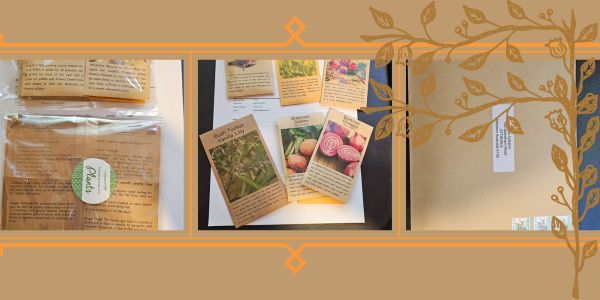
Not only are our seeds packed in recycled paper envelopes, we keep the theme going when we post out website orders. To protect your seeds from moisture and the letter box munchers (snails), we use a very special plastic free material made from plants. They are then put into recycled mailing envelopes. Green all the way 💚🌿
Delivery Guarantee
We take great care to make sure your seeds arrive safely. If your order is lost or damaged in transit, we’ll happily send a replacement. Unfortunately, we can’t replace or refund orders that arrive later than the estimated delivery date, as delays can sometimes occur that are outside our control.
Please note that all dispatch and delivery times listed are estimates only. While we do our best to post promptly, delivery timeframes can vary due to postal service delays, weather events, or other unforeseen circumstances. We’re unable to take responsibility for any loss, damage, or cost that results from a late delivery.
An order is not considered missing until at least 20 business days have passed from the postage date. You’ll receive an email once your seeds have been posted, letting you know they’re on their way. If you don’t see it in your main inbox, please check your Spam or Promotions folders as sometimes our emails like to hide there.
See all our verified customer reviews on our official CusRev profile.
See all our verified customer reviews on our official CusRev profile.