





Wild Bush Tomato
$6.59
Solanum Orbiculatum
- 30 seeds
- Bush Tucker
- Perennial
In stock
Description
The Wild Bush Tomato is a tough, sun-hardy survivor that speaks of resilience and adaptation. Found across the arid and semi-arid heart of Australia, this small native shrub has long held both ecological and cultural value. Its silvery, softly textured foliage, delicate purple blooms, and small, edible fruits make it a plant of understated beauty and an authentic piece of the Australian landscape.
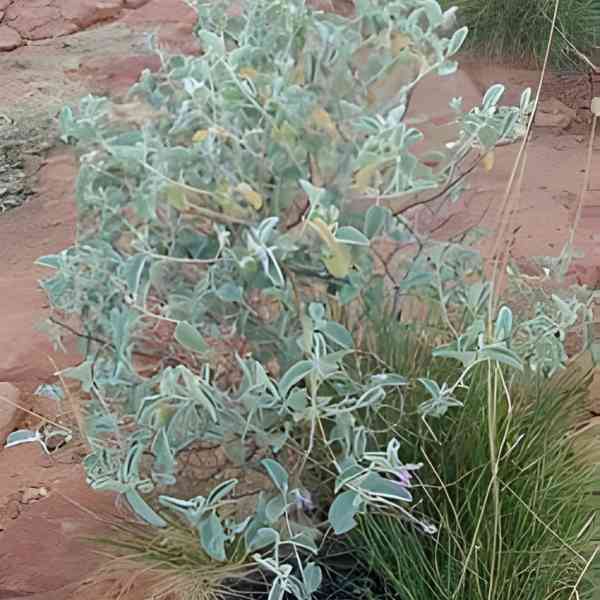
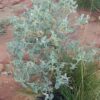
Often called the Round-leaved Solanum or Wild Tomato, this compact species grows naturally in the red sand plains, dunes, and rocky rises of Western Australia and South-West Provinces, stretching across the Northern Territory and into parts of South Australia. It is a true desert dweller, evolved to endure extremes of heat, low rainfall, and poor soils where most other plants simply fade away. Yet despite these harsh conditions, the Wild Tomato manages to create a striking visual presence in its native environment with a low, softly rounded shrub with a shimmer of silver-green against the ochre soil.
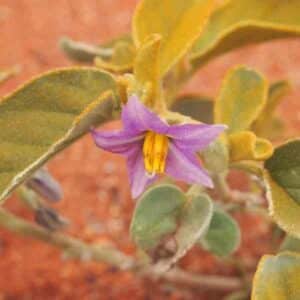
This native Solanum typically stands around 1 to 1.5 metres tall, forming a fairly compact habit that makes it well suited to gardens designed around Australian flora. Its leaves are rounded and yellow-green in colour, and both the foliage and young stems are covered with fine, tiny hairs that catch the light, creating a silvery or rusty appearance depending on the soil and season. These fine hairs also serve a practical purpose, helping the plant conserve moisture in hot, dry conditions.
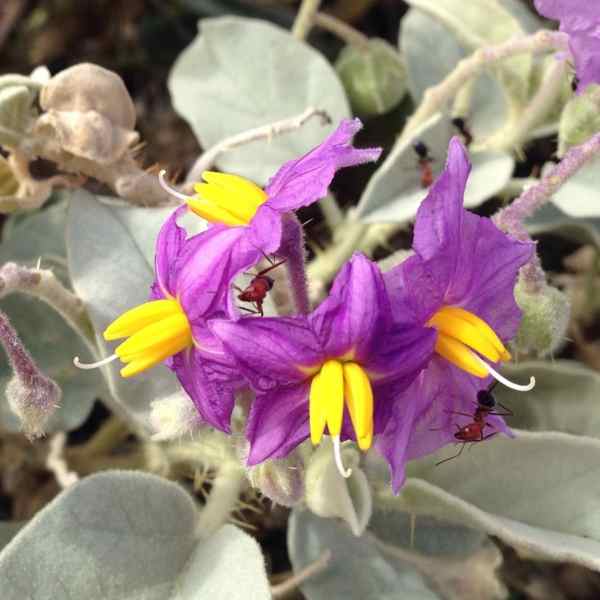
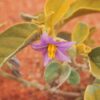
During the cooler months, from June through to October, it puts on a soft but showy display of flowers. The blossoms are small but beautiful, with purple to violet petals and a golden-yellow centre that stands out brightly against the foliage. These star-shaped flowers bring a welcome touch of colour to arid landscapes at a time when many other plants are dormant. Pollinators, particularly native bees, are drawn to the blooms, helping to sustain local biodiversity.
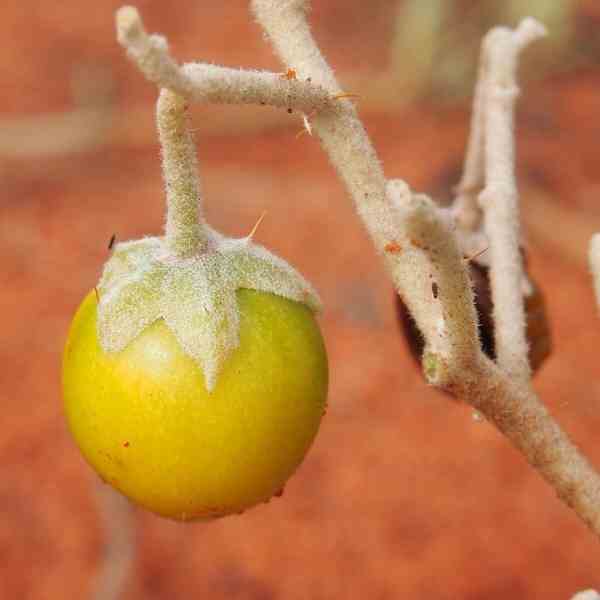
By early summer, the flowers give way to small round fruits, about a centimeter in diameter. These begin as marbled green globes, ripening to a creamy ivory shade and eventually drying to a mottled brown. In their native range, the fruits appear mainly in early summer, though timing can vary with local rainfall and conditions.
For countless generations, the Wild Bush Tomato was a valued food source for Indigenous Australians, who knew precisely when and how to harvest it. The ripe fruits were eaten fresh in small amounts, while others were dried and stored for later use. The knowledge of which fruits were safe and how to prepare them properly was, and still is, a matter of cultural importance. Early settlers, observing local traditions, also came to appreciate the plant as a source of nutrition in the dry interior where few fruits were available. Today, this heritage remains an important reminder of the deep connection between native plants and the traditional knowledge that surrounds them.
Care should be taken before experimenting with it as bush tucker. Those unfamiliar with native food plants should always seek guidance from those with traditional knowledge or expert understanding before consuming any wild fruit. In gardens, however, its value lies far beyond the kitchen. It brings authenticity, texture, and resilience to native plantings, and it carries a story that links the grower back to the land itself. Google or chatgpt are great placers to inform yourself.
In a home or landscape garden, the Wild Tomato has plenty to offer purely as an ornamental shrub. Its softly rounded form makes it ideal for filling gaps among rock gardens or native borders, where its silver tones contrast beautifully with the deeper greens of wattles or the bright flowers of desert peas. Its fine texture catches the morning light, and in full sun, it glows with that distinctive, dusty shimmer typical of Australia’s inland flora. Because it naturally thrives in poor, sandy soils, it fits comfortably into low-water, low-maintenance gardens where many ornamentals would struggle. For gardeners looking to build habitat for native insects and pollinators, the flowers are also a quiet but important resource.
Once established it is extremely hardy, needing little care beyond what nature provides. It endures heat, wind, and long periods of dry weather, and still manages to produce flowers and fruit year after year. Its natural adaptation to Australia’s arid interior makes it a perfect choice for sustainable landscapes, particularly in regions seeking to showcase local biodiversity or reduce water use.
Beyond its beauty and hardiness, the Wild Tomato also holds ecological significance. It provides shelter for small native animals and food for various species of birds and insects. The presence of these shrubs in arid environments contributes to stabilising sandy soils and maintaining fragile desert ecosystems. In this way, Solanum Orbiculatum is more than just a pretty plant, it is a small but important player in Australia’s environmental tapestry.
For those who value plants with a story, the Wild Bush Tomato is a deeply rewarding addition. It connects modern gardeners to ancient landscapes and cultural traditions, carrying with it the memory of people who have lived in harmony with this land for countless generations. Each fruit, flower, and silvery leaf tells a story of adaptation, survival, and respect for country.
| Method: Start in Trays | Soil Temp: 20°C - 30°C |
| Cool Mountain: Oct - Dec | Position: Full sun |
| Arid: Apr - Jun | Row Spacing: 50cm apart |
| Temperate: Mar-May/Aug-Oct | Planting Depth: 2mm |
| Sub Tropical: Mar - May | Harvest: 90 days |
| Tropical: May - Jul | Plant Height: 40cm |
🌱 Sowing: Trays vs Direct Planting
You can start Wild Tomato either in seed trays or directly in the ground, depending on your climate and the conditions of your garden.
Sowing in Trays:
Starting in trays gives you more control over moisture and temperature, which can be important because native Solanum seeds can be slow or uneven to germinate. Use small pots or seed trays filled with a free-draining native seed mix. Sow the seeds on the surface and gently press them down—just enough to ensure good contact with the soil. They need light for germination, so don’t cover them heavily. Keep the mix moist but never soggy.
Germination can take anywhere from 2 to 6 weeks, sometimes longer if temperatures fluctuate. Once the seedlings are strong enough to handle, transplant them into the garden when the risk of frost has passed and the soil has warmed.
Sowing Direct:
If you live in a warm region with mild winters, you can sow directly into the ground. Choose a sunny spot with well-drained soil. Sow seeds in shallow furrows and water in gently. Direct sowing often results in hardier plants, as they establish their root systems right where they’ll grow. However, germination may be slower and more unpredictable compared to tray-grown seedlings.
🔥 Seed Pre-treatment
Wild Tomato seeds have a tough coating that protects them in the wild until conditions are just right. To speed things up, you can mimic nature’s process with a simple pre-treatment.
Soak the seeds in warm water (around 30–35°C) for 12–24 hours before sowing. This softens the seed coat and encourages faster germination. Some gardeners also use a light smoke treatment, which can help mimic the conditions after bushfires when many native seeds germinate naturally.
🌞 Soil and Position
Wild Tomato loves full sun and well-drained soil. In its natural environment, it thrives in sandy, gravelly, or loamy soils with low fertility. This makes it an ideal choice for tough garden spots where other plants may struggle.
If your soil is heavy clay, improve drainage by mixing in coarse sand or small gravel. Avoid rich, fertilised soils as they can lead to excessive leafy growth with fewer fruits. Slightly alkaline to neutral soil pH is preferred, though Wild Tomato is quite adaptable.
Plant in a spot that gets at least 6 hours of sunlight daily, and where it won’t be shaded by taller plants.
🌿 Care and Maintenance
Once established, Wild Tomato is very low maintenance. It’s naturally drought-tolerant and can cope with hot, dry conditions, though it will appreciate the occasional deep watering during extended dry spells.
Mulch lightly around the base to help retain soil moisture and reduce weeds, but keep mulch away from the stem to prevent rot.
You can prune lightly after fruiting to encourage a compact shape and remove any dead or straggly growth.
Avoid overwatering—this plant prefers to dry out between drinks. Overly wet soil can cause root problems.
🌸 Companion Planting Guide
Wild Tomato works beautifully in a native food garden or dry-tolerant planting scheme. It pairs well with plants that enjoy similar conditions.
Good Companions:
- Native Basil (Ocimum tenuiflorum) – helps attract pollinators and adds aroma to the garden.
- Warrigal Greens (Tetragonia tetragonioides) – groundcover that shades the soil and suppresses weeds.
- Saltbush species – offer wind protection and structure.
- Bush Mint (Mentha satureioides) – attracts beneficial insects.
- Native lemongrass (Cymbopogon ambiguus) – good for spacing and texture contrast.
Avoid pairing with heavy feeders like pumpkins or corn that will compete for nutrients and water.
🍅 Harvesting
Fruits ripen mainly in early to mid-summer, though timing can vary depending on your local climate. They turn from green to a dull yellow or reddish colour when ripe. Harvest gently by hand once the fruit has softened slightly.
The flavour varies between plants—from mild and pleasant to more bitter—so it’s worth growing a few and selecting your favourite. Fruits can be used fresh in small amounts, or dried and stored for later use in sauces or native spice blends.
🪲 Common Issues and Fixes
| Problem | Possible Cause | Fix |
|---|---|---|
| Poor germination | Hard seed coat or low temperature | Soak seeds before sowing and keep trays warm (25–30°C). Be patient. |
| Yellowing leaves | Overwatering or poor drainage | Let soil dry between waterings; improve drainage. |
| Aphids on new growth | Warm, dry weather attracts sap-suckers | Spray with a mild soap solution or use beneficial insects like ladybirds. |
| Wilting in hot weather | Heat stress or shallow roots | Water deeply in the morning and add a light mulch. |
| Fungal spots on leaves | High humidity or overhead watering | Water at soil level and ensure good air circulation. |
🌾 Seed Saving Guide
Saving seed from Wild Tomato is simple and satisfying. Choose the healthiest, most productive plants and let the fruits fully ripen on the plant until they begin to soften.
- Harvest: Pick ripe fruits and place them in a bowl.
- Extract Seeds: Mash the fruit gently and add a little water. Let the mix sit for a couple of days to allow the pulp to ferment slightly—this helps separate the seeds and remove the jelly-like coating.
- Clean: Rinse the seeds through a fine sieve until clean.
- Dry: Spread the seeds on a paper towel or mesh screen in a warm, airy place out of direct sun.
- Store: Once completely dry, store in a paper envelope or glass jar, labelled with the variety and date. Keep in a cool, dark place. Seeds will remain viable for 3 to 5 years if kept dry.
🌼 Final Thoughts
Growing Wild Tomato (Solanum orbiculatum) connects you to the resilience and resourcefulness of Australia’s native landscapes. It’s a plant that thrives on neglect, rewards curiosity, and brings a touch of the bush right into the garden.
For gardeners who love trying something different, it’s a delightful addition—tough, beautiful in its silvery foliage, and full of history. Once established, it will quietly get on with the job of growing, fruiting, and reseeding itself, season after season.
So if you’re looking for a native edible that asks for little but gives plenty in return, the Wild Tomato is well worth your time and a sunny corner in your garden.

Postage Charge
Orders under $35 attract a $4.95 shipping charge. Orders $35 and above have free shipping.
Order Times
Seed orders are normally dispatched within three business days. You will receive an email when seeds are mailed out.
Postage Days
Seeds are mailed out Tuesday to Friday at 1pm. Except for the Friday of long weekends.
Postage Times
WA 2-3 Days: SA,NT 3-5 Days: NSW, ACT, QLD, VIC: 5-7 Days
Carrier
We use Australia Post Letter Postage for the majority of orders

Not only are our seeds packed in recycled paper envelopes, we keep the theme going when we post out website orders. To protect your seeds from moisture and the letter box munchers (snails), we use a very special plastic free material made from plants. They are then put into recycled mailing envelopes. Green all the way 💚🌿
Delivery Guarantee
We take great care to make sure your seeds arrive safely. If your order is lost or damaged in transit, we’ll happily send a replacement. Unfortunately, we can’t replace or refund orders that arrive later than the estimated delivery date, as delays can sometimes occur that are outside our control.
Please note that all dispatch and delivery times listed are estimates only. While we do our best to post promptly, delivery timeframes can vary due to postal service delays, weather events, or other unforeseen circumstances. We’re unable to take responsibility for any loss, damage, or cost that results from a late delivery.
An order is not considered missing until at least 20 business days have passed from the postage date. You’ll receive an email once your seeds have been posted, letting you know they’re on their way. If you don’t see it in your main inbox, please check your Spam or Promotions folders as sometimes our emails like to hide there.
Reviews
There are no reviews yet