

Quandong Tree
$6.59
Santalum Acuminatum
- Seed Count 3
- Drought Tolerant Fruit Tree
- Use in Jams and Chutney
Out of stock
Email when stock available
Description
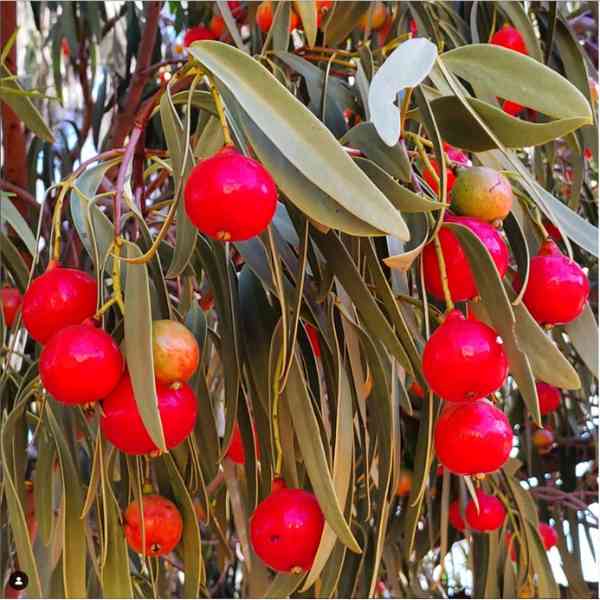
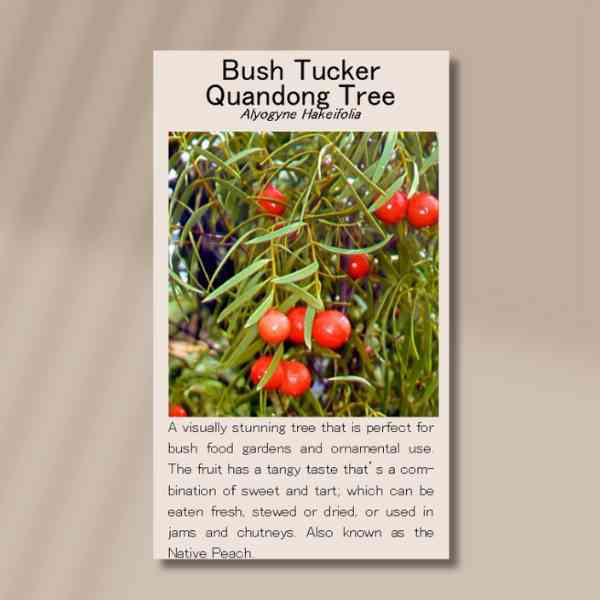
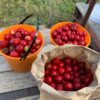
The Quandong Tree is one of those truly iconic Australian plants that manages to be both practical and beautiful at the same time. It’s a hardy native that looks right at home in a bush garden, yet still stands out as something quite special. With its slender form, pale green leathery leaves, and small cream-coloured flowers that fill the air with a light fragrance, the Quandong makes an immediate impression. Then, as the season turns, it rewards the patient gardener with glossy, red, waxy fruit about the size of a large macadamia nut.
It thrives in tough, dry conditions, growing across the arid and semi-arid regions of all mainland states. Like many of our most resilient natives, it’s not fussy about soil, doesn’t demand attention, and once it’s settled in, it can handle just about anything nature throws at it. The Quandong belongs to the sandalwood family and shares its relatives’ unique ability to live partly off other plants. It’s what’s known as semi-parasitic—which sounds more alarming than it is. Rather than harming its neighbours, it quietly connects to their roots, borrowing water and nutrients to help it get by. In return, it sits happily beside them, casting dappled shade and contributing to the biodiversity of the garden. Good host plants include acacias, perennial native grasses, and a range of hardy shrubs and trees.
The Quandong’s red, waxy fruit is one of the most distinctive bush foods you’ll ever see. Inside that glossy skin lies a bright, tangy flesh with a flavour that sits somewhere between sweet and tart, think of a mix of peach, rhubarb, and apricot, with a wild twist. It’s an unmistakably Australian taste, rich and zesty, and packed with vitamin C. The fruit ripens between August and December, a generous harvest period that sees the tree coming alive just as many other plants are beginning to slow down for the summer.
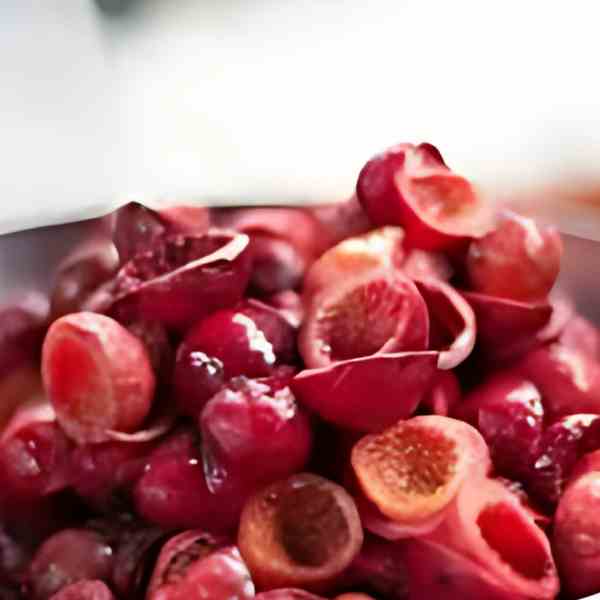
The fruit can be eaten fresh, stewed, or dried, and it’s especially popular in jams, chutneys, sauces, and desserts. When stewed with a little sugar, it makes a beautiful pie filling with a tart finish that pairs perfectly with cream or ice cream. Dried Quandongs have a long shelf life and can be rehydrated later, ideal for bush travelers who once relied on them as a long-lasting food source. In more recent years, Quandong has found its way into modern Australian kitchens, where it adds a touch of native flair to sweet and savoury dishes alike. You’ll find it in everything from chutneys to salad dressings, baked goods, and even infused into liqueurs.
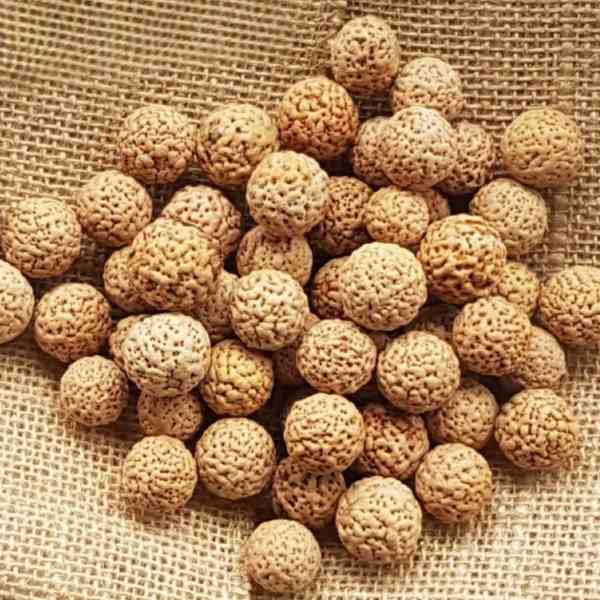
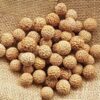
There’s also a certain charm to the seed itself. Once the fruit has been enjoyed, the large, round kernel inside can be cleaned and dried for a range of creative uses. Craft lovers and artisans often use the seeds in jewelry, beading, macramé, or toy making. The seeds are strong, light, and naturally patterned, making them a lovely material to work with.
In the garden, the Quandong has an understated elegance. It’s moderately vigorous, meaning it grows at a steady, manageable pace without becoming unruly. Left to its own devices, it will usually form a small to medium-sized tree or a large shrub, depending on conditions. Its slender branches and pale foliage catch the light beautifully, and the leathery leaves give it a refined look that contrasts nicely with rougher native textures. When in flower, the tree is covered in clusters of small, creamy blossoms that not only look delicate but also give off a subtle, sweet scent that attracts pollinators. These are followed by the eye-catching fruit, which hang like ornaments through late winter and spring, making the tree a real conversation piece.
It’s equally at home in a suburban yard, a rural block, or a permaculture system where it can mingle with acacias and wattles. And while it looks ornamental enough to hold its own in a landscape design, it also has that wonderful practicality of food for the kitchen, material for crafts, and nourishment for wildlife.
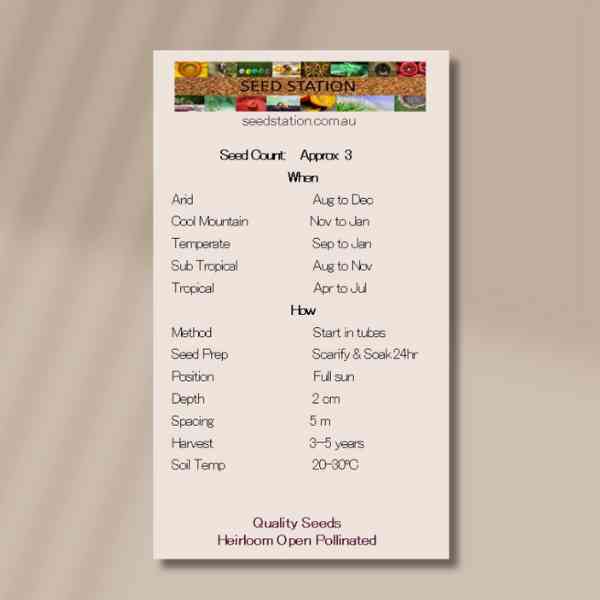
| Method: Sow in Tube | Soil Temp: 20°C - 30°C |
| Cool Mountain: Nov - Jan | Position: Full sun |
| Arid: Aug - Dec | Row Spacing: 5 m apart |
| Temperate: Sep - Jan | Planting Depth: 2 cm |
| Sub Tropical: Aug - Nov | Harvest: 3 - 5 years |
| Tropical: Apr - Jul | Plant Height: 3 - 6 m |
Quandong (Santalum acuminatum) is one of those uniquely Australian natives that gardeners either dream about growing—or grow with quiet pride. Known for its striking red fruit and blue-grey foliage, this semi-parasitic small tree is a staple in bush tucker traditions and a fascinating plant to grow at home.
It’s not the easiest seedling to raise, but don’t let that put you off. With a bit of planning and patience, you can absolutely grow your own Quandong patch, whether you’re in the arid outback or a dry temperate zone. Let’s dive in!
🥚 Sowing from Seed: Trays vs. Direct
Quandong seeds are large, hard-coated, and a little fussy about germination. They also need a host plant to survive (we’ll come back to this), so that adds a layer of complexity but it’s manageable once you understand the rhythm.
🌱 Starting in Trays (Recommended for Control)
Why it works: You get to monitor moisture levels closely, track early germination, and pair your Quandong seedling with a host in a controlled way.
Steps:
- Pre-treat your seeds – Scarify the hard outer coat using sandpaper or soak in boiling water (let them cool in the water overnight). This breaks dormancy.
- Use deep pots or forestry tubes – Quandongs develop a long taproot early on. Shallow trays don’t suit them.
- Host pairing: Sow a suitable fast-growing native host species—like Acacia acinacea, Rhagodia spinescens, or Myoporum—in the same pot at the same time.
- Medium: Use a native potting mix with excellent drainage. Avoid heavy composts or fertilisers.
- Position: Full sun is ideal—even from germination—so don’t coddle them in too much shade.
Germination can take 3–12 months, so this is a waiting game. Water lightly and consistently but don’t overdo it—they hate soggy roots.
🌿 Direct Sowing (Advanced Option)
Direct sowing works best in areas with low weed pressure, excellent drainage, and established host species nearby. It mimics nature, but the conditions have to be spot-on.
- Scarify seeds as above.
- Sow directly into prepared ground, near the base of a young host plant.
- Mark the location—they’ll take their time emerging.
- Protect from grazing animals—young shoots are tender and often targeted by wallabies or rabbits.
This method is less fiddly but harder to control, especially in clay or compacted soils.
🌞 Soil & Position
Quandongs are native to arid and semi-arid zones, so they’re well-suited to:
- Sandy, free-draining soils—avoid clay.
- Full sun—they need warmth and light for healthy growth.
- Low nutrient soils—they prefer poor soils over rich ones.
- Slightly alkaline pH (they’re not fond of acidic conditions).
They’re remarkably drought-tolerant once established but need occasional water early on to get going.
🌿 Care & Maintenance
Once they’re settled in with a host, Quandongs are low-maintenance but do require a bit of attention in the first few years.
- Watering: Light, occasional watering is best. Let the soil dry out between drinks.
- Fertilising: Minimal. You can give the host plant a light feed, but keep fertiliser away from the Quandong.
- Pruning: Trim lightly to encourage branching and airflow.
- Mulching: Use coarse mulch sparingly to suppress weeds without locking in too much moisture.
- Weed control: Essential, especially in the first 1–2 years. Weeds compete with both host and Quandong roots.
🤝 Companion Planting Guide
Remember: Quandong is a root hemiparasite, meaning it partially relies on a host plant for water and nutrients. It’s not a true parasite as it still photosynthesises but it will struggle without a good root connection.
Here are some top hosts and companions:
| Host Plant | Why It Works |
|---|---|
| Acacia acinacea | Fast-growing nitrogen fixer, easy to establish |
| Myoporum insulare | Hardy coastal shrub, pairs well in sandy soils |
| Rhagodia spinescens | Low-growing and drought-hardy, common in dry zones |
| Eremophila spp. | Tough desert natives, ideal for arid climates |
Plant your host a few centimetres away, ideally in the same pot if starting in trays. Quandong roots will naturally seek out the host’s roots and graft on.
🍒 Harvesting Quandongs
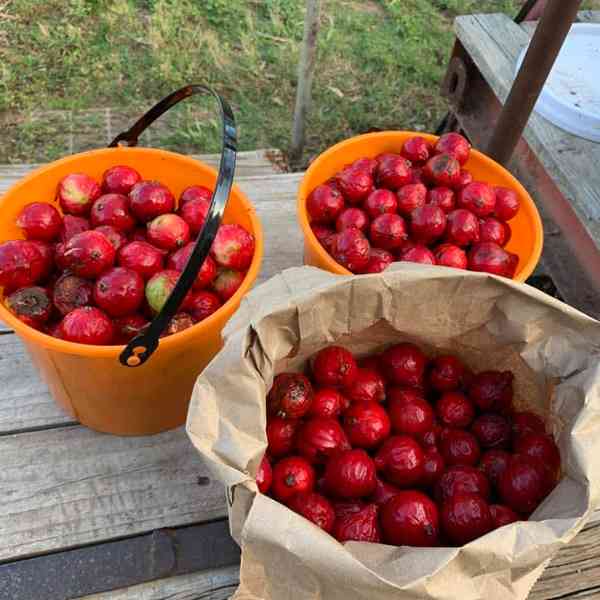
Quandongs typically fruit 3–5 years after planting. You’ll know they’re ready when the fruit turns a bright, glossy red and starts to soften slightly.
- Timing: Late summer through early autumn
- Method: Twist gently to pick, or let them drop to the ground (they bruise easily, so hand-picking is best)
- Storage: Fruits can be dried, frozen, or used fresh for jams, chutneys, and sauces
- Tip: Harvest with the seed intact if saving for propagation
🐛 Common Issues & Fixes
Here’s a handy table to keep your plants healthy and thriving:
| Issue | Symptoms | Fix |
|---|---|---|
| No germination | Nothing after 6–12 months | Re-scarify seeds; ensure host is present and viable |
| Yellowing leaves | Nutrient deficiency or poor host connection | Check host health; add trace minerals to surrounding soil |
| Root rot | Wilting, black roots | Improve drainage; reduce watering |
| Pest attack (e.g. aphids) | Sticky residue, curled leaves | Neem spray or soapy water—avoid harsh chemicals |
| Animal damage | Shoots bitten off | Use tree guards or fencing early on |
🌱 Seed Saving Guide
Quandong seeds are as beautiful as the fruit, large, glossy, and full of promise. But saving them takes a little extra effort:
- Extract seeds from freshly harvested, ripe fruit.
- Clean thoroughly to remove all pulp. Any leftover fruit can attract mould.
- Dry naturally in a warm, shady spot for 1–2 weeks.
- Store in breathable bags or paper envelopes in a cool, dry place.
- Viability: Seeds remain viable for up to 1 year, but fresher is better.
- Label with date and known source/parent plant if relevant.
Pro tip: Seeds stored in the fridge (not freezer) can stay viable longer, but humidity control is key.
🌻 Final Thoughts
Quandongs aren’t your average backyard fruit tree but that’s what makes them so special. Growing them is about more than just harvesting bush tucker. It’s about working with nature, understanding plant relationships, and enjoying the challenge of something a little different.
If you’ve ever wanted to grow a fruit that carries the stories of the desert, nourishes wildlife, and looks downright spectacular while doing it then Quandong is your plant.
Start with one. Be patient. Pair it with the right host. And in a few years, you’ll be sharing your own stories of that glossy red fruit that started as a stubborn seed in a tray.
2 reviews for Quandong Tree
| 5 star | 50% | |
| 4 star | 50% | |
| 3 star | 0% | |
| 2 star | 0% | |
| 1 star | 0% |

Postage Charge
Orders under $35 attract a $4.95 shipping charge. Orders $35 and above have free shipping.
Order Times
Seed orders are normally dispatched within three business days. You will receive an email when seeds are mailed out.
Postage Days
Seeds are mailed out Tuesday to Friday at 1pm. Except for the Friday of long weekends.
Postage Times
WA 2-3 Days: SA,NT 3-5 Days: NSW, ACT, QLD, VIC: 5-7 Days
Carrier
We use Australia Post Letter Postage for the majority of orders
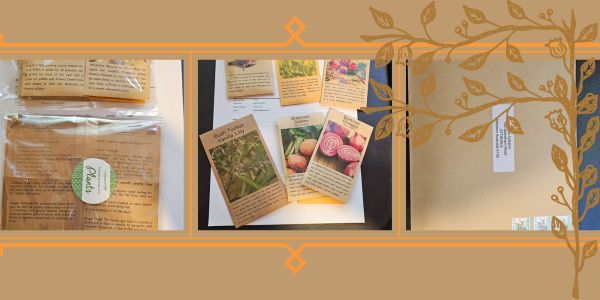
Not only are our seeds packed in recycled paper envelopes, we keep the theme going when we post out website orders. To protect your seeds from moisture and the letter box munchers (snails), we use a very special plastic free material made from plants. They are then put into recycled mailing envelopes. Green all the way 💚🌿
Delivery Guarantee
We take great care to make sure your seeds arrive safely. If your order is lost or damaged in transit, we’ll happily send a replacement. Unfortunately, we can’t replace or refund orders that arrive later than the estimated delivery date, as delays can sometimes occur that are outside our control.
Please note that all dispatch and delivery times listed are estimates only. While we do our best to post promptly, delivery timeframes can vary due to postal service delays, weather events, or other unforeseen circumstances. We’re unable to take responsibility for any loss, damage, or cost that results from a late delivery.
An order is not considered missing until at least 20 business days have passed from the postage date. You’ll receive an email once your seeds have been posted, letting you know they’re on their way. If you don’t see it in your main inbox, please check your Spam or Promotions folders as sometimes our emails like to hide there.
See all our verified customer reviews on our official CusRev profile.
See all our verified customer reviews on our official CusRev profile.