

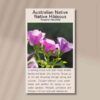

Native Hibiscus
$6.59
Alyogyne Hakeifolia
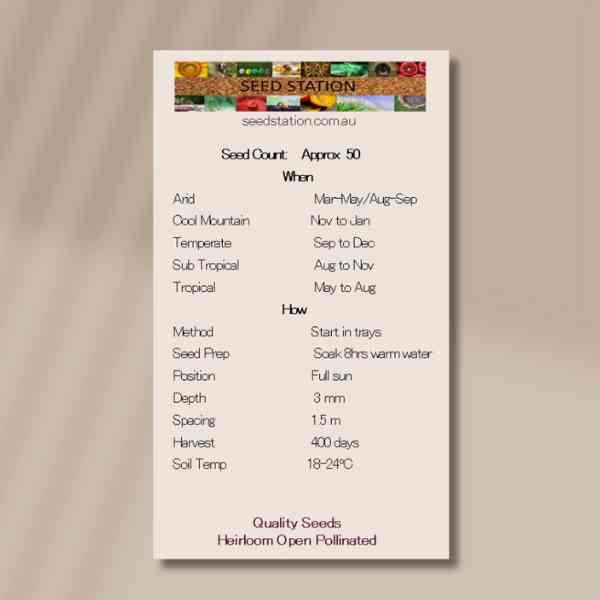
- Seed Count 50
- Sculptural Beauty
- Perennial
In stock
Description
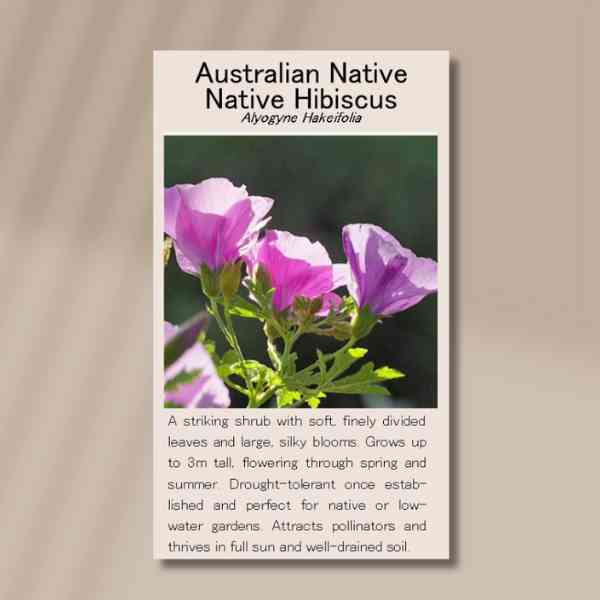
The Native Hibiscus is a hardy Australian shrub that thrives in our sun-soaked soils and responds to a little care and patience with an abundance of flowers that stop you in your tracks. Native to parts of Western Australia and South Australia, this shrub is beautifully adapted to our climate and light conditions. Its an upright, bushy figure often growing to around three metres high, though it doesn’t mind staying a bit smaller in home gardens, especially if trimmed to shape.
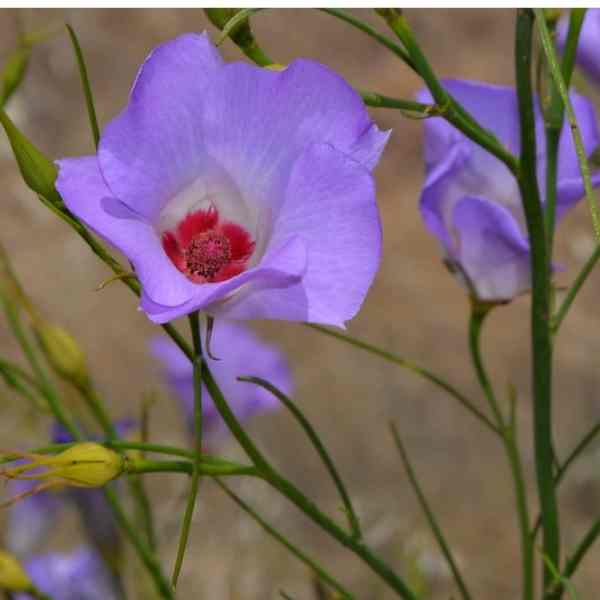
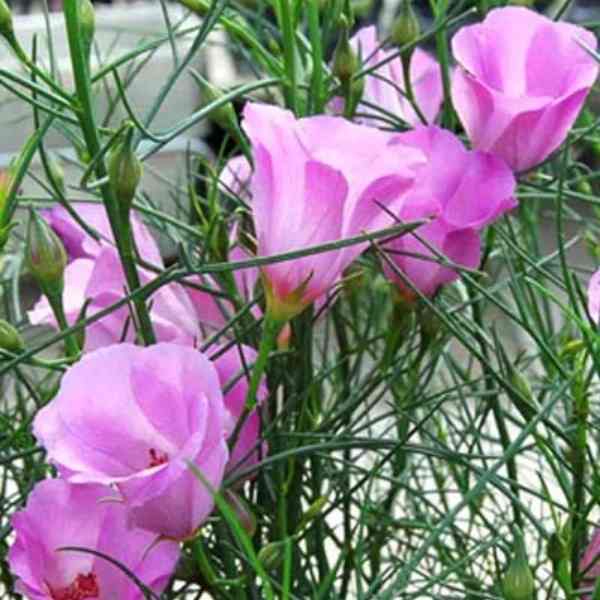
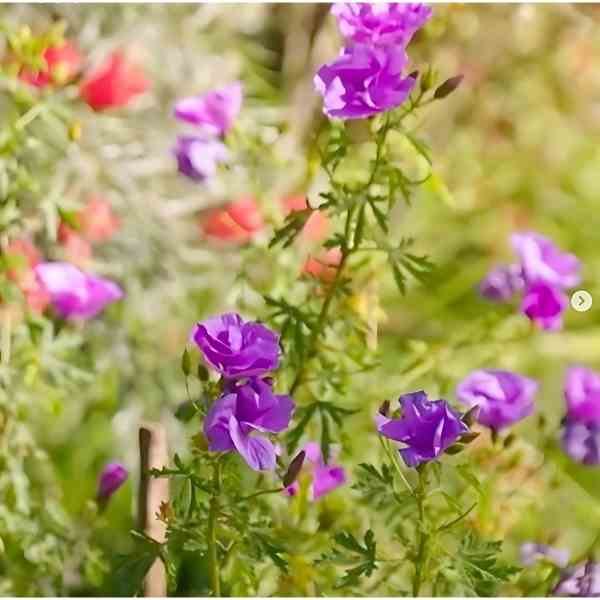
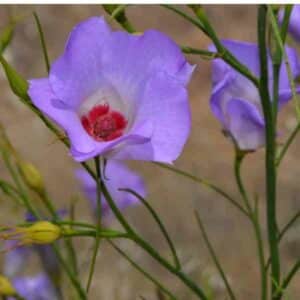
The leaves themselves are one of its most distinctive features. Slender and finely divided, they grow up to 10 centimeters long, almost like soft, green lace from a distance. There’s a bit of a wild tangle to them, which contrasts beautifully with the open simplicity of the flowers. But of course, it’s the flowers that steal the show. The blooms are large, deeply cupped, and composed of five broad petals that flare open generously, inviting bees, butterflies, and admiring humans alike. At the centre of each bloom sits a deep red eye, bold and velvety against the surrounding petals shaded in tones of purple.
Because of its origin in Western and South Australia, the Native Hibiscus is highly drought-tolerant once established, making it a brilliant choice for gardeners in arid or temperate zones, or anyone looking to create a waterwise garden that still feels vibrant and full of life. It’s also a reliable performer in sandy soils and light gravelly ground and the sort of conditions that can leave fussier plants throwing in the towel.
Its adaptability and visual impact have made it a favourite in native gardens, bush-style landscaping, and even more formal plantings where its tidy upright form can be used to good effect. It can be used as a hedge, a standalone feature, or nestled among rockeries and native grasses for a looser, more organic look. One of the additional joys of growing this shrub is the way it invites wildlife into the garden. Pollinators are drawn to the open flowers, especially bees and native insects that rely on flowering natives for food and habitat.
Despite its botanical name and resemblance to tropical hibiscus, Alyogyne hakeifolia isn’t a true hibiscus—though you’d be forgiven for thinking it was. Its flowers have that same soft, trumpet-like shape, and its overall appearance is just as striking. But as a member of the Malvaceae family, it’s part of a proud lineage of native bloomers that includes other beloved Aussie species. If you’re a fan of the bold flowers of hibiscus or hollyhocks but want something with more resilience and local character, this plant delivers in spades.
| Method: Start in trays | Soil Temp: 18°C - 24°C |
| Cool Mountain: Nov - January | Position: Full sun |
| Arid: Mar - May / Aug to Sep | Row Spacing: 1.5 m apart |
| Temperate: Sep - Dec | Planting Depth: 3mm |
| Sub Tropical: Aug - Nov | Harvest: 400 days |
| Tropical: May - Aug | Plant Height: 2.5 m |
🪴 Starting From Seed: Trays vs Direct Sowing
You can grow Alyogyne hakeifolia either by sowing directly into your garden or starting in trays—but which method suits you best depends on your climate and gardening setup.
Starting in Trays
For most gardeners, especially those in cooler, wetter, or less predictable regions, starting in seed trays is the safer bet. It gives you more control over germination and helps protect young seedlings from pests and weather extremes. Use a quality native seed-raising mix with good drainage. A warm, bright spot with indirect light is ideal.
Sowing Direct
If you’re in an arid or warm temperate climate, direct sowing can work beautifully—especially if you time it right (typically spring or early summer). Choose a well-drained, sunny location, and make sure the area is weed-free and protected from heavy rain or strong winds during germination.
🌱 Seed Pre-treatment
Alyogyne hakeifolia seeds will benefit from:
- Soaking the seeds in warm (not boiling) water overnight. This softens the seed coat and encourages quicker sprouting.
You should see germination within 2–4 weeks, though some seeds may take a little longer depending on conditions.
🌞 Soil & Position
This native hibiscus loves a sunny, well-drained spot—mimicking the open woodland or scrub where it naturally thrives. Here’s what to aim for:
- Soil: Sandy loam, gravelly soil, or even light clay will work—just make sure it drains well. Avoid rich, high-fertility soils or those with heavy organic matter, which can encourage too much leafy growth and fewer flowers.
- pH: Neutral to slightly alkaline (pH 6.5–8)
- Position: Full sun is essential. The more sunlight, the better the flowering. In cooler climates, choose a warm microclimate—against a north-facing wall, for instance.
🌿 Care & Maintenance
Once established, Alyogyne hakeifolia is remarkably low-maintenance. Here’s how to keep it happy:
- Watering: Water regularly while young, then reduce. Once mature, it’s very drought-tolerant.
- Mulching: A light mulch of gravel or bark helps retain moisture without holding too much water.
- Feeding: Use a low-phosphorus native plant fertiliser in spring. Avoid high-phosphorus fertilisers, which can damage the roots.
- Pruning: Light tip-pruning encourages bushiness. After flowering, give it a gentle trim to maintain shape and promote new growth.
🌸 Companion Planting
This native hibiscus fits beautifully into native and waterwise gardens. Here are some great plant friends:
| Companion Plant | Benefit |
|---|---|
| Eremophila spp. | Drought-hardy, similar needs |
| Westringia fruticosa | Coastal tolerant, soft contrast |
| Lomandra longifolia | Adds texture, low competition |
| Grevillea ‘Gin Gin Gem’ | Pollinator-friendly, low hedge |
| Kangaroo Paw | Bold flowers, similar sun needs |
Together, they create a vibrant, hardy planting that attracts bees, butterflies, and birds.
✂️ Harvesting (For Seed Collection or Enjoyment)
You don’t typically harvest Alyogyne hakeifolia for cut flowers—they’re short-lived once picked. But seed collection is a joy.
After flowering, the plant develops papery seed capsules. These ripen to a light brown and can be harvested once they’re dry and start to rattle. Be mindful of timing—leave them too long and the capsules will split and scatter.
🐛 Common Issues & Fixes
| Problem | Symptoms | Fix |
|---|---|---|
| Damping off | Seedlings collapse at soil level | Use clean trays, well-draining mix, avoid overwatering |
| Aphids or mites | Distorted new growth, sticky residue | Spray with neem oil or hose off with water |
| Yellowing leaves | Poor drainage, overwatering | Improve drainage, reduce watering |
| Lack of flowers | Too much shade or rich soil | Move to full sun, avoid high nitrogen fertilisers |
| Powdery mildew (rare) | White powdery coating on leaves | Improve air flow, remove affected foliage |
Native plants are tough, and once established, this one shrugs off most pests and diseases.
🌾 Seed Saving Guide
Saving your own Alyogyne hakeifolia seeds is both sustainable and satisfying. Here’s how to do it step by step:
- Wait for dry seed pods: After flowering, watch for the capsules to turn brown and brittle.
- Harvest carefully: Pick the pods before they split. Use gloves—some pods can be a little prickly.
- Dry further: Spread the pods on paper in a dry, airy place for a week or two.
- Extract seeds: Break open the pods gently and collect the seeds.
- Clean and store: Remove chaff and store seeds in a paper envelope or glass jar, in a cool, dry place. Label clearly with name and date.
- Viability: Seeds are typically viable for 2–3 years, sometimes longer if kept well.
💬 Final Thoughts
Growing Alyogyne hakeifolia from seed is one of those deeply satisfying projects that connects you with the rhythms of native Australian landscapes. It asks for a little patience and a bit of care early on—but once it’s settled, this native hibiscus rewards you with soft beauty, strength, and those luminous blooms that flutter like silk in the breeze.
It’s a wonderful choice for anyone building a native garden, looking for drought-tolerant ornamentals, or simply wanting to grow something uniquely Australian. Whether you’re just starting out or adding another gem to your patch, this plant brings resilience and joy to the garden.

Postage Charge
Orders under $35 attract a $4.95 shipping charge. Orders $35 and above have free shipping.
Order Times
Seed orders are normally dispatched within three business days. You will receive an email when seeds are mailed out.
Postage Days
Seeds are mailed out Tuesday to Friday at 1pm. Except for the Friday of long weekends.
Postage Times
WA 2-3 Days: SA,NT 3-5 Days: NSW, ACT, QLD, VIC: 5-7 Days
Carrier
We use Australia Post Letter Postage for the majority of orders
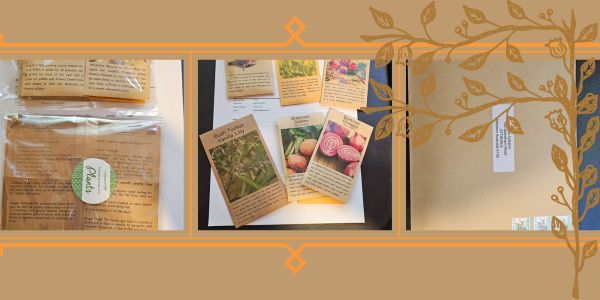
Not only are our seeds packed in recycled paper envelopes, we keep the theme going when we post out website orders. To protect your seeds from moisture and the letter box munchers (snails), we use a very special plastic free material made from plants. They are then put into recycled mailing envelopes. Green all the way 💚🌿
Delivery Guarantee
We take great care to make sure your seeds arrive safely. If your order is lost or damaged in transit, we’ll happily send a replacement. Unfortunately, we can’t replace or refund orders that arrive later than the estimated delivery date, as delays can sometimes occur that are outside our control.
Please note that all dispatch and delivery times listed are estimates only. While we do our best to post promptly, delivery timeframes can vary due to postal service delays, weather events, or other unforeseen circumstances. We’re unable to take responsibility for any loss, damage, or cost that results from a late delivery.
An order is not considered missing until at least 20 business days have passed from the postage date. You’ll receive an email once your seeds have been posted, letting you know they’re on their way. If you don’t see it in your main inbox, please check your Spam or Promotions folders as sometimes our emails like to hide there.
Reviews
There are no reviews yet