

Mint Korean
$4.95
Agastache Rugosa
- Seed Count 250
- Culinary And Medicinal Herb
- Perennial
In stock
Description
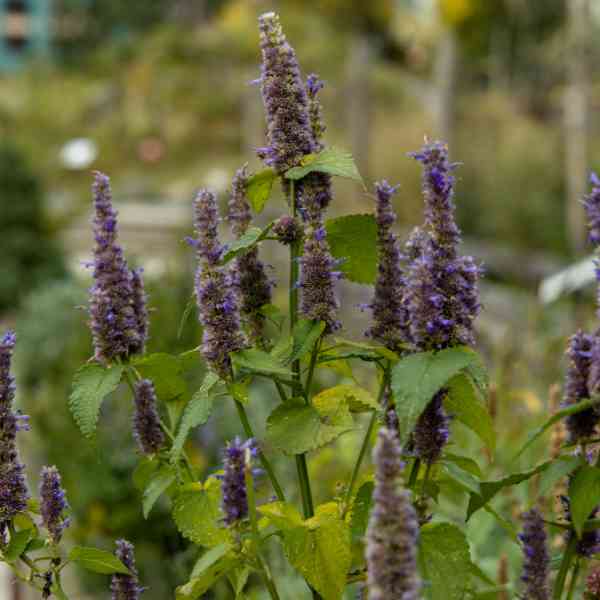
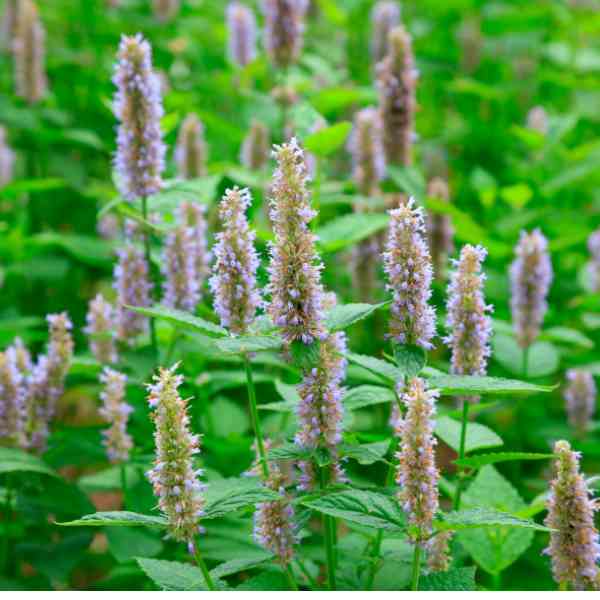
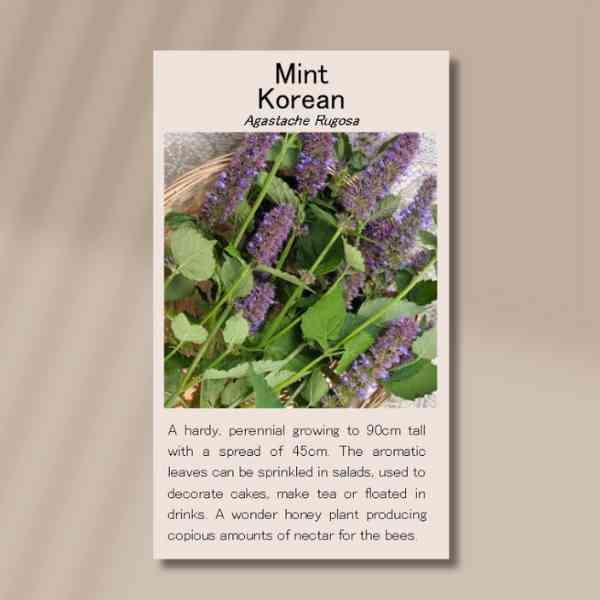
Mint Korean is one of those plants that quietly earns its place in the garden and then never leaves. A hardy, aromatic perennial from East Asia, it grows into a sturdy, upright clump around 90 cm tall and about 45 cm wide, with no need for staking. Once it settles in, it just gets on with the job.
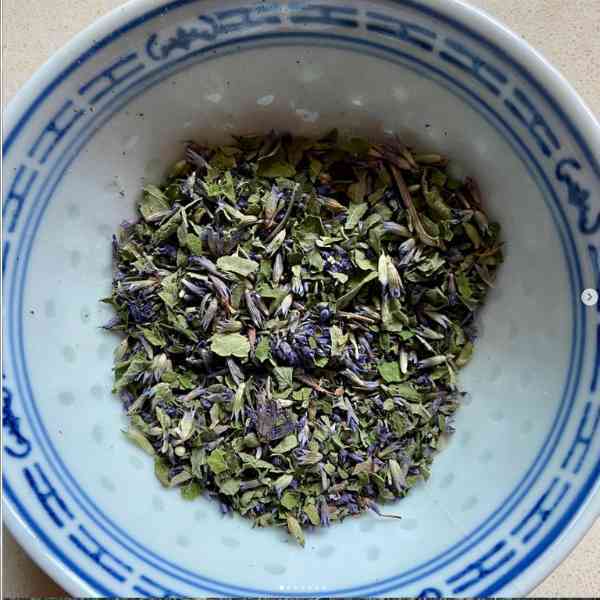
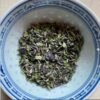
The leaves are wonderfully fragrant and very versatile. Sprinkle them through salads, float them in drinks, brew them into a soothing tea, or use them to decorate cakes. Add a few leaves to a Pimm’s and you will wonder how you ever drank it without them. In South Korea, where it is known as Baechohyang or Banga, the leaves are used fresh in stews and savoury pancakes.
Flavour-wise, think spearmint with a hint of liquorice. As a tea, it is traditionally used to help digestion, making it as useful as it is enjoyable. Brush past the plant or gently crush a leaf and the sweet liquorice scent is released straight into the air.
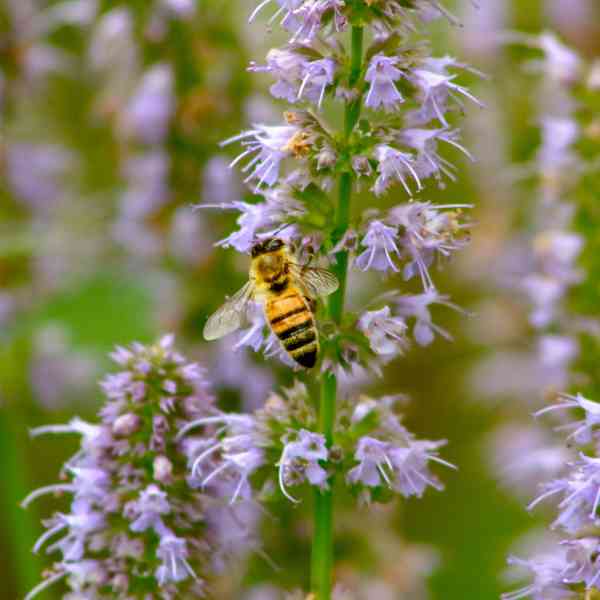
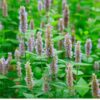
In summer, tall upright stems are topped with bluish-purple flower spikes, making this a surprisingly good cut flower. It also shines in the garden as a magnet for bees and butterflies. Often called a “wonder honey plant”, it produces masses of nectar. It is so productive that just one acre can support well over 100 hives, making it an important plant for commercial honey production.
Because it flowers later in the season and does so generously, it helps bees build up honey reserves before winter. Where it is grown in drifts, a honey surplus is often the result. Not bad for a single herb.
Easy to grow and easy to care for, Korean Mint prefers a sunny position and dry, well-drained soil. It is a robust perennial for summer borders, a gift to pollinators, and a pleasure to have close by where you can enjoy its scent and flavour throughout the season.
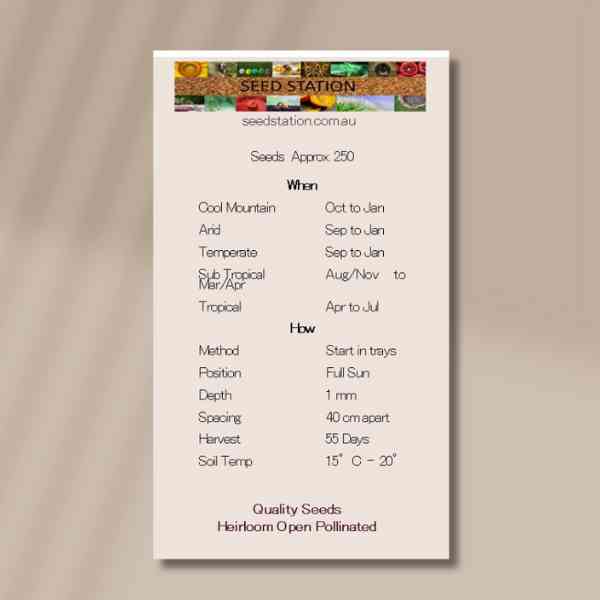
| Method: Raise seedlings | Soil Temp: 15°C - 20°C |
| Cool Mountain: Oct - Jan | Position: Full sun |
| Arid: Sep - Jan | Row Spacing: 40cm apart |
| Temperate: Sep - Jan | Planting Depth: 1 mm |
| Sub Tropical: Aug - Nov / Mar - Apr | Harvest: 90 days |
| Tropical: Apr - Jul | Plant Height: 80 cm |
🪴 Sowing Mint from Seed: In Trays vs. Direct in the Ground
Growing mint from seed can be a bit fiddly to start with—mint seeds are tiny, slow to germinate, and need a bit of patience. But once they get going, they’re hardy little survivors.
Sowing in Trays (Recommended)
Sowing in trays gives you more control over moisture and warmth, which mint seedlings really appreciate.
- When: Late winter to early spring is ideal in most regions—start indoors if it’s still cool.
- How:
- Use a seed-raising mix in punnets or trays.
- Scatter the seeds thinly on the surface—don’t bury them. They need light to germinate.
- Mist gently and keep moist, but not soggy.
- Cover with a clear lid or plastic wrap to maintain humidity.
Expect germination in 10–16 days, but don’t stress if it takes longer—mint is notorious for uneven sprouting.
Once seedlings have 2–3 sets of true leaves, you can harden them off and transplant them out.
Direct Sowing
This is possible but trickier—only try direct sowing once the soil is consistently warm (early spring in warmer zones, late spring further south).
- Prepare a fine seedbed—remove clumps and keep it level.
- Broadcast or sprinkle thinly.
- Press seeds in, water gently, and cover lightly with a fine sprinkle of vermiculite or nothing at all.
- Keep the soil moist until germination.
📝 Tip: If direct sowing, choose a semi-shaded spot where the soil won’t dry out too quickly.
🧊 Seed Pre-treatment?
No pre-treatment is strictly necessary for mint seed—but pre-soaking the seeds overnight in lukewarm water can sometimes speed up germination a bit. It’s optional, but worth a try if you’re in a hurry.
🌞 Soil and Position
Mint grows best in rich, moisture-retentive soil with good drainage. It doesn’t mind heavy soils as long as they don’t stay soggy. Here’s what it loves:
- pH: Slightly acidic to neutral (around 6.0–7.0)
- Light: Full sun to part shade—afternoon shade is ideal in hot summers.
- Position: Somewhere you don’t mind it spreading, or grow it in containers to keep it contained. Raised beds or large pots work beautifully.
📝 Tip: Add compost or well-rotted manure before planting out to give mint a nutrient boost from the get-go.
🛠️ Care and Maintenance
Once established, mint is pretty low fuss—but regular maintenance will keep it thriving and stop it from taking over.
- Water: Keep soil moist, especially in hot or windy weather. Don’t let it dry out.
- Feeding: A fortnightly liquid feed in spring and summer keeps growth lush. Seaweed or worm tea is ideal.
- Pruning: Cut back regularly to keep it tidy and encourage fresh leaves. Don’t be afraid to give it a hard prune mid-season if it gets woody.
- Mulch: Helps retain moisture and keeps weeds down. Use straw or sugarcane mulch around the base.
🌼 Companion Planting with Mint
Mint is a natural pest repellent and does well alongside many plants, as long as you keep it in check. It’s best to grow it in a sunken pot or container if using in garden beds.
| Great Companions | Not Recommended |
|---|---|
| Cabbage & broccoli (repels cabbage moth) | Parsley (competes for space) |
| Carrots (deters carrot fly) | Chamomile (mint can overrun it) |
| Tomatoes (improves air aroma, repels pests) | Strawberries (may inhibit growth) |
✂️ Harvesting Mint
You can start harvesting once plants are around 10–15 cm tall and bushy.
- Pick in the morning for best flavour—oils are strongest then.
- Pinch out the tops to encourage branching.
- Regular picking keeps the plant compact and stops flowering (which makes the leaves less tasty).
Dry mint for tea by tying stems in bundles and hanging upside down out of direct sun.
🐛 Common Issues and Fixes
Here’s a handy table to help diagnose and treat common mint problems:
| Issue | Cause | Fix |
|---|---|---|
| Yellowing leaves | Overwatering, poor drainage | Improve drainage, water less often |
| Leggy, floppy growth | Lack of light | Move to a sunnier spot, prune hard |
| Rust (orange spots) | Fungal disease | Remove infected leaves, improve airflow |
| Whitefly or aphids | Sap-sucking insects | Spray with insecticidal soap or neem oil |
| Mint not growing well | Poor soil or root-bound container | Replant into richer soil or larger container |
🌾 Saving Mint Seeds
If you let a few mint plants flower (usually in their second year), they’ll reward you with delicate spikes of pale flowers—bee magnets! And they’ll set seed if pollinated.
Here’s how to save them:
- Let the plant flower fully and wait for the seed heads to dry and turn brown.
- Snip off the dry flower spikes and place them in a paper bag.
- Gently shake or rub the heads to release the fine seeds.
- Sift or blow away the chaff.
- Store in a cool, dry, dark place in an airtight container or envelope. Label with date and variety.
📝 Note: Mint can cross-pollinate, so for true-to-type seeds, grow only one variety or separate them by distance (at least 400m) if you’re collecting seed.
🌿 Final Thoughts
Growing mint from seed might take a little patience at first, but once established, it rewards you many times over. It’s one of those plants that gives and gives—fresh tea, herbal remedies, kitchen flavour, and even some pest protection.
If you’re new to it, start with a tray or two and keep it in a pot for easy management. Once you’ve found your rhythm, you might find yourself trying all kinds of mint—each one with its own charm.
Happy sowing, and may your mint patch be forever lush and fragrant! 🌱
1 review for Mint Korean
| 5 star | 100% | |
| 4 star | 0% | |
| 3 star | 0% | |
| 2 star | 0% | |
| 1 star | 0% |
Postage Charge
Orders under $35 attract a $4.95 shipping charge. Orders $35 and above have free shipping.
Order Times
Seed orders are normally dispatched within three business days. You will receive an email when seeds are mailed out.
Postage Days
Seeds are mailed out Tuesday to Friday at 1pm. Except for the Friday of long weekends.
Postage Times
WA 2-3 Days: SA,NT 3-5 Days: NSW, ACT, QLD, VIC: 5-7 Days
Carrier
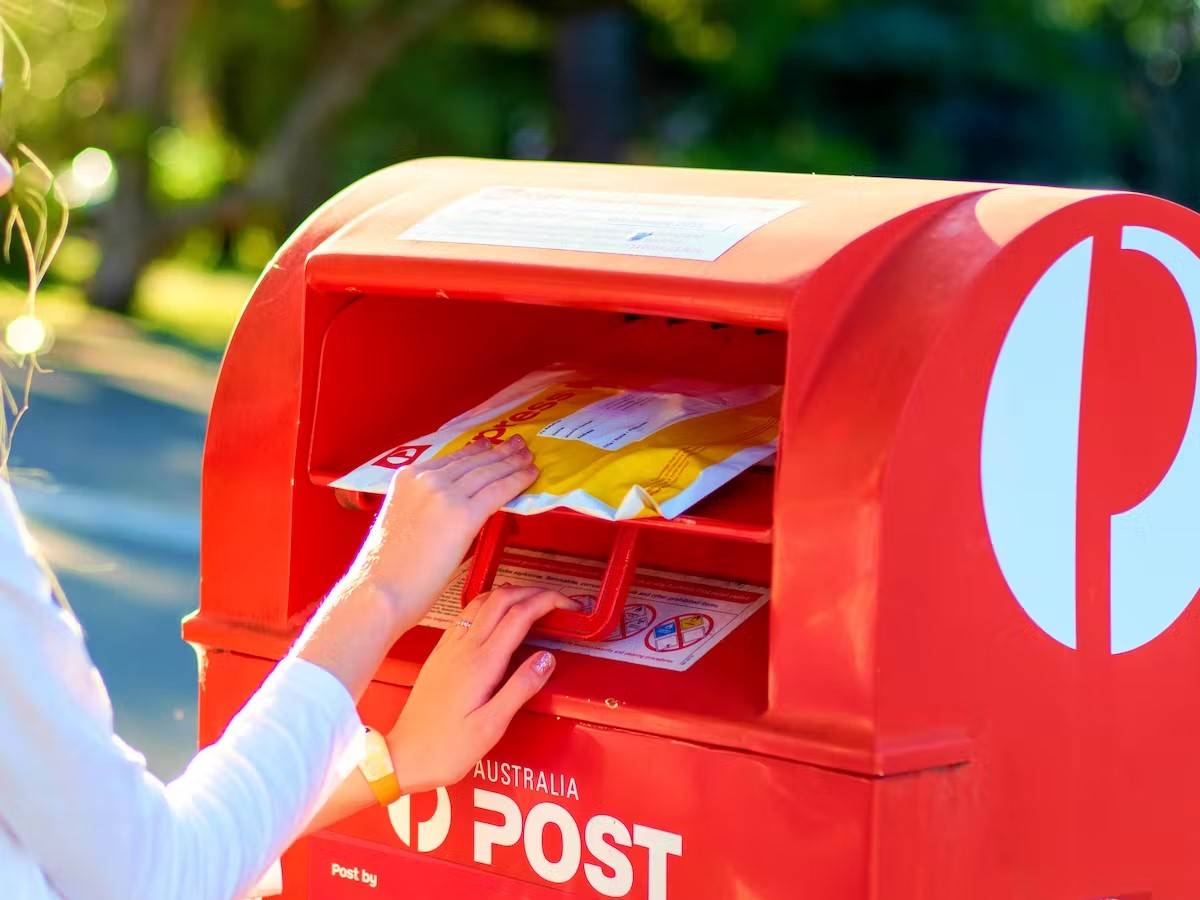
We use Australia Post Letter Postage for the majority of orders
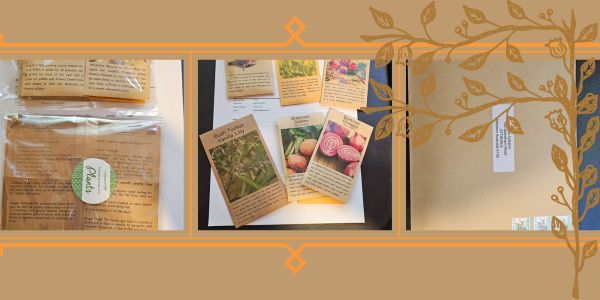
Not only are our seeds packed in recycled paper envelopes, we keep the theme going when we post out website orders. To protect your seeds from moisture and the letter box munchers (snails), we use a very special plastic free material made from plants. They are then put into recycled mailing envelopes. Green all the way 💚🌿
Delivery Guarantee
We take great care to make sure your seeds arrive safely. If your order is lost or damaged in transit, we’ll happily send a replacement. Unfortunately, we can’t replace or refund orders that arrive later than the estimated delivery date, as delays can sometimes occur that are outside our control.
Please note that all dispatch and delivery times listed are estimates only. While we do our best to post promptly, delivery timeframes can vary due to postal service delays, weather events, or other unforeseen circumstances. We’re unable to take responsibility for any loss, damage, or cost that results from a late delivery.
An order is not considered missing until at least 20 business days have passed from the postage date. You’ll receive an email once your seeds have been posted, letting you know they’re on their way. If you don’t see it in your main inbox, please check your Spam or Promotions folders as sometimes our emails like to hide there.
See all our verified customer reviews on our official CusRev profile.