


Luffa
$4.95
Luffa Aegyptica
- Seed Count 5
- Also known as Vegetable Sponge
- Annual
In stock
Description
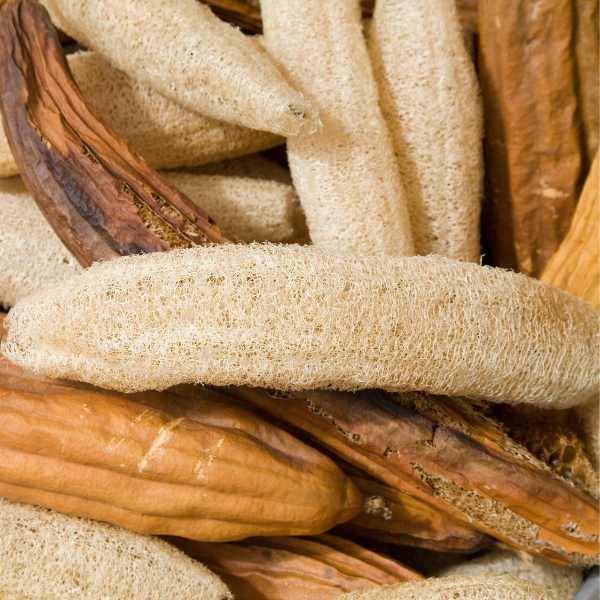
When most people hear the word Luffa,” they think of the natural sponge hanging in the shower. And it is true, Luffa Aegyptica is the very plant that, when left to mature and dry on the vine, produces those fibrous sponges we know so well. But before it becomes a scrubber for the bath or kitchen, luffa is also a delicious and versatile vegetable that deserves a place on the dinner table.
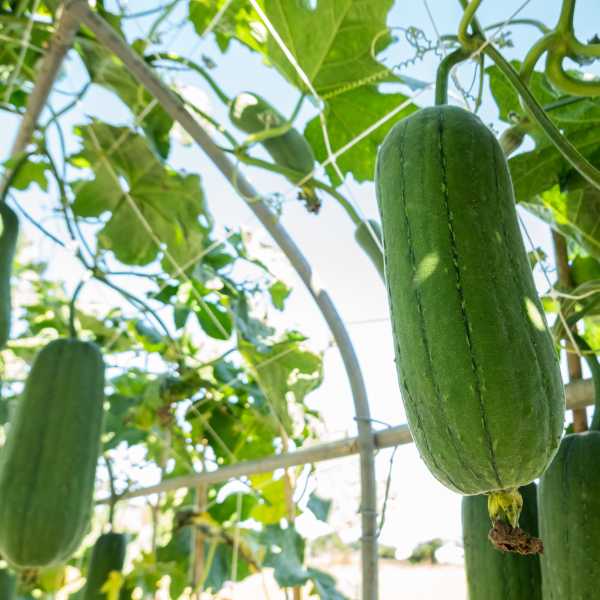
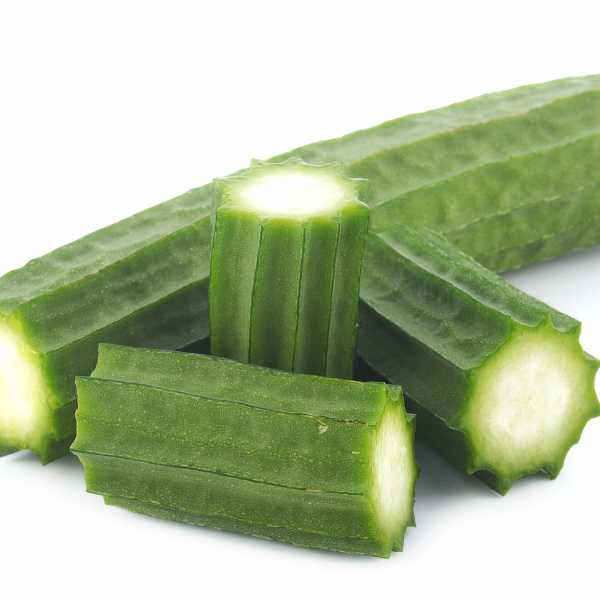
In its early stages, the fruit looks like a smooth cucumber or slim zucchini. Picked young, it can be eaten raw, sliced into salads where its crisp bite and mild cucumber flavour really shine. It pairs beautifully with tomatoes, herbs, and cheese and is an easy way to add something different to summer salads.
Cooking with luffa opens even more possibilities. Its soft, silky flesh has a wonderful ability to soak up flavours, much like eggplant or tofu. In stir fries, it carries garlic and ginger beautifully. In soups and curries, it takes on the richness of the broth or spices while adding its own gentle sweetness.
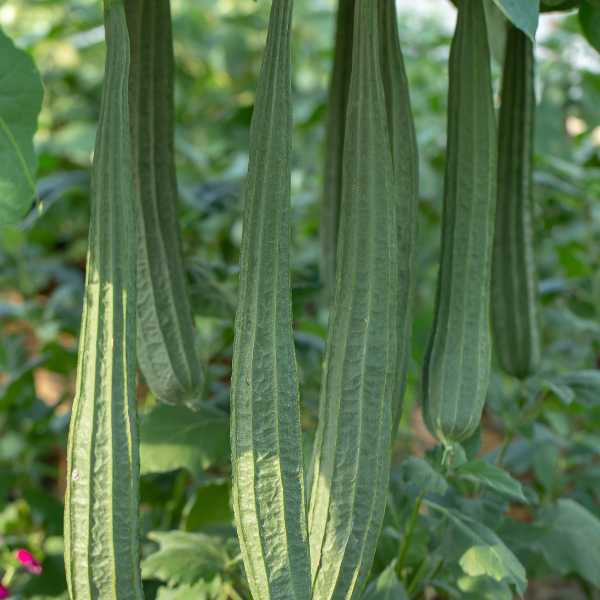
The fruits are best for the kitchen when they are about 20 cm long. They make an excellent stand-in for zucchini, squash, or eggplant. Once you get used to them, it is easy to see why they are such a popular ingredient in parts of Asia and the Middle East, where they are regularly used in everyday cooking.
Luffa also lends itself well to preserving. Young fruits can be turned into pickles, and the young leaves can be used fresh in salads or lightly cooked like spinach. It is a plant where very little goes to waste, which makes it especially rewarding for gardeners who like to use what they grow in as many ways as possible.
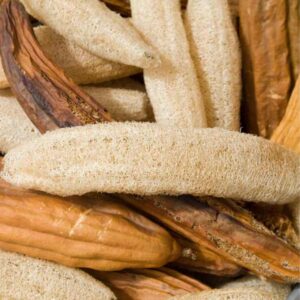
And then there is the luffa’s second life, the one most people already know. If the fruits are left to mature fully, they dry out into the familiar fibrous skeleton that becomes the natural sponge. Once peeled and cleaned, these sponges are excellent as exfoliating scrubbers in the bathroom or as eco-friendly dishcloths and pot scrubbers in the kitchen. They are long-lasting, biodegradable, and completely free from plastics.
Related Article – Grow Your Own Bath Sponge
| Method: Set seedlings | Soil Temp: 20°C - 30°C |
| Cool Mountain: Sep - Nov | Position: Full sun |
| Arid: Aug - Sep | Row Spacing: 50 cm |
| Temperate: Sep - Dec | Planting Depth: 10 mm |
| Sub Tropical: Aug - Jan | Harvest: 180 Days |
| Tropical: Apr - Jul | Plant Height: Trailing |
🌿 Sowing Luffa: Trays versus Direct
Starting Luffa in seed trays or small pots has a few advantages. It allows seedlings to establish in a controlled environment, giving them a head start on cooler or unpredictable spring conditions. Use a seed-raising mix with good drainage and gently press one seed about 1 cm deep in each cell. Keep the tray in a warm spot with indirect sunlight and maintain moisture, but avoid waterlogging. Germination can take 7 to 14 days, though may take slightly longer.
Direct sowing into the garden works well once all risk of frost has passed and soil temperatures are consistently warm, around 20 to 25 degrees Celsius. Sow seeds 2 to 3 centimetres deep and space them at least 1 metre apart to allow for sprawling vines. This method can produce larger plants more quickly because they avoid transplant shock. However, seedlings are more exposed to pests and temperature swings, so careful monitoring is required.
💧 Seed Pre-Treatment
Luffa seeds have a hard outer shell and benefit from pre-treatment to improve germination. Soak seeds in warm water for 24 hours before planting. Some gardeners lightly nick the seed coat with a file or sandpaper to help water penetrate, but soaking alone is usually sufficient. Always plant seeds immediately after soaking to avoid fungal issues.
🌞 Soil and Position
Luffa thrives in rich, well-draining soil. Incorporate plenty of compost or well-rotted manure to provide nutrients and retain moisture. A slightly acidic to neutral pH, around 6.0 to 7.0, is ideal. Position the plants in full sun to encourage strong vine growth and abundant fruiting. Luffa vines can climb trellises, fences, or pergolas, which helps with air circulation and keeps fruits clean.
🪴 Care and Maintenance
Luffa is a vigorous grower and needs support, water, and feeding:
- Watering: Keep soil evenly moist, particularly during flowering and fruit set, but avoid soggy soil.
- Fertilising: Feed with a balanced liquid fertiliser every 2 to 3 weeks during the growing season. Side-dressing with compost is also beneficial.
- Pruning: Pinch out the growing tips after the vine reaches its support to encourage lateral branching and more flowers.
- Training: Tie vines loosely to supports as they grow to prevent breakage.
🌸 Companion Planting
Luffa benefits from companions that either repel pests or provide shade for soil:
- Good companions: Corn, beans, cucumbers, and sunflowers. Beans add nitrogen to the soil, helping the heavy-feeding luffa.
- Plants to avoid: Potatoes and other heavy feeders that compete for nutrients.
🌾 Harvesting
Luffa has two harvesting stages:
- Vegetable harvest: Pick young fruits when they are small, tender, and green. These can be eaten like zucchini or cooked in stir-fries.
- Sponge harvest: Allow fruits to mature fully on the vine until the skin turns brown and starts to dry. This can take up to 150 days in Australian conditions. Once dry, peel off the outer skin and remove seeds to reveal the fibrous sponge inside.
⚠️ Common Issues and Fixes
| Problem | Symptoms | Solution |
|---|---|---|
| Powdery mildew | White, powdery spots on leaves | Improve air circulation, avoid overhead watering, apply organic fungicide if severe |
| Aphids | Clusters on new growth | Spray with insecticidal soap, encourage beneficial insects like ladybugs |
| Fruit rot | Soft, discoloured fruit | Ensure good air circulation, avoid waterlogged soil, remove affected fruits |
| Poor flowering | Few or no flowers | Ensure full sun, feed with high-potassium fertiliser, prune excess leaves |
🌾 Seed Saving Guide
Saving seeds from Luffa is straightforward:
- Leave mature fruits on the vine until fully brown and dry.
- Peel off the outer skin and scoop out seeds.
- Rinse seeds in water and remove any pulp.
- Spread seeds on a tray to dry for 2 to 3 weeks in a cool, shaded area.
- Store seeds in a labelled paper envelope or jar in a dry, dark place until next season. Viable seeds can remain productive for several years if stored correctly.
🌟 Final Thoughts
Growing Luffa Aegyptica from seed in Australia is a journey that rewards patience and care. Starting seeds in trays can give you an early advantage, while direct sowing saves transplant stress. Rich soil, full sun, and consistent care will produce vigorous vines, edible fruits, and eventually, the iconic natural sponges. Keep an eye on pests, provide support, and enjoy the dual-purpose harvest. Saving your own seeds completes the cycle and ensures a fresh supply for years to come. With a little effort, Luffa can become a staple in both your garden and kitchen, offering unusual fruits and natural sponges for family and friends.
4 reviews for Luffa
| 5 star | 100% | |
| 4 star | 0% | |
| 3 star | 0% | |
| 2 star | 0% | |
| 1 star | 0% |

Postage Charge
Orders under $35 attract a $4.95 shipping charge. Orders $35 and above have free shipping.
Order Times
Seed orders are normally dispatched within three business days. You will receive an email when seeds are mailed out.
Postage Days
Seeds are mailed out Tuesday to Friday at 1pm. Except for the Friday of long weekends.
Postage Times
WA 2-3 Days: SA,NT 3-5 Days: NSW, ACT, QLD, VIC: 5-7 Days
Carrier
We use Australia Post Letter Postage for the majority of orders
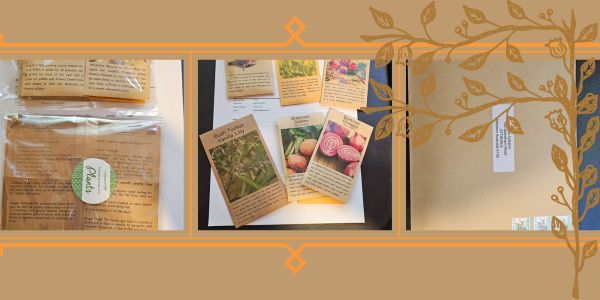
Not only are our seeds packed in recycled paper envelopes, we keep the theme going when we post out website orders. To protect your seeds from moisture and the letter box munchers (snails), we use a very special plastic free material made from plants. They are then put into recycled mailing envelopes. Green all the way 💚🌿
Delivery Guarantee
We take great care to make sure your seeds arrive safely. If your order is lost or damaged in transit, we’ll happily send a replacement. Unfortunately, we can’t replace or refund orders that arrive later than the estimated delivery date, as delays can sometimes occur that are outside our control.
Please note that all dispatch and delivery times listed are estimates only. While we do our best to post promptly, delivery timeframes can vary due to postal service delays, weather events, or other unforeseen circumstances. We’re unable to take responsibility for any loss, damage, or cost that results from a late delivery.
An order is not considered missing until at least 20 business days have passed from the postage date. You’ll receive an email once your seeds have been posted, letting you know they’re on their way. If you don’t see it in your main inbox, please check your Spam or Promotions folders as sometimes our emails like to hide there.
See all our verified customer reviews on our official CusRev profile.
See all our verified customer reviews on our official CusRev profile.
See all our verified customer reviews on our official CusRev profile.
See all our verified customer reviews on our official CusRev profile.