



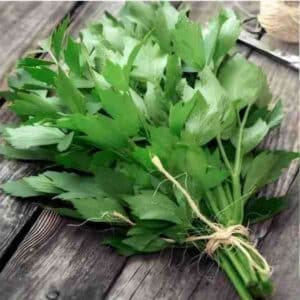
Lovage
$4.95
Levisticum Officinale
- Seed Count 125
- Strong Celery Flavour
- Perennial
In stock
Description
Lovage is one of those herbs that quietly slips through the cracks of modern gardening. You don’t often see it in nurseries or on supermarket shelves, yet it’s one of the most useful, flavoursome, and generous plants you can grow. For generations, lovage held an honoured place in kitchen gardens across Europe. It was used for seasoning, healing, and even as a garden companion for other crops. Somewhere along the way, it fell out of favour. But this old-fashioned perennial still has plenty to offer today’s gardener and cook. It’s time to redress the balance and bring lovage back where it belongs.
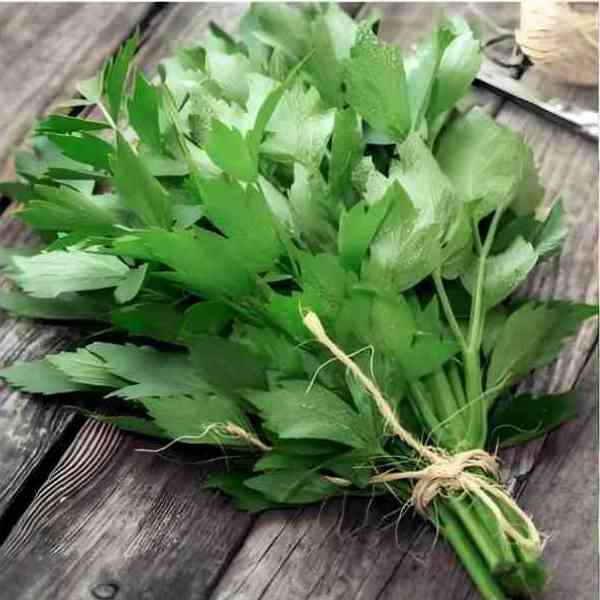
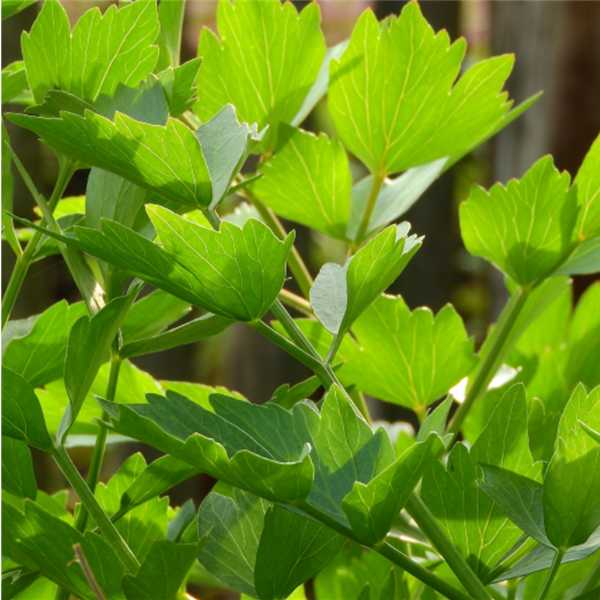
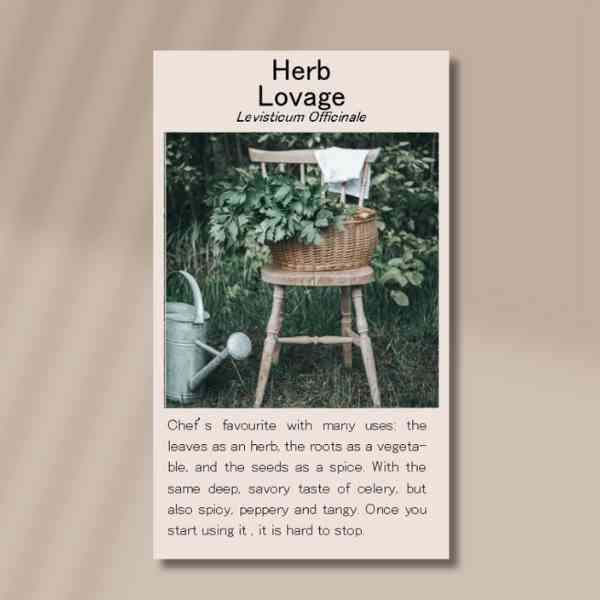
At first glance, lovage looks a bit like an oversized celery plant with strong, glossy leaves and tall, hollow stems. But its flavour sets it apart. It has the same deep, savoury backbone as celery, yet with a peppery edge and a sharp, spicy fragrance. Some say it tastes like celery with a hint of parsley and a dash of aniseed. Others describe it as earthy, warming and full-bodied. Whatever your take, lovage adds a complexity that makes food taste rounder, deeper, and more satisfying. Once you start using it, it’s hard to stop.
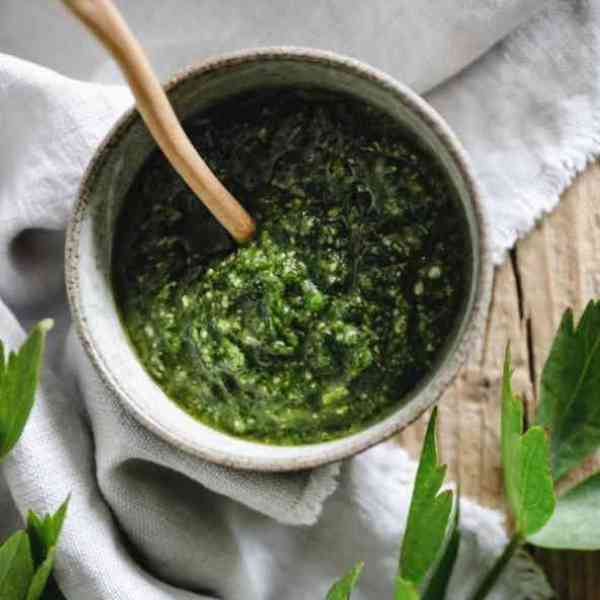
The leaves, roots and seeds all serve different culinary roles. The young leaves can be finely chopped and added to soups, stews, stocks, and sauces. They bring an instant lift to beans, fish dishes, and tomato sauces. A few leaves tucked into a pot of slow-cooked lamb or lentils will give it a depth of flavour you can’t quite pin down but will definitely notice. It’s particularly good in broths, where its savoury punch fills in all the gaps salt and seasoning alone can’t reach.
The roots of lovage can also be eaten as a vegetable. They’re quite mild and starchy, often compared to parsnip or celeriac. In older European cooking, the roots were roasted, boiled, or even grated raw into salads. The seeds, on the other hand, have an entirely different character. Once dried, they take on a strong, aromatic flavour similar to fennel or celery seed but a little sharper. They make a great addition to pickles, breads, or homemade spice mixes. Crushed lovage seeds sprinkled into a jar of pickled cucumbers or beans add a distinctive tang that makes them truly memorable.
When summer rolls around, lovage shows its other side. Tall flower stalks rise above the foliage, topped with clusters of small yellow blooms. These flowers are more than just pretty; they’re a magnet for pollinators. Bees, hoverflies, and butterflies flock to them. In that sense, lovage is not only a gift to the cook but to the whole garden. It draws beneficial insects and helps keep pest populations in check naturally. That makes it an excellent choice for anyone wanting to garden more sustainably.
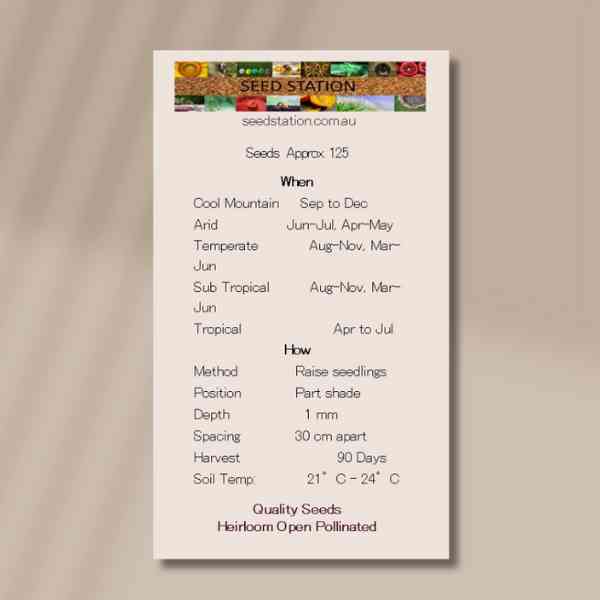
| Method: Raise seedlings | Soil Temp: 21°C - 24°C |
| Cool Mountain: Sep - Dec | Position: Part Shade |
| Arid: Jun-Jul, Apr-May | Row Spacing: 30 cm |
| Temperate: Aug-Nov, Mar-Jun | Planting Depth: 3 mm |
| Sub Tropical Aug-Nov, Mar-Jun | Harvest: 90 Days |
| Tropical: Apr - Jul | Plant Height: 2 m |
🌾 Starting Lovage from Seed: Trays vs Direct Sowing
Lovage seeds can be a bit slow to germinate, so many gardeners prefer to start them in trays before transplanting.
- In seed trays or pots: Sow seeds about 1–2 mm deep in a good-quality seed-raising mix. Keep them moist and warm, ideally around 18–22°C. Germination can be slow, sometimes taking 2–3 weeks, so patience is key.
- Direct sowing: In warmer parts of Australia (QLD, northern NSW), you can sow directly once the soil is warm and frost-free. Sow thinly, as lovage plants can become large and need space to spread.
Lovage prefers not to have its roots disturbed, so if starting in trays, use small modules or biodegradable pots that can be planted straight into the garden.
💧 Seed Pre-Treatment
Lovage seeds have natural dormancy that slows germination. To speed things up:
- Soak seeds in lukewarm water for 12–24 hours before sowing.
- Some gardeners lightly nick the seed coat or roll seeds between sandpaper for better results.
This softening encourages a faster, more uniform emergence.
🌞 Soil & Position
Lovage is happiest in a cool, sheltered, and partially sunny spot, though it tolerates full sun in cooler climates.
- Soil: Fertile, well-drained soil enriched with compost or well-rotted manure. It thrives in loamy soil but tolerates clay if amended with organic matter.
- pH: Slightly acidic to neutral, 6.0–7.0.
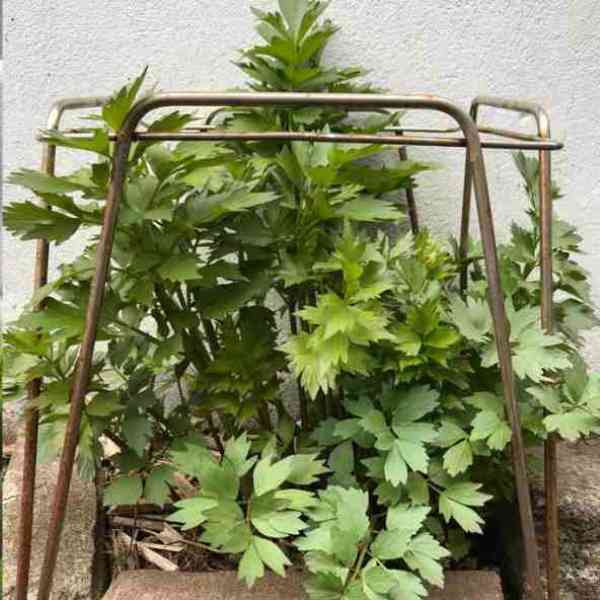
- Spacing: Space plants 50–70 cm apart to accommodate their mature size (lovage can reach 1.5–2 m tall).
Lovage loves moisture but dislikes waterlogging, so mulch around the base to retain soil moisture and regulate temperature.
🌿 Care & Maintenance
Lovage is a long-lived perennial, so once established, it’s fairly low-maintenance.
- Watering: Keep soil consistently moist, especially during dry periods. Mulching helps retain moisture.
- Feeding: Feed with liquid seaweed or compost tea once a month. Avoid high nitrogen fertilisers; they encourage leaf growth but reduce flavour intensity.
- Pruning: Trim leaves regularly to encourage new growth and prevent the plant from becoming too woody. Harvest before flowering for best flavour.
- Winter Care: In cooler areas, protect roots with a thick mulch; lovage will return in spring.
🌸 Companion Planting Guide
Lovage is more than just a herb — it’s a garden ally.
Good companions:
- Tomatoes, carrots, and parsnips – lovage enhances growth and flavour.
- Cabbage, kale, and other brassicas – attracts beneficial insects that help deter pests.
- Herbs like parsley and basil – grow well together without competing.
Avoid planting with:
- Fennel – may stunt lovage growth due to competition.
The tall flower stalks attract pollinators like bees, hoverflies, and butterflies, benefiting the whole garden ecosystem.
🌸 Harvesting Lovage
Lovage offers multiple harvests: leaves, roots, and seeds.
- Leaves: Pick young leaves as needed. They’re perfect for soups, stews, stocks, sauces, and slow-cooked dishes. The older leaves can be tougher but still flavourful when chopped finely.
- Roots: Harvest in the first or second year. They’re mild, starchy, and can be roasted, boiled, or grated raw into salads.
- Seeds: Collect when the flower heads turn brown and dry. Seeds have a sharp, aromatic flavour and are excellent in pickles, breads, or spice blends.
Regular leaf harvesting promotes bushier growth, while leaving some stems to flower supports pollinators.
🪲 Common Issues and Fixes
| Problem | Likely Cause | Solution |
|---|---|---|
| Slow germination | Natural seed dormancy or cold soil | Pre-soak seeds 12–24 hrs; sow in warm soil or trays |
| Yellowing leaves | Overwatering or nutrient deficiency | Water less frequently; feed with compost tea |
| Leggy growth | Insufficient light | Move trays to bright, indirect light; transplant to sunny garden spot |
| Aphids or caterpillars | Warm weather, lush growth | Spray with mild soapy water or neem oil; handpick pests |
| Wilting or root rot | Waterlogging | Improve drainage; reduce watering |
| Leaves losing flavour | Harvesting old or over-mature leaves | Use young leaves for best taste |
| Flowering too early | Plant stress or age | Continue harvesting leaves; flowering encourages pollinator attraction |
🌻 Seed Saving Guide
Lovage is self-pollinating but insect-friendly, so isolated plants produce true-to-type seed.
- Allow a few flower stalks to go to seed late in the season.
- Harvest when seeds turn brown and dry.
- Remove seeds from umbels and dry thoroughly in a cool, airy space.
- Store in a paper envelope or jar, away from moisture. Lovage seeds stay viable for 3–5 years.
Tip: Lovage seed is very aromatic, so store in a sealed container to avoid flavour transfer to other seeds.
🌾 Final Thoughts
Lovage is more than a herb — it’s a multi-purpose powerhouse for flavour, garden ecology, and culinary creativity. Its leaves, roots, and seeds all serve different roles in the kitchen, while its tall flowers support pollinators and beneficial insects. Once established, it will generously reward you year after year with minimal fuss.
If you haven’t grown it before, give it a try. It’s a plant that blends old-world charm with modern kitchen versatility. Once lovage earns a spot in your garden, you’ll wonder how you ever gardened without it.
2 reviews for Lovage
| 5 star | 100% | |
| 4 star | 0% | |
| 3 star | 0% | |
| 2 star | 0% | |
| 1 star | 0% |
Postage Charge
Orders under $35 attract a $4.95 shipping charge. Orders $35 and above have free shipping.
Order Times
Seed orders are normally dispatched within three business days. You will receive an email when seeds are mailed out.
Postage Days
Seeds are mailed out Tuesday to Friday at 1pm. Except for the Friday of long weekends.
Postage Times
WA 2-3 Days: SA,NT 3-5 Days: NSW, ACT, QLD, VIC: 5-7 Days
Carrier
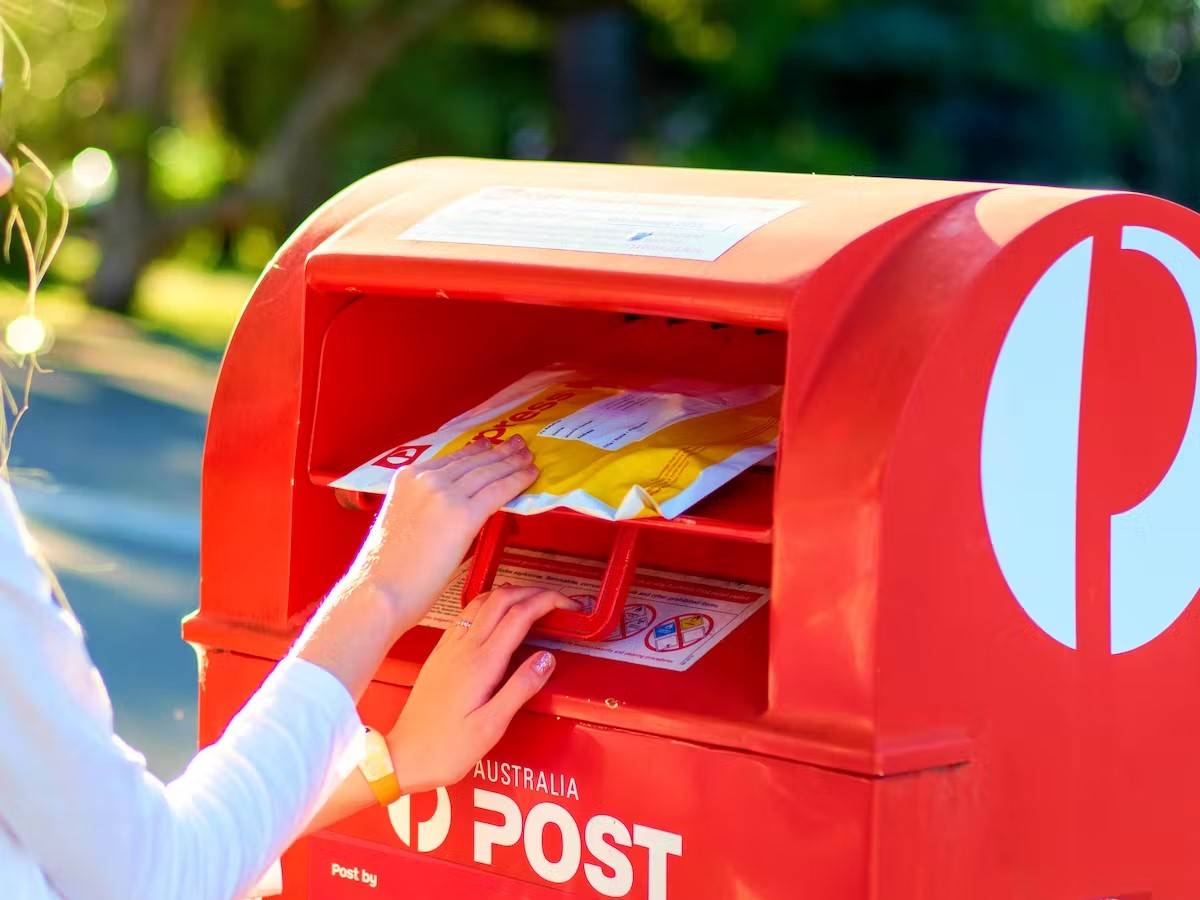
We use Australia Post Letter Postage for the majority of orders
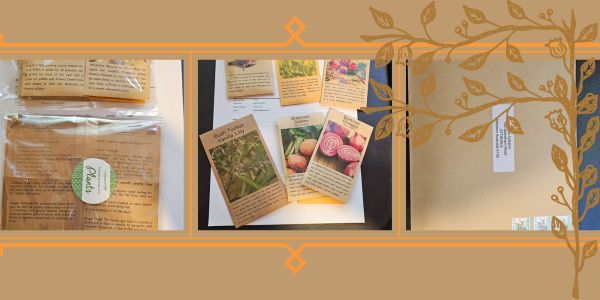
Not only are our seeds packed in recycled paper envelopes, we keep the theme going when we post out website orders. To protect your seeds from moisture and the letter box munchers (snails), we use a very special plastic free material made from plants. They are then put into recycled mailing envelopes. Green all the way 💚🌿
Delivery Guarantee
We take great care to make sure your seeds arrive safely. If your order is lost or damaged in transit, we’ll happily send a replacement. Unfortunately, we can’t replace or refund orders that arrive later than the estimated delivery date, as delays can sometimes occur that are outside our control.
Please note that all dispatch and delivery times listed are estimates only. While we do our best to post promptly, delivery timeframes can vary due to postal service delays, weather events, or other unforeseen circumstances. We’re unable to take responsibility for any loss, damage, or cost that results from a late delivery.
An order is not considered missing until at least 20 business days have passed from the postage date. You’ll receive an email once your seeds have been posted, letting you know they’re on their way. If you don’t see it in your main inbox, please check your Spam or Promotions folders as sometimes our emails like to hide there.
See all our verified customer reviews on our official CusRev profile.
See all our verified customer reviews on our official CusRev profile.