
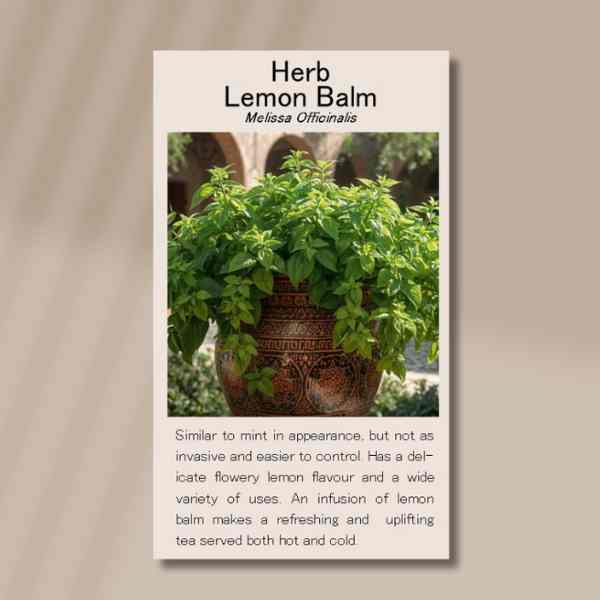

Lemon Balm
$4.95
Melissa Officinalis
- Seed Count 200
- Culinary & Tea Herb
- Perennial
In stock
Description
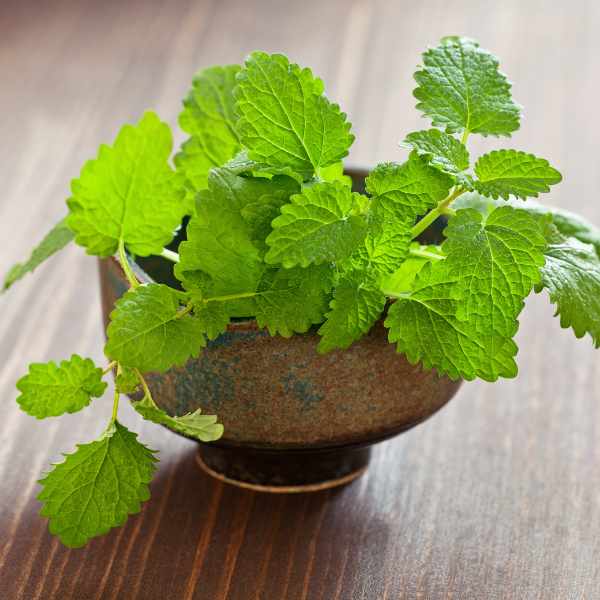
Lemon balm, a close cousin of mint, it shares that same easy-growing habit, but with a softer, more uplifting scent that smells like freshly grated lemon peel. Just brushing your hand through its leaves releases a cloud of sweet citrus aroma that instantly brightens the air. For centuries, gardeners and herbalists have treasured lemon balm for its calming qualities, cheerful scent, and versatility in the kitchen.
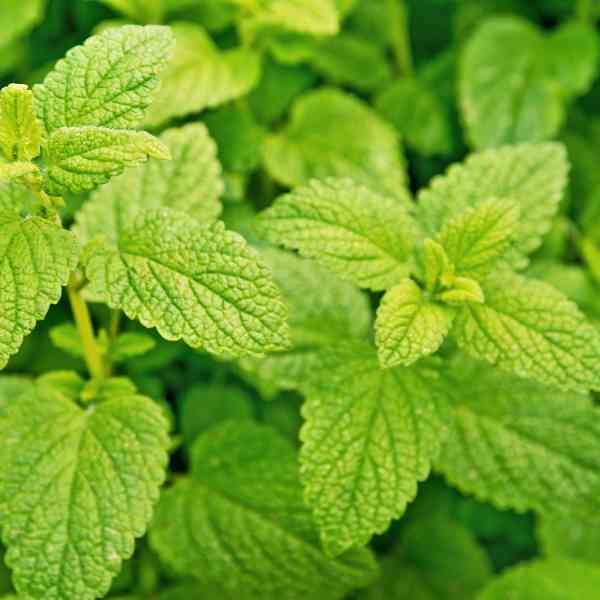
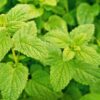
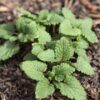
This lovely herb is a perennial in most Australian gardens, coming back reliably year after year. It forms a neat clump of bright green, crinkled leaves that shimmer in sunlight and look especially fresh after rain. In summer, it produces delicate white or pale yellow flowers that bees absolutely adore. In fact, the name Melissa comes from the Greek word for “honey bee,” and it’s easy to see why. Few herbs attract bees quite like lemon balm does, which makes it a wonderful choice for anyone hoping to create a pollinator-friendly garden.
It has long been valued for both its flavour and its gentle, soothing effects. In the kitchen, its lemony taste pairs beautifully with fruit, fish, and chicken dishes. Fresh leaves can be torn and scattered through salads, steeped in hot water for a calming tea, or muddled into cold drinks for a refreshing twist. It brings brightness to fruit salads, desserts, and herbal vinegars, and it’s delightful chopped finely into butter or sprinkled over roasted vegetables. A few leaves added to a jug of iced water or lemonade give it a clean, fragrant lift on a hot day.
In older herbal traditions, lemon balm was thought to cheer the heart and calm the mind. It was often brewed as a tea to ease tension or help with restful sleep. Herbalists called it a “balm for the spirit,” believing that its scent alone could lift low moods and bring a sense of peace. Even today, many people grow it simply for that reason. It’s a joy to have nearby, whether planted by a kitchen door, a garden path, or in a pot on the verandah where you can crush a leaf between your fingers and take a slow, deep breath.
Its scent is what truly sets it apart. The aroma of lemon balm is unlike anything else in the herb garden. It’s lemony, yes, but not sharp. There’s a soft, honeyed undertone that makes it comforting rather than zesty. This balance of freshness and warmth is what makes it such a favourite for teas, tonics, and tinctures. A handful of leaves steeped in hot water releases an aroma that fills the room with calm. Some cooks like to mix it with other herbs like chamomile, mint, or lavender for a custom tea blend, but on its own, it’s more than enough to soothe a busy mind.
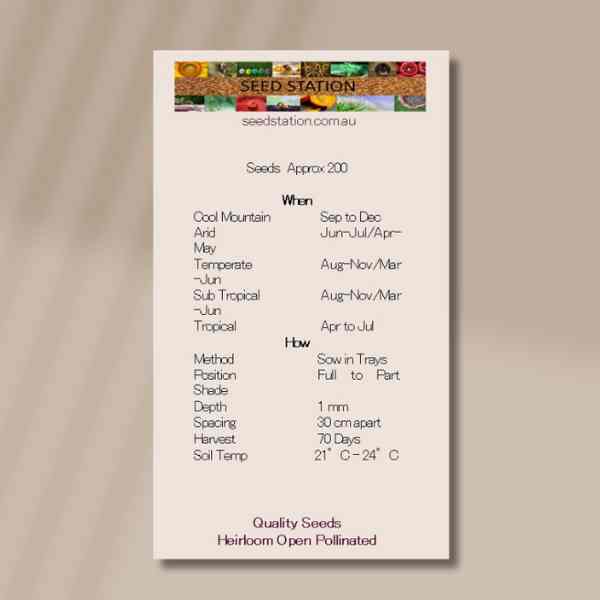
| Method: Raise seedlings | Soil Temp: 21°C - 24°C |
| Cool Mountain: Sep - Dec | Position: Part shade |
| Arid: Jun-Jul, Apr-May | Row Spacing: 30cm apart |
| Temperate: Aug-Nov, Mar-Jun | Planting Depth: 1mm |
| Sub Tropical: Aug-Nov, Mar-Jun | Harvest: 70 days |
| Tropical: Apr - Jul | Plant Height: 50 cm |
🌾 Starting Lemon Balm from Seed: Trays vs Direct Sowing
Lemon balm seeds are small and need light to germinate, so they are best started in trays or small pots where you can control conditions.
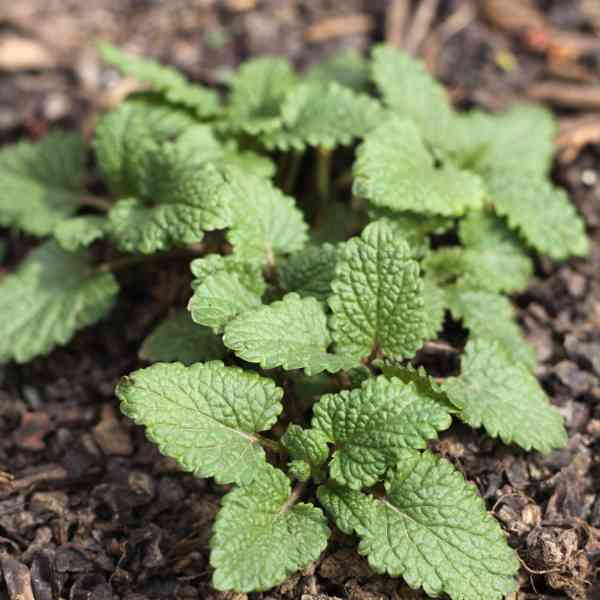
- In trays: Fill trays with a fine seed-raising mix. Scatter the seeds lightly over the surface and press them gently into the soil without covering them. Keep them moist but not soggy. Germination can take 10–21 days, depending on temperature.
- Direct sowing: In warmer areas of Australia, you can sow seeds directly outdoors once all frost risk has passed. Choose a spot that stays evenly moist and receives partial sun. Thin seedlings once they are big enough to handle.
Starting in trays gives better control and helps prevent tiny seeds from being washed away or eaten by ants or birds.
💧 Seed Pre-Treatment
Lemon balm seeds do not need special pre-treatment. However, you can soak them in room-temperature water for 4–6 hours before sowing to speed up germination slightly. The key is warmth and light rather than scarification or soaking.
🌞 Soil & Position
Lemon balm enjoys a position that gets morning sun and light afternoon shade. Too much direct afternoon sun can scorch the leaves, especially in hotter regions.
- Soil: Prefers a loamy, well-drained soil that holds some moisture. Mix in compost or aged manure before planting.
- pH: Slightly acidic to neutral, 6.0–7.5.
- Spacing: Space plants about 40 cm apart, as they will spread naturally to form a soft mound of foliage about 40–60 cm high.
Mulch around plants to help retain moisture and reduce weeds. Lemon balm can spread by runners, so you can either allow it to form a patch or contain it in a large pot.
🌿 Care & Maintenance
Lemon balm is low-maintenance but rewards a bit of regular attention.
- Watering: Keep soil consistently moist, especially during dry weather. Avoid letting it dry out completely.
- Feeding: Feed monthly with liquid seaweed or compost tea to keep growth lush and healthy.
- Pruning: Cut back hard in late summer or early autumn to encourage fresh growth. It will bounce back quickly. Trim regularly through the season to prevent flowering if you prefer young, tender leaves for cooking or tea.
- Container growing: Lemon balm grows beautifully in pots. Use a premium potting mix and water regularly. Containers also help control its spread.
In colder regions, lemon balm may die back in winter and return in spring. Protect roots with a layer of mulch through the cooler months.
🌸 Companion Planting Guide
Lemon balm is a friendly garden companion with many benefits. Its lemon scent repels unwanted insects while attracting bees and pollinators when it blooms.
Good companions:
- Tomatoes and capsicums – helps deter aphids and improves pollination.
- Cabbage and broccoli – its scent masks these crops from common pests.
- Fruit trees – attracts bees for better fruit set.
Avoid planting with:
- Mint – both plants spread vigorously and will compete for space.
Lemon balm also makes an excellent border plant, adding fragrance and charm wherever it grows.
🌼 Harvesting Lemon Balm
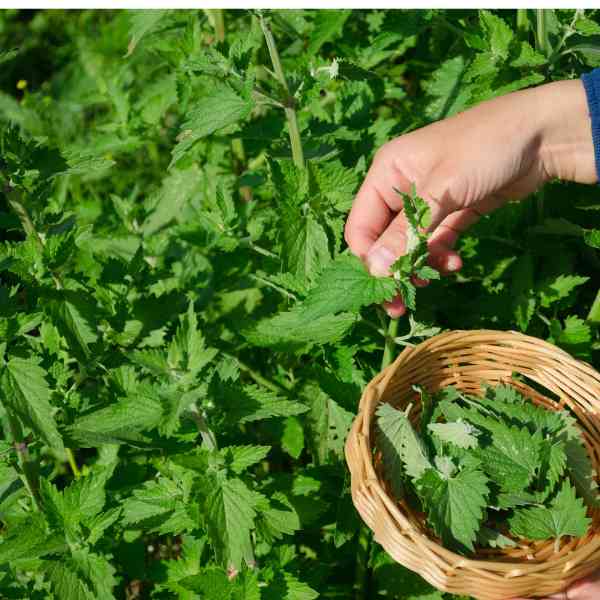
Harvest leaves once the plant is well established, usually after 8–10 weeks. The flavour is best before flowering when the leaves are young and full of essential oils.
- Pick leaves in the morning after the dew has dried for the strongest aroma.
- Use them fresh in teas, salads, and desserts, or dry them for later use.
- To dry, spread leaves in a single layer in a shaded, airy space. Once crisp, store them in airtight jars away from sunlight.
Regular harvesting encourages new shoots and keeps the plant compact.
🪲 Common Issues and Fixes
| Problem | Likely Cause | Solution |
|---|---|---|
| Poor germination | Seeds covered too deeply or cold soil | Sow on surface and keep soil warm and moist |
| Leggy or floppy growth | Too much shade or not enough pruning | Move to a sunnier spot and trim regularly |
| Yellowing leaves | Overwatering or nutrient imbalance | Let soil dry slightly and feed with compost tea |
| Aphids or whitefly | Warm weather and soft growth | Spray with soapy water or neem oil; encourage ladybirds |
| Powdery mildew | Humid conditions or poor airflow | Thin plants, avoid overhead watering, and trim often |
| Leaves losing flavour | Harvesting too late or after flowering | Harvest young leaves early in the day |
🌻 Seed Saving Guide
Lemon balm is self-pollinating and will produce plenty of seeds if you allow some flowers to mature.
- Allow a few flower spikes to dry on the plant at the end of summer.
- Once the flowers turn brown and dry, shake them gently over a paper bag to release the tiny black seeds.
- Spread the seeds out to dry for a few more days in a cool, airy place.
- Store them in paper envelopes or small jars, labelled with the variety and year.
Seeds remain viable for up to 3 years when stored in a cool, dry, dark place.
Lemon balm also spreads easily by self-seeding, so if you prefer a tidy garden, cut back flowering stems before seeds drop.
🌾 Final Thoughts
Lemon balm is one of those herbs that brings calm, beauty, and practicality to the garden. It is simple to grow, forgiving if neglected, and generous once established. The leaves make delicious tea, the flowers feed bees, and the whole plant fills the air with a scent that seems to lift the mood instantly.
It may not shout for attention like basil or mint, but it quietly earns its place and keeps on giving. Whether you grow it in a pot by the back door or let it spread near the veggie patch, lemon balm is one of those herbs that makes any garden feel more alive and welcoming.
4 reviews for Lemon Balm
| 5 star | 100% | |
| 4 star | 0% | |
| 3 star | 0% | |
| 2 star | 0% | |
| 1 star | 0% |
Postage Charge
Orders under $35 attract a $4.95 shipping charge. Orders $35 and above have free shipping.
Order Times
Seed orders are normally dispatched within three business days. You will receive an email when seeds are mailed out.
Postage Days
Seeds are mailed out Tuesday to Friday at 1pm. Except for the Friday of long weekends.
Postage Times
WA 2-3 Days: SA,NT 3-5 Days: NSW, ACT, QLD, VIC: 5-7 Days
Carrier
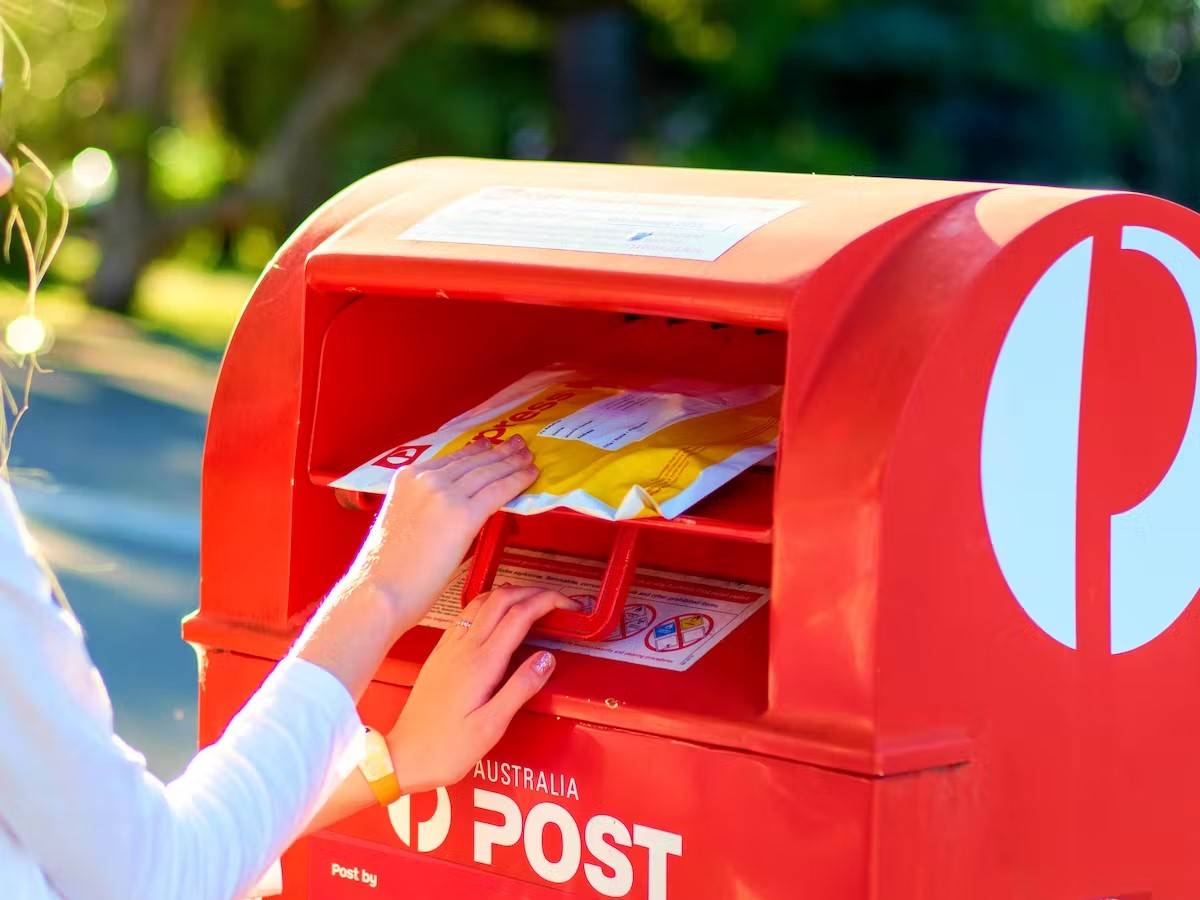
We use Australia Post Letter Postage for the majority of orders
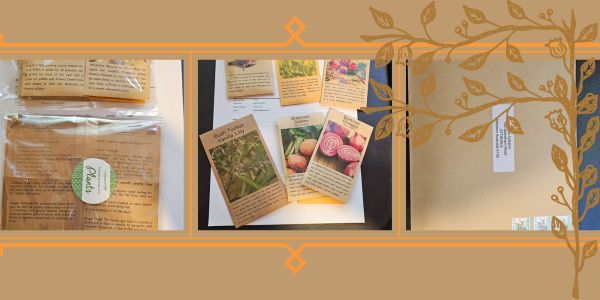
Not only are our seeds packed in recycled paper envelopes, we keep the theme going when we post out website orders. To protect your seeds from moisture and the letter box munchers (snails), we use a very special plastic free material made from plants. They are then put into recycled mailing envelopes. Green all the way 💚🌿
Delivery Guarantee
We take great care to make sure your seeds arrive safely. If your order is lost or damaged in transit, we’ll happily send a replacement. Unfortunately, we can’t replace or refund orders that arrive later than the estimated delivery date, as delays can sometimes occur that are outside our control.
Please note that all dispatch and delivery times listed are estimates only. While we do our best to post promptly, delivery timeframes can vary due to postal service delays, weather events, or other unforeseen circumstances. We’re unable to take responsibility for any loss, damage, or cost that results from a late delivery.
An order is not considered missing until at least 20 business days have passed from the postage date. You’ll receive an email once your seeds have been posted, letting you know they’re on their way. If you don’t see it in your main inbox, please check your Spam or Promotions folders as sometimes our emails like to hide there.
See all our verified customer reviews on our official CusRev profile.
See all our verified customer reviews on our official CusRev profile.
Haven’t planted as I’m moving house.
See all our verified customer reviews on our official CusRev profile.
Flowered beautifully
See all our verified customer reviews on our official CusRev profile.