




Everlastings
$15.99
Rhodanthe Chlorocephala var Rosea
- Seed Count 3000
- Long Lasting
- Annual
Only 7 left in stock
Description
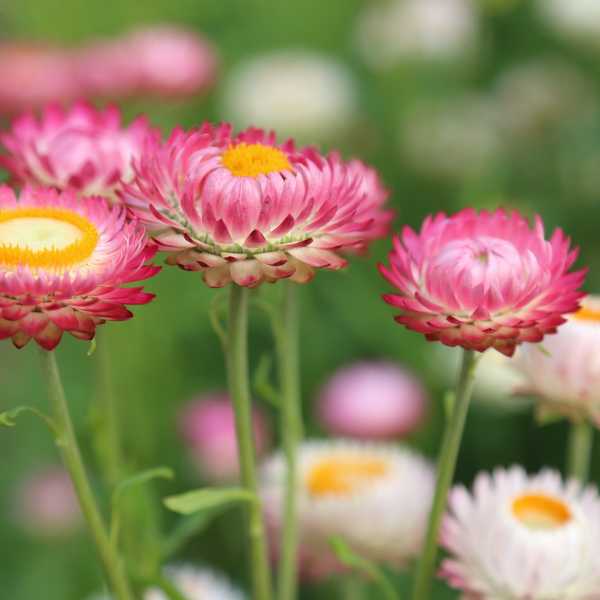
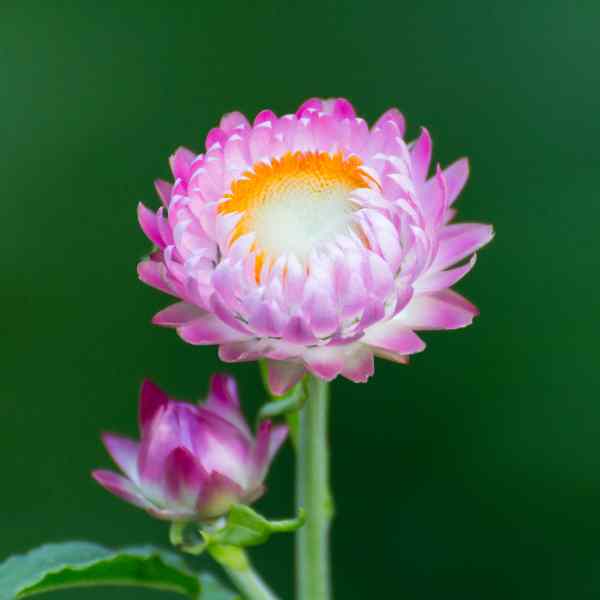
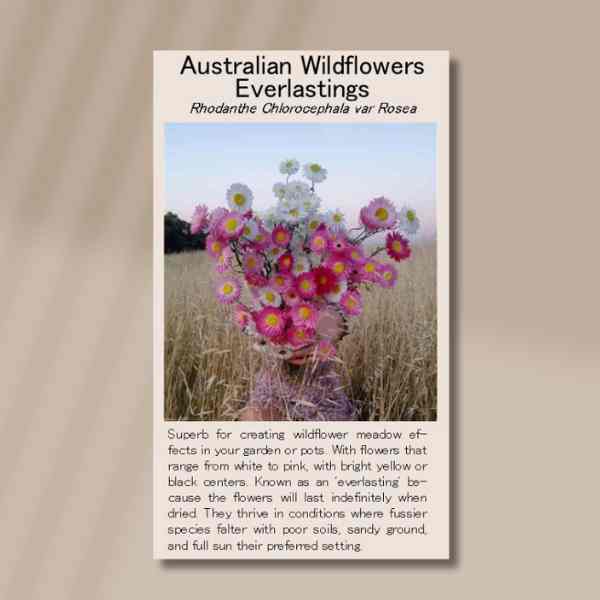
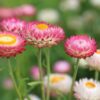
There is something deeply reassuring about a flower that refuses to fade. Among the many blooms that have woven themselves into the fabric of Australian gardens, the Pink Everlasting Daisy, holds a special place. From the very first flush of colour in late spring right through until the first frost finally calls an end to the display, Everlastings deliver weeks upon weeks of steady bloom. Their papery petals, which almost seem crafted by hand, carry colours ranging from soft rose-pinks through to deeper, richer tones, often with a striking golden-yellow centre. Planted en masse, they form a haze of soft movement, a field that shimmers and dances in the lightest breeze. Whether you grow a modest cluster in the front garden or scatter seeds over a wide, open bed, their impact is unforgettable.
The most remarkable trait of these flowers is hinted at in their name. They are called “Everlastings” because their blooms, once opened, refuse to give in to time in the way most flowers do. The petals are dry and papery from the start, a structure that helps them resist both drought and decay. Even after cutting, they retain their shape and colour long after most other blooms have withered.
These plants ask for very little. They thrive in conditions where fussier species falter and poor soils, sandy ground, and full sun are their preferred setting. Their roots are adapted to store what little moisture the land offers, allowing them to endure long stretches without rain. They are the kind of plant that turns “wasteland” into wonder, flowering where little else will take hold. It is this toughness that has made them a staple of wildflower meadows across Western Australia and beyond, where they have painted whole landscapes in pinks and whites that draw travelers from around the world.
Their blossoms, rich with nectar, are alive with pollinators through the warmer months. Bees hum purposefully among the flowers, butterflies dart and glide, and countless native insects find refuge in their petals. In supporting this community of pollinators, Everlastings contribute directly to biodiversity and the health of the wider garden.
As the season progresses and the fresh blooms give way to seed heads, the generosity of these plants continues. Birds, particularly small native species, are quick to visit, feeding on the seeds that remain standing above the soil. In this way, Everlastings extend their usefulness well beyond their peak flowering months, providing food and shelter at a time of year when other resources are scarce.
With water restrictions becoming more common and summers often stretching hotter and drier, the need for water-wise plants is pressing. Once sown, they will return a show of colour that defies drought and requires little intervention. Their deep resilience also means they contribute to soil health, with their presence helping to stabilise ground that might otherwise be prone to erosion. In areas where soils are degraded, they can act as pioneer plants, slowly improving conditions and encouraging the return of life to bare patches. They are not only beautiful—they are practical partners in the work of caring for land.
There is also something undeniably poetic about Everlastings. To see them sway in the warm air of late spring is to be reminded of endurance in the face of hardship. Where some plants demand attention, fertiliser, and constant watering, these daisies thrive on very little. Their beauty lies not in fragility but in strength. In this way, they offer gardeners a lesson: that colour, joy, and abundance do not always require endless effort or ideal conditions. Sometimes, it is the plants that demand the least that give the most.
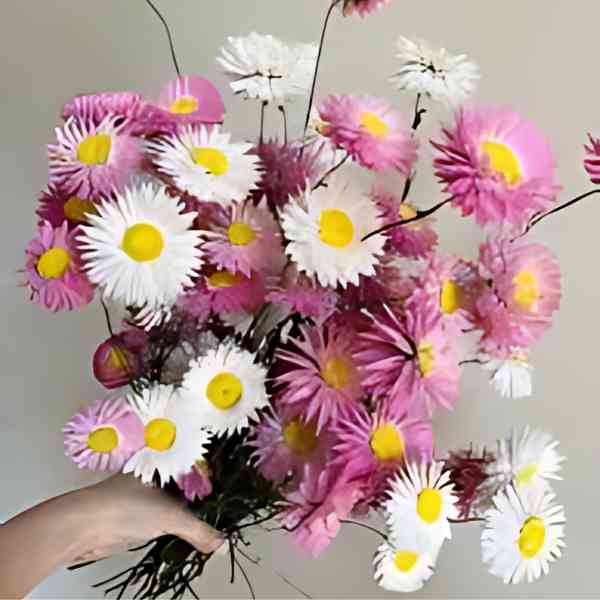
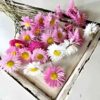
For those who enjoy the artistry of flower arranging, Everlastings are a gift. Their texture, their durability, and their palette of colours make them versatile in both fresh and dried displays. Mixed with other native flowers, they create arrangements that are distinctly Australian in character, bold yet delicate, earthy yet refined. Unlike most cut flowers that fade within days, Everlastings keep their form, making them invaluable for anyone who wants their efforts in arranging to last longer than a week.
Coverage Guide for 3000 Everlasting Daisy Seeds
-
Dense planting (carpet of colour): covers 8–10 m²
-
Light scatter (meadow-style effect): covers 15–20 m²
-
Containers: 3000 seeds will generously sow around 10–15 medium pots (20–25 cm across), or 5–6 large tubs/planters. A lighter hand with sowing can stretch further.
🌸 Recommendation: For containers, sprinkle seeds thinly across the surface rather than crowding them. This gives each plant room to flourish and ensures a steady display of blooms right through the season.
🥚 Sowing: In Trays vs. Direct
Everlastings are famously easy to grow from seed, especially when sown direct into the garden—this mimics their natural way of germinating after autumn rains. But there are pros and cons to both sowing methods, and each has its place depending on your setup and timing.
🌱 Direct Sowing (Best for Mass Plantings & Naturalised Displays)
- When to sow: Late autumn to early winter (April–June), depending on your climate. You want to catch the seasonal rains and cool soil temps.
- How to sow: Lightly rake your soil, scatter the seed thinly, and press it in gently with a board or your palm—don’t cover deeply. Light is important for germination.
- Why choose this method: Less root disturbance, simpler process, and it mimics nature. Ideal for large areas like cottage garden beds or meadows.
🪴 Tray Sowing (Best for Precision or Early Starts)
- When to sow: Late summer to early autumn, or if you want more control over timing.
- How to sow: Use seedling trays filled with a quality seed-raising mix. Sprinkle the seeds on top and press them in lightly. Mist gently.
- Transplanting tips: Plant out when seedlings have at least two true leaves. Be gentle—they don’t love root disturbance, so handle carefully.
🌼 Tip: If your garden is prone to slugs, sowing in trays can give your seedlings a head start before planting them out.
🌾 Seed Pre-Treatment
No fancy tricks needed here—Everlasting seeds don’t require pre-treatment. They’re ready to go straight from the packet to the soil. Just make sure they’re stored in a cool, dry place until you’re ready to sow.
🏡 Soil & Position
🌞 Sunlight
- Full sun is essential. Everlastings love to soak it up and will sulk in shade.
🌱 Soil Type
- Well-draining soil is key. Sandy, loamy soils are perfect. Heavy clay can lead to rot unless improved with sand or compost.
- They’ll grow happily in poor soils—in fact, too-rich soils can lead to leggy growth and fewer blooms.
🌸 Personal tip: If your soil holds water after rain, raise the bed or plant into a gently sloping area to keep roots dry.
🧑🌾 Care & Maintenance
Once they’re up and growing, Everlastings are incredibly low maintenance. That said, a little attention here and there keeps them at their best.
- Watering: Once established, they’re drought-tolerant. Water seedlings regularly until roots take hold, then ease off.
- Feeding: They don’t need much! A sprinkle of slow-release fertiliser at sowing is plenty. Avoid overfeeding.
- Mulching: Use a light, fine mulch like sugarcane or straw around young seedlings to conserve moisture and suppress weeds.
- Deadheading: Not essential, but removing spent flowers can extend blooming time and improve appearance.
- Staking: Not usually needed unless they’re in a windy or exposed site.
🌻 Companion Planting Guide
Everlastings shine in mixed borders and native garden beds. Here are some great plant partners:
| Companion | Benefit |
|---|---|
| Kangaroo Paw | Shared sun and drought-loving nature |
| Lavender | Attracts pollinators, offers structure |
| Cosmos | Light, airy flowers that complement daisy forms |
| Yarrow | Brings pollinators and helps break up soil |
| Swan River Daisy | Softens edges and fills gaps beautifully |
🌼 Everlastings also do well with other wildflowers for a colourful native patch!
✂️ Harvesting Blooms
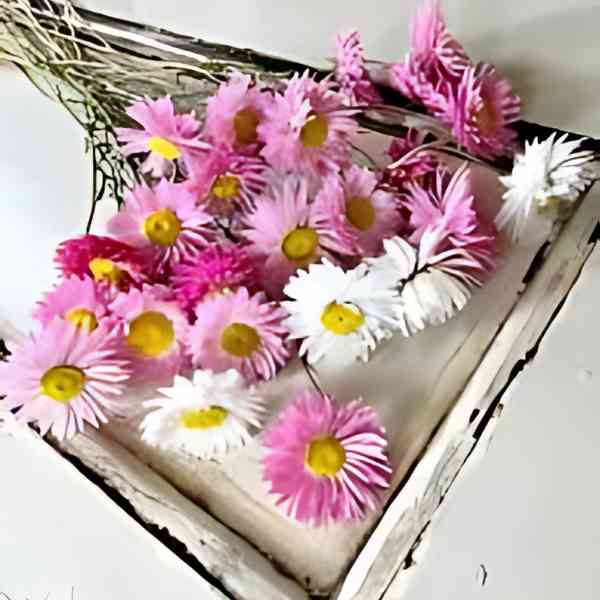
Everlastings are famed for their long vase life and crisp papery petals—hence the name! They’re perfect for dried flower arrangements, wreaths, or fresh posies.
- When to harvest: Pick blooms just as they begin to open, before the centres are fully visible. They’ll continue to open after cutting.
- How to dry: Strip leaves, bunch loosely, and hang upside down in a dry, dark spot with good airflow.
- Storage: Once dried, store in a box lined with tissue paper away from light and moisture.
🌸 They’ll last for years in dried arrangements if handled gently!
🐛 Common Issues & Fixes
Here’s a quick guide to troubleshoot common problems with Everlastings:
| Issue | Likely Cause | Fix |
|---|---|---|
| Poor germination | Buried too deeply / old seed | Sow on surface and use fresh seed |
| Leggy seedlings | Not enough light | Move to a sunnier spot or under grow lights |
| Yellowing or wilting plants | Overwatering or poor drainage | Improve soil, reduce watering |
| Leaves eaten overnight | Slugs/snails | Use organic slug traps, beer traps, or remove manually |
| No blooms | Too much nitrogen / too little sun | Ease up on fertiliser and move to full sun if possible |
🌾 Seed Saving Guide
Saving your own Everlasting seeds is both satisfying and practical—they’re prolific seed producers, and the process is easy.
🌸 When to collect:
- Let a few flower heads dry completely on the plant. They’ll turn brown and crispy.
🖐️ How to harvest:
- Snip off the dried flower heads and place them in a paper bag or tray.
- Rub the heads gently to separate seeds from the chaff.
🏷️ Storage:
- Store seeds in a paper envelope or glass jar, labelled with the date.
- Keep them in a cool, dark spot. They’ll stay viable for 2–3 years.
🌼 Seed saving is especially helpful if you want to build a wildflower meadow or swap with other gardeners.
💬 Final Thoughts
If you’re looking for a bloom that’s as tough as it is cheerful, you can’t go past Everlastings. These drought-hardy charmers are a celebration of Australian resilience and beauty—thriving with minimal fuss and rewarding you with clouds of colour all through spring.
In my own garden, I scatter them freely along sunny paths and let them naturalise under native shrubs. Each year, they self-seed just enough to keep the cycle going. It’s a low-effort burst of joy that keeps on giving 🌸
So go ahead—grab a packet of Everlasting seeds, find a sunny spot, and start something beautiful that really lasts.
3 reviews for Everlastings
| 5 star | 100% | |
| 4 star | 0% | |
| 3 star | 0% | |
| 2 star | 0% | |
| 1 star | 0% |
Postage Charge
Orders under $35 attract a $4.95 shipping charge. Orders $35 and above have free shipping.
Order Times
Seed orders are normally dispatched within three business days. You will receive an email when seeds are mailed out.
Postage Days
Seeds are mailed out Tuesday to Friday at 1pm. Except for the Friday of long weekends.
Postage Times
WA 2-3 Days: SA,NT 3-5 Days: NSW, ACT, QLD, VIC: 5-7 Days
Carrier
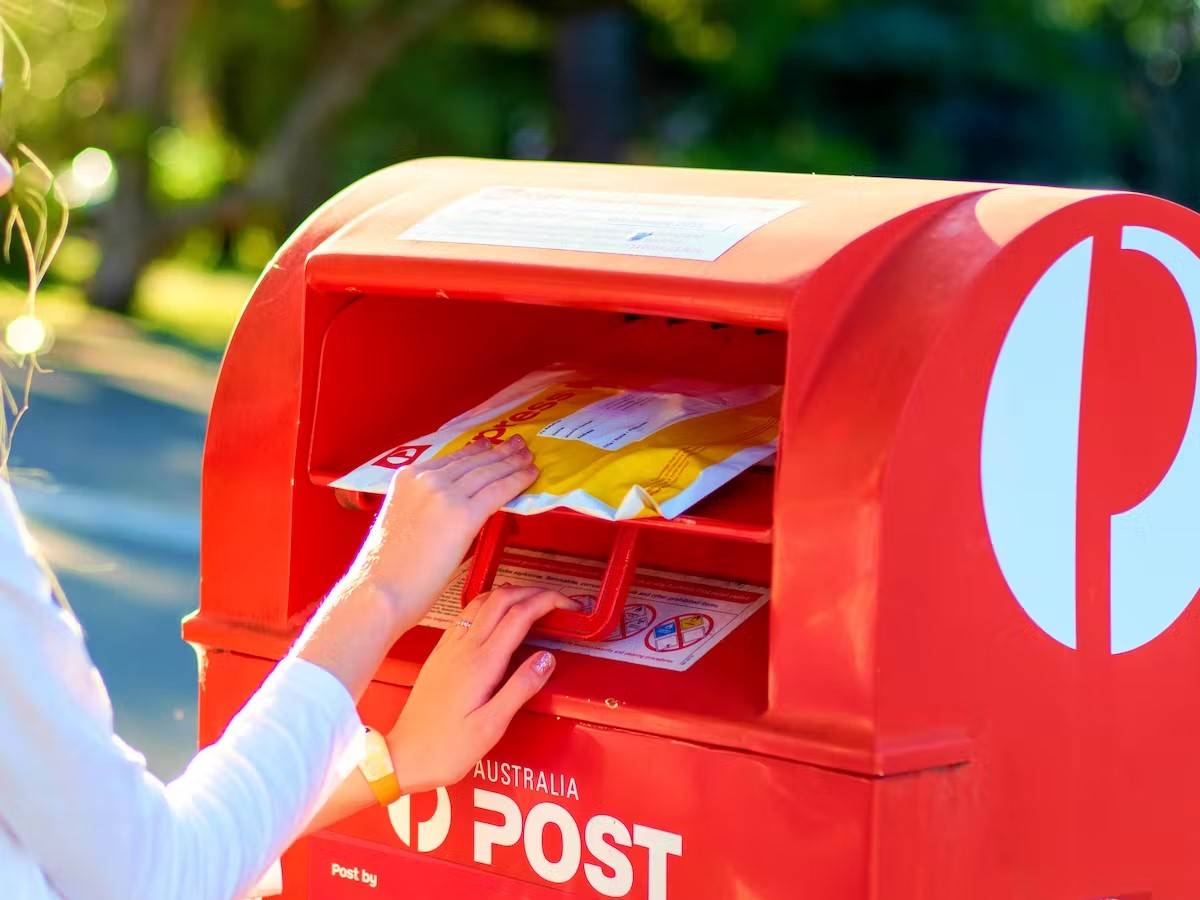
We use Australia Post Letter Postage for the majority of orders
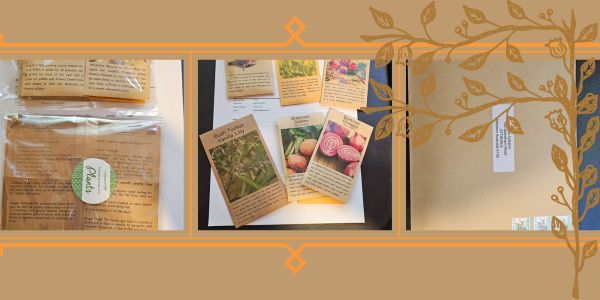
Not only are our seeds packed in recycled paper envelopes, we keep the theme going when we post out website orders. To protect your seeds from moisture and the letter box munchers (snails), we use a very special plastic free material made from plants. They are then put into recycled mailing envelopes. Green all the way 💚🌿
Delivery Guarantee
We take great care to make sure your seeds arrive safely. If your order is lost or damaged in transit, we’ll happily send a replacement. Unfortunately, we can’t replace or refund orders that arrive later than the estimated delivery date, as delays can sometimes occur that are outside our control.
Please note that all dispatch and delivery times listed are estimates only. While we do our best to post promptly, delivery timeframes can vary due to postal service delays, weather events, or other unforeseen circumstances. We’re unable to take responsibility for any loss, damage, or cost that results from a late delivery.
An order is not considered missing until at least 20 business days have passed from the postage date. You’ll receive an email once your seeds have been posted, letting you know they’re on their way. If you don’t see it in your main inbox, please check your Spam or Promotions folders as sometimes our emails like to hide there.
See all our verified customer reviews on our official CusRev profile.
See all our verified customer reviews on our official CusRev profile.
See all our verified customer reviews on our official CusRev profile.