
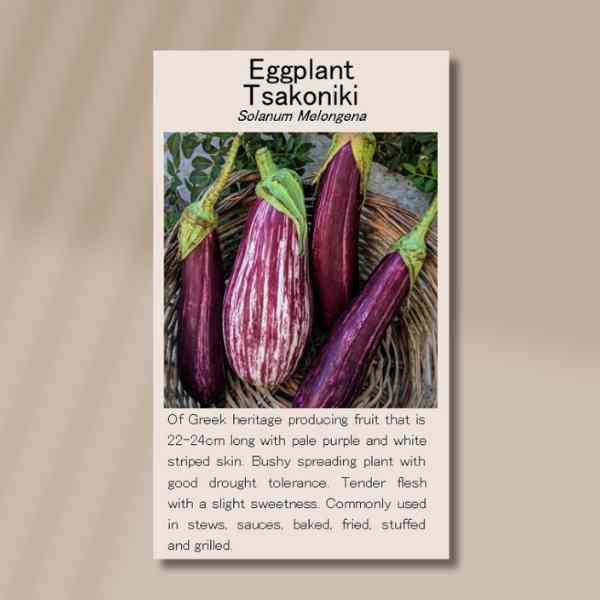







Eggplant Tsakoniki
$4.95
Solanum Melongena
- Seed Count 75
- Good Drought Tolerance
- Frost Tender Perennial
In stock
Description
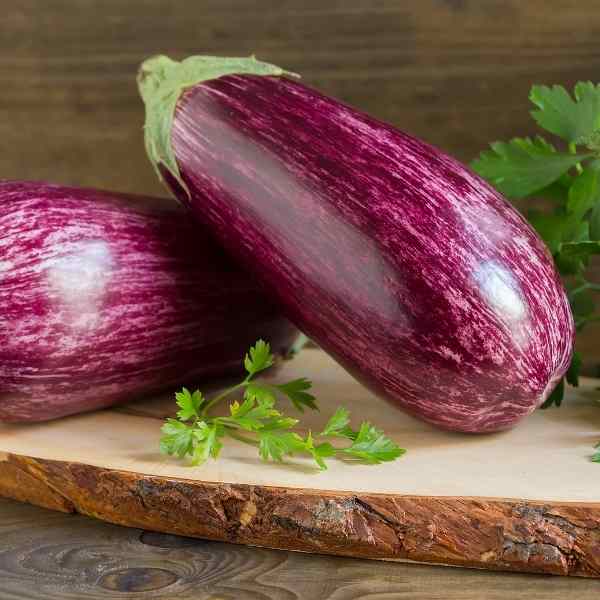
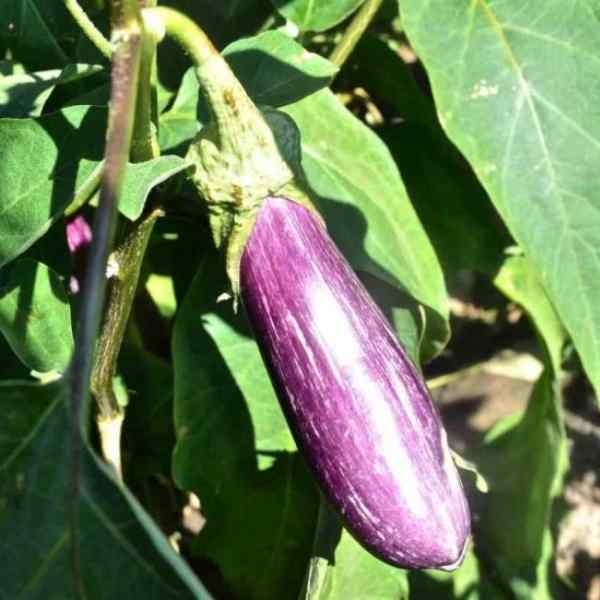
Eggplant Tsakoniki is a heat-lover through and through, with bushy, spreading plants that simply revel in a long summer season. If you’re in a frost-free area, this variety can even behave like a short-lived perennial, popping back up year after year with a bit of care. That makes it a clever pick for the gardener who likes to get the most out of their space.
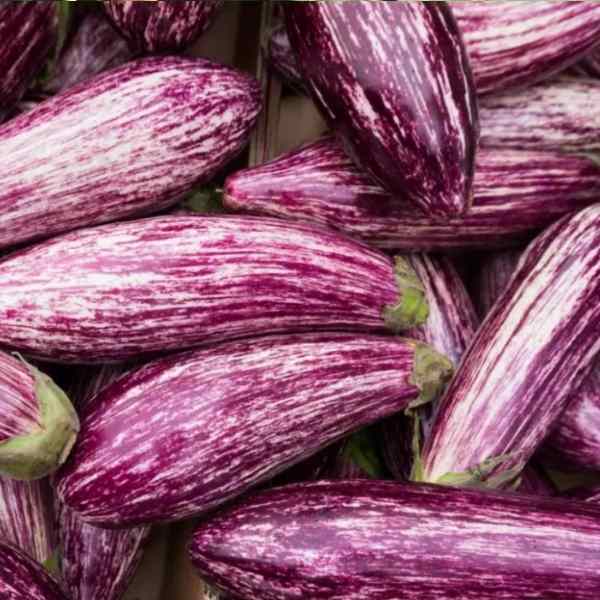
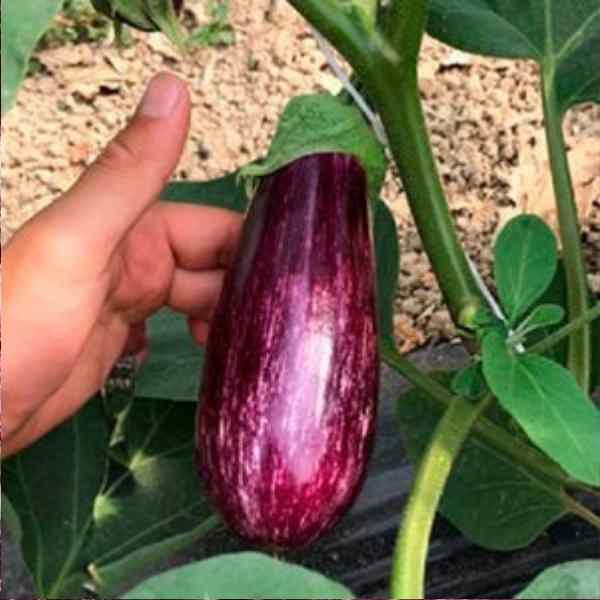
These elegant eggplants grow long and slim, usually around 22 to 24 centimeters in length, much like a Lebanese type, but with a more generous curve and broader girth. Each fruit is gently striped with creamy white and soft purple, creating a marbled effect that really catches the eye. You’ll often find them growing in clusters, with multiple fruit maturing together on the plant. That makes for an abundant harvest, and fewer empty spots on your dinner plate.
The plants themselves are stocky and strong, with a spreading growth habit that provides good cover and natural shading for the fruit. This helps protect against sunscald in extreme heat and keeps the skin of the fruit smooth and supple. They’ll pump out eggplants throughout the season with minimal fuss, provided they get a good start.
The flesh is creamy and tender, with very little bitterness, even when harvested a little later than usual. That makes it a dream to cook with, especially for dishes where the eggplant takes centre stage. This variety is the traditional choice for moussaka, the classic layered Greek casserole made with slices of eggplant, rich meat sauce, and a fluffy béchamel topping.
Eggplant Tsakoniki shine in Australian gardens due to its adaptability. It’s a tough, no-nonsense variety that copes well with heatwaves, dry spells, and variable conditions. Its bushy, spreading habit also means it fills out a space nicely, giving you both productivity and ornamental value. Those distinctive striped fruits dangling from leafy green stems make a lovely addition to your edible garden.
| Method: Set seedlings | Soil Temp: 24°C - 32°C |
| Cool Mountain: Sep - Jan | Position: Full sun |
| Arid: Oct - Jan | Row Spacing: 70 cm |
| Temperate: Aug - Jan | Harvest: 80 Days |
| Sub Tropical: Aug - Feb | Planting Depth: 5 mm |
| Tropical: Apr - Jul | Plant Height: 1 m |
🥚 Starting from Seed: In Trays vs Direct Sowing
Eggplants are best started in seed trays, particularly in cooler parts of Australia. They need warmth to germinate and take their time getting going, so starting them under cover gives you a head start on the season.
✅ Seed Trays (Recommended):
- When to sow:
- Warm climates (QLD, NT, northern WA): July–September
- Temperate climates (NSW, VIC, SA, southern WA): August–October
- Cool climates (TAS, inland areas): Start indoors in September or wait until October
- Use a quality seed-raising mix.
- Sow seeds about 5mm deep.
- Maintain consistent warmth (ideally 24–28°C). Heat mats or warm windowsills help in early spring.
- Germination usually takes 7–14 days, sometimes longer in cooler rooms.
- Harden off seedlings before transplanting outdoors by gradually introducing them to the elements over 7–10 days.
🌿 Direct Sowing (Less Ideal):
- Only suitable in tropical and subtropical zones once soils are reliably warm.
- Needs consistent soil moisture and warmth (min 18–20°C soil temp).
- Direct sowing can risk uneven germination and pest damage at the early stage.
🌟 Seed Pre-treatment:
- No special treatment is needed, but soaking seeds in warm water for 6–12 hours before sowing can help speed up germination.
🌞 Soil and Position
Eggplants are sun-lovers, so choose a spot with full sun (6–8 hours minimum) and shelter from wind.
Soil:
- Rich, free-draining soil is essential.
- Ideal pH: 6.0–6.8
- Work in plenty of compost or aged manure before planting.
- Mulch well to retain warmth and moisture—this crop loves consistent conditions.
Pro tip: Avoid planting where other Solanaceae (like tomatoes, capsicum or potatoes) have grown in the last 2–3 years to reduce the risk of disease build-up.
🌿 Care and Maintenance
Once your eggplants are in, it’s all about consistency—warmth, water, and a bit of extra nutrition go a long way.
Spacing:
- 45–60cm apart, with 70–90cm between rows.
- Staking or caging can help support heavy-bearing plants, especially in wind-prone gardens.
Watering:
- Water deeply, 2–3 times a week.
- Avoid wetting the leaves to reduce fungal issues.
Feeding:
- Feed fortnightly with a liquid fertiliser high in potassium once flowering begins.
- A side-dressing of compost mid-season keeps plants happy.
Pruning:
- Pinch the tip once the plant reaches about 30cm to encourage bushier growth.
- Remove early small fruit if plants are struggling—they’ll put more energy into growing strong.
🌼 Companion Planting for Eggplant
Eggplants play well with:
- Basil – repels pests like aphids and adds a lovely scent.
- Marigold – deters nematodes and beetles.
- Beans – fix nitrogen into the soil.
- Thyme and oregano – help confuse pests with scent.
- Spinach and lettuce – quick crops to interplant before the eggplants bush out.
Avoid planting near:
- Fennel – tends to inhibit growth.
- Other Solanaceae (too much disease risk clustered together).
🍆 Harvesting Eggplants
Patience is key here—eggplants can take 70–90 days from transplant to first harvest, depending on variety and weather.
- Pick when fruits are glossy, firm, and have reached their full size.
- A dull sheen or over-hard skin can mean they’re overripe.
- Cut with a sharp knife or secateurs, leaving a short stem attached.
- Regular harvesting encourages more fruit to develop.
🛠️ Common Issues & Fixes
| Problem | Symptom | Cause | Solution |
|---|---|---|---|
| Poor germination | Seeds don’t sprout | Too cold, too dry, old seed | Use heat mats, soak seeds, ensure fresh seed |
| Yellowing leaves | Lower leaves turn yellow | Nutrient deficiency | Add compost, feed fortnightly with liquid feed |
| Flowers drop | No fruit set | Cold nights or heat stress | Improve pollination, shelter from extremes |
| Flea beetles | Tiny holes in leaves | Pest | Use fine mesh netting, apply neem oil or eco-oil |
| Spider mites | Fine webbing, yellow stippling | Dry conditions | Increase humidity, spray with insecticidal soap |
| Aphids | Clusters on stems or undersides | Pest | Blast with water, apply neem or companion plant |
| Fruit rot | Soft spots on fruit | Fungal issue or sunscald | Improve airflow, water at soil level, mulch well |
🧬 Seed Saving Guide
Saving eggplant seed is easy and satisfying—but does take some patience.
Here’s how:
- Choose open-pollinated/heirloom varieties – hybrids won’t grow true.
- Allow a few fruits to fully mature on the plant—they’ll go dull, hard, and sometimes brownish.
- Harvest and slice open fruit. Scoop out the seedy pulp.
- Place in a jar with water and ferment for 2–3 days to separate seed from pulp.
- Rinse thoroughly using a fine sieve.
- Spread on a plate or paper towel to dry in a cool, dry, well-ventilated spot.
- Label and store in a cool, dark place in an envelope or airtight jar.
Properly dried and stored, eggplant seeds will stay viable for up to 5 years.
🌿 Final Thoughts
Eggplants may seem a bit fussy to start with, but once they find their groove, they’re incredibly rewarding. They love heat, regular care, and good compost—and in return, they’ll give you armfuls of fruit perfect for grilling, curries, and all those dishes where they shine.
If you’re growing in cooler parts of Australia, don’t be discouraged—just give them the right start indoors and choose shorter-season varieties. In warmer zones, eggplants can even be grown as short-lived perennials, producing over multiple seasons if protected from frost.
So go on—pop some seeds in, nurture them through those early weeks, and enjoy watching these stunning plants come to life in your patch.
Happy growing! 🌞
1 review for Eggplant Tsakoniki
| 5 star | 100% | |
| 4 star | 0% | |
| 3 star | 0% | |
| 2 star | 0% | |
| 1 star | 0% |

Postage Charge
Orders under $35 attract a $4.95 shipping charge. Orders $35 and above have free shipping.
Order Times
Seed orders are normally dispatched within three business days. You will receive an email when seeds are mailed out.
Postage Days
Seeds are mailed out Tuesday to Friday at 1pm. Except for the Friday of long weekends.
Postage Times
WA 2-3 Days: SA,NT 3-5 Days: NSW, ACT, QLD, VIC: 5-7 Days
Carrier
We use Australia Post Letter Postage for the majority of orders

Not only are our seeds packed in recycled paper envelopes, we keep the theme going when we post out website orders. To protect your seeds from moisture and the letter box munchers (snails), we use a very special plastic free material made from plants. They are then put into recycled mailing envelopes. Green all the way 💚🌿
Delivery Guarantee
We take great care to make sure your seeds arrive safely. If your order is lost or damaged in transit, we’ll happily send a replacement. Unfortunately, we can’t replace or refund orders that arrive later than the estimated delivery date, as delays can sometimes occur that are outside our control.
Please note that all dispatch and delivery times listed are estimates only. While we do our best to post promptly, delivery timeframes can vary due to postal service delays, weather events, or other unforeseen circumstances. We’re unable to take responsibility for any loss, damage, or cost that results from a late delivery.
An order is not considered missing until at least 20 business days have passed from the postage date. You’ll receive an email once your seeds have been posted, letting you know they’re on their way. If you don’t see it in your main inbox, please check your Spam or Promotions folders as sometimes our emails like to hide there.
See all our verified customer reviews on our official CusRev profile.