


Desert Yam
$6.59
Ipomoea Costata
- Seed Count 5
- Native Potato
- Perennial
In stock
Description
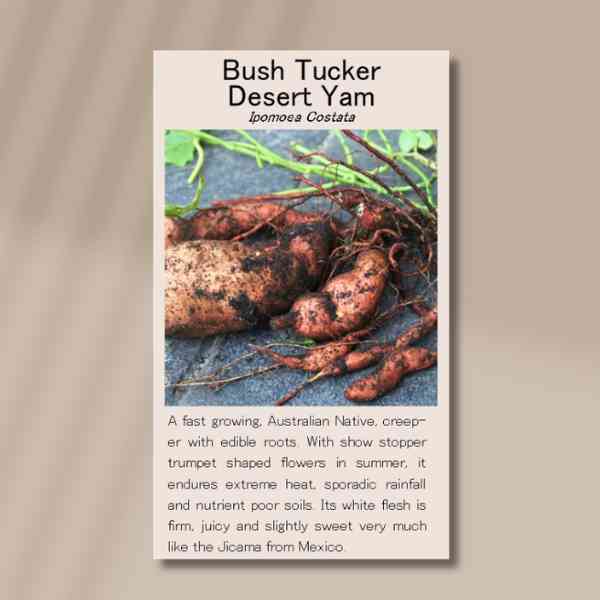
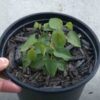
The Desert Yam, also known as Rock Morning Glory, is a perennial plant that is a is a master of adaptation. Found across the dry interior regions of Western Australia, the Northern Territory, and parts of South Australia, it has evolved to endure extreme heat, sporadic rainfall, and nutrient-poor soils. Its silvery-green leaves, thick and fleshy to conserve moisture, form a low-growing mat that hugs the ground, creating a textural contrast in garden beds or rockeries.
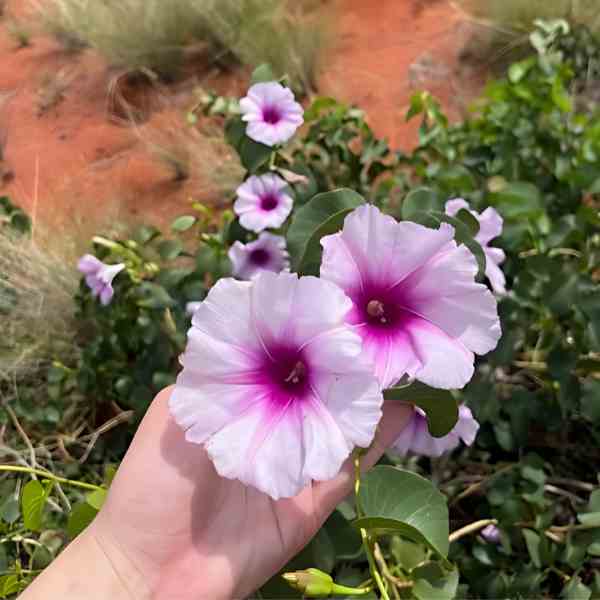
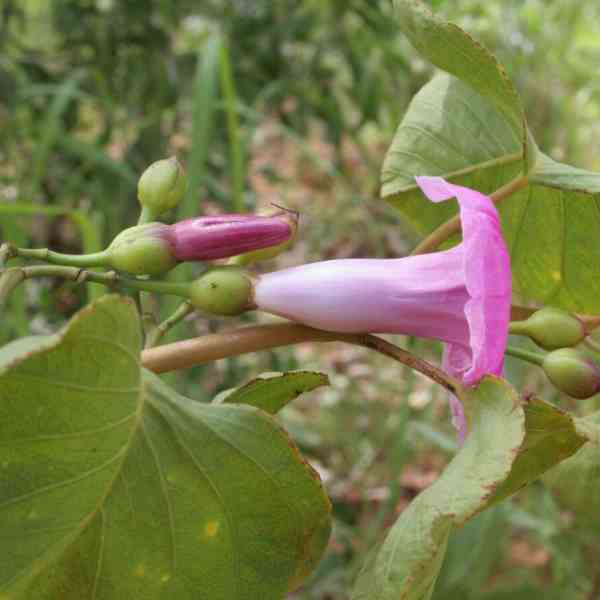
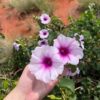
But the real showstopper arrives in the warmer months, when large, trumpet-shaped flowers emerge. These blooms, often pinky-white with a subtle darker pink throat, unfurl in the cool of the morning and retreat by midday—a clever dance to avoid the harsh sun. After flowering, it produces woody seed pods that blend discreetly into the landscape, ensuring its persistence through dry spells. For those aiming to create a water-wise garden or restore a patch of land with native flora, the Desert Yam is a practical choice.
This fast-growing creeper and can send out long tendrils that stretch up to 3 meters. These tendrils will also scale shrubs and trees to several meters in height, so care is needed when choosing its growing location. As Bush Tucker, the Desert Yam is sweet and juicy and is delicious when sliced and fried, roasted or baked. It can also be eaten raw.
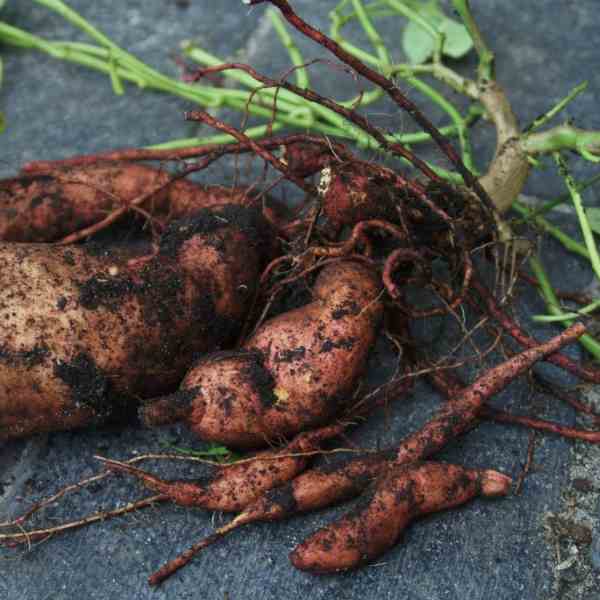
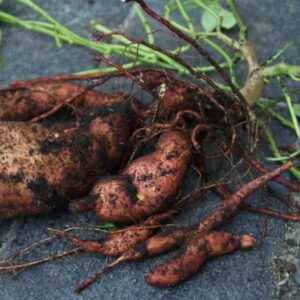
Three types of tuber can be found under the one bush. The first is found on the long runners which occasionally send down roots, but usually only in good seasons. The second type of tuber is produced on the parent’s lateral roots – up to 3 m from the plant base. The third type is found directly below the mature plant. These can be hard and woody because of their age.
Traditional uses/preparation: When eaten fresh like an apple, the white flesh is firm, juicy and slightly sweet very much like the Jicama from Mexico. Roasted whole in the ashes of a fire and eaten hot they taste very similar to the common sweet potato.
In cultivation, its versatility shines. Whether sprawling across a rocky garden, softening the edges of a gravel path, or adding contrast to succulent arrangements, this plant requires little beyond a sunny spot and well-drained soil. Its sprawling habit makes it ideal for erosion control on slopes, while its salt tolerance opens possibilities for coastal gardens.
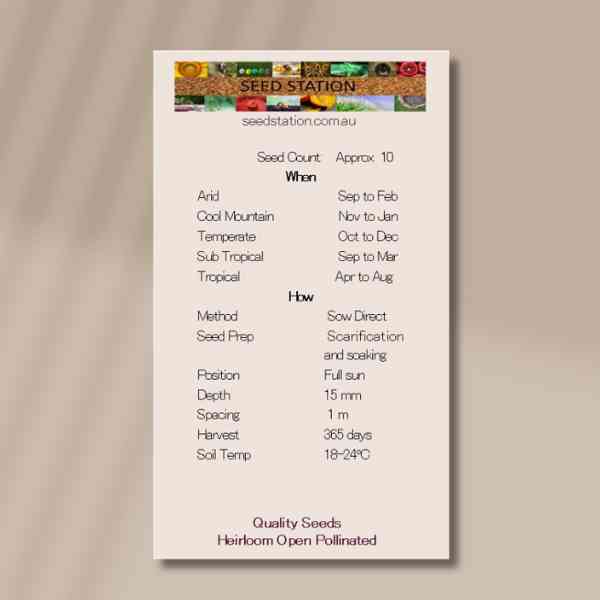
| Method: Sow direct | Soil Temp: 18°C - 24°C |
| Cool Mountain: Nov - Jan | Position: Full sun |
| Arid: Sep - Feb | Row Spacing: 1 m apart |
| Temperate: Oct - Dec | Planting Depth: 15mm |
| Sub Tropical: Sep - Mar | Harvest: 356 days |
| Tropical: Apr - Aug | Plant Height: 3cm |
🥄 Sowing Desert Yam
From Seed:
Desert yam seeds have a tough outer coating, which means scarification is essential for good germination.
- Scarify seeds by lightly rubbing them with sandpaper or nicking them with a sharp knife, then soak in warm water overnight.
- Seeds can take 2–4 weeks to germinate depending on conditions.
Option 1: Sowing in Trays
✔️ Best for controlled environments or early starts in cooler regions.
- When: Late spring to early summer (once the risk of frost is past)
- How: Sow 1 cm deep into seed-raising mix in biodegradable pots or cells
- Where: In a warm, sunny spot (a heat mat will speed things up!)
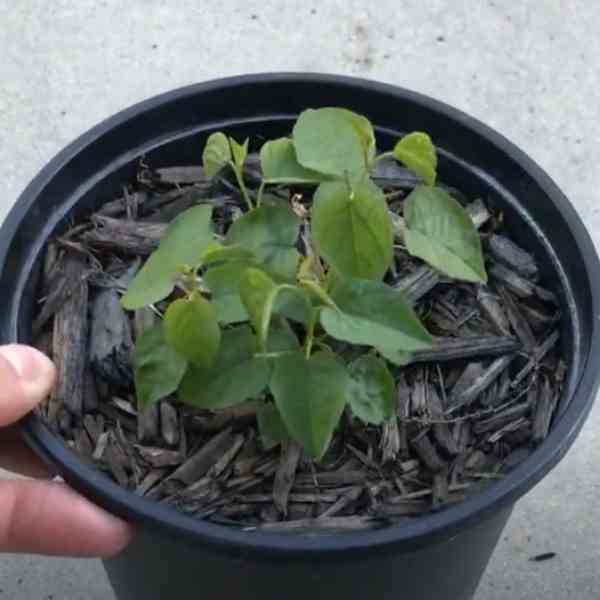
- Transplant when plants have 2–3 sets of true leaves and soil is warm
Option 2: Sowing Direct
✔️ Best for warm climates with consistently warm soil temps (20–30°C)
- When: After the soil has warmed up, typically late spring
- How: Sow 1–2 cm deep, spaced 50 cm apart
- Water in well, then keep moist (not wet) until germinated
🌞 Soil & Position
- Soil: Light, sandy, well-drained soil is ideal. Desert yam thrives in poor soils and doesn’t like to sit in water.
- pH: Neutral to slightly alkaline (6.5–7.5)
- Sunlight: Full sun—this is a heat-loving plant!
- Position: Choose an open space where vines can sprawl or climb. Trellising helps manage space but isn’t essential.
🌿 Care & Maintenance
- Watering: Once established, desert yam is drought-tolerant, but young seedlings need regular water until well rooted.
- Feeding: Not necessary if soil is moderately fertile. Over-fertilising may promote leaf growth over tuber development.
- Mulching: Light mulch helps retain moisture but don’t cover the crown of the plant.
- Weeding: Keep weed-free in early stages to reduce competition.
👩🌾 Companion Planting Guide
Desert yam is a bit of a loner—it does best with non-invasive, upright companions that don’t crowd the soil.
Good Companions:
- Sunflowers – act as natural trellises
- Corn – offers shade and support
- Marigolds – help deter root pests
Avoid Planting With:
- Other vining or deep-rooted crops (e.g., pumpkin, sweet potato) – may compete underground
- Very thirsty plants – they may stress yam plants in dry conditions
🧺 Harvesting
- Timeframe: 5–8 months after planting, usually in autumn once the vines begin to die back.
- How to Harvest:
- Use a garden fork to gently dig around the base of the plant
- Tubers form deep down—go slowly to avoid damaging them
- What to Look For: Firm, starchy tubers ranging from fist-sized to much larger
Desert yams can be stored in a cool, dry place for several months and are traditionally roasted or baked.
🐛 Common Issues & Fixes
| Problem | Symptoms | Likely Cause | Fix |
|---|---|---|---|
| Poor germination | No sprouts after 3 weeks | Seed coat too hard or cool soil | Scarify seeds properly and ensure warm conditions |
| Yellowing leaves | Leaves pale and limp | Overwatering or poor drainage | Improve soil drainage and reduce watering |
| Slow growth | Plants don’t take off | Soil too rich or crowded roots | Move to poorer soil or thin out |
| Root rot | Mushy tubers | Soil too wet or heavy | Harvest early and improve drainage |
| Leaf curl or discolouration | Leaves distorted or spotted | Mite or aphid activity | Spray with insecticidal soap or neem oil |
🌾 Seed Saving Guide
Saving desert yam seed can be a slow process, but worthwhile if you want to build up your own supply.
How to Save Seeds:
- Let flowers develop naturally—they are usually purple and trumpet-shaped (like their morning glory cousins).
- Allow pods to dry on the vine.
- Harvest when brown and brittle, just before they open and drop seeds.
- Clean & store in a cool, dry place in a paper envelope or glass jar.
Seeds can remain viable for 3–5 years when stored well.
🌼 Final Thoughts
It’s not the quickest crop, but it’s hardy, meaningful, and nourishing. If you’re after a low-input edible that doesn’t mind the heat and can handle dry spells, desert yam is worth the space. And even if you don’t get a bumper crop first go—don’t worry. That’s okay—it’s all part of the learning!

Postage Charge
Orders under $35 attract a $4.95 shipping charge. Orders $35 and above have free shipping.
Order Times
Seed orders are normally dispatched within three business days. You will receive an email when seeds are mailed out.
Postage Days
Seeds are mailed out Tuesday to Friday at 1pm. Except for the Friday of long weekends.
Postage Times
WA 2-3 Days: SA,NT 3-5 Days: NSW, ACT, QLD, VIC: 5-7 Days
Carrier
We use Australia Post Letter Postage for the majority of orders
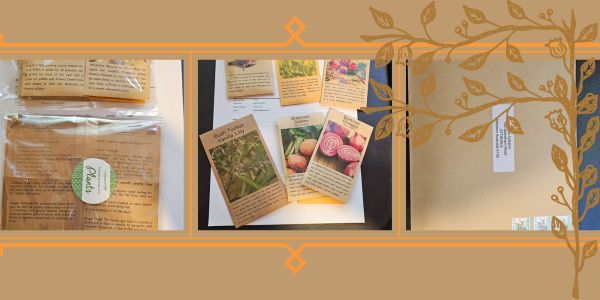
Not only are our seeds packed in recycled paper envelopes, we keep the theme going when we post out website orders. To protect your seeds from moisture and the letter box munchers (snails), we use a very special plastic free material made from plants. They are then put into recycled mailing envelopes. Green all the way 💚🌿
Delivery Guarantee
We take great care to make sure your seeds arrive safely. If your order is lost or damaged in transit, we’ll happily send a replacement. Unfortunately, we can’t replace or refund orders that arrive later than the estimated delivery date, as delays can sometimes occur that are outside our control.
Please note that all dispatch and delivery times listed are estimates only. While we do our best to post promptly, delivery timeframes can vary due to postal service delays, weather events, or other unforeseen circumstances. We’re unable to take responsibility for any loss, damage, or cost that results from a late delivery.
An order is not considered missing until at least 20 business days have passed from the postage date. You’ll receive an email once your seeds have been posted, letting you know they’re on their way. If you don’t see it in your main inbox, please check your Spam or Promotions folders as sometimes our emails like to hide there.
Reviews
There are no reviews yet