
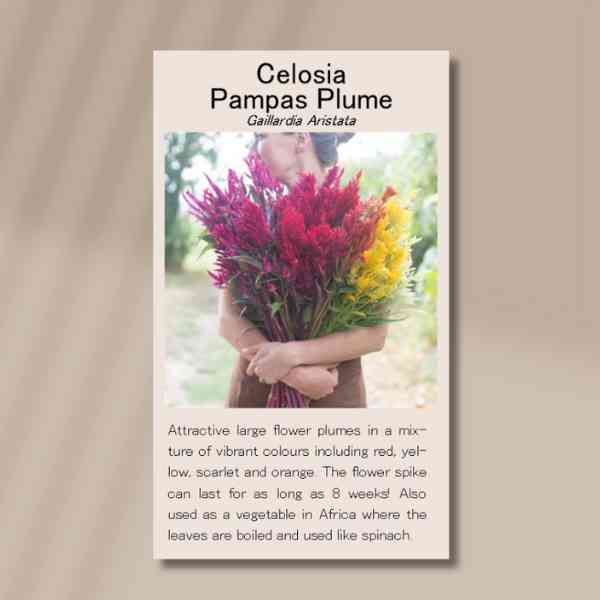






Celosia Pampas Plume
$4.95
Celosia Plumosa
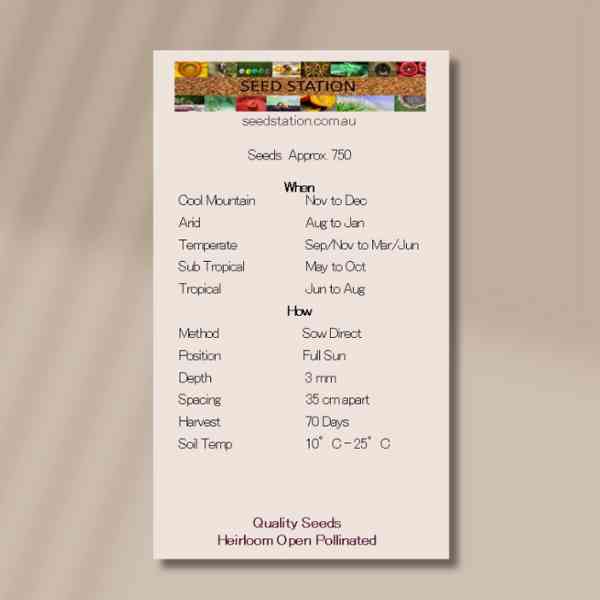
- Seed Count 750
- Long Lasting Cut Flower
- Annual
- Height 1 m
In stock
Description
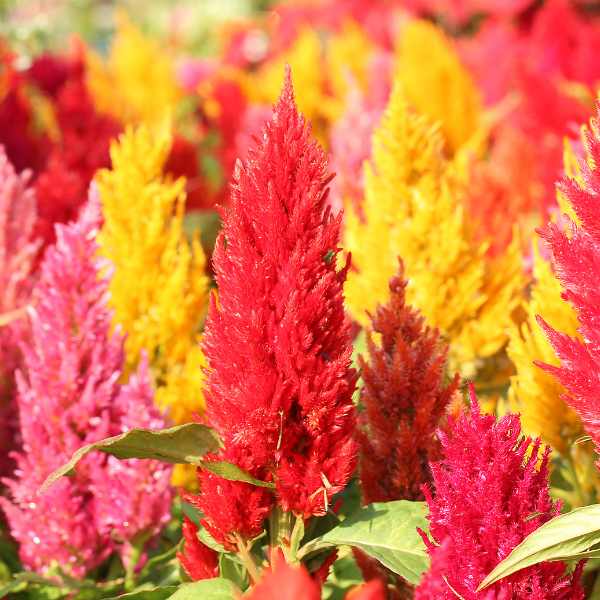
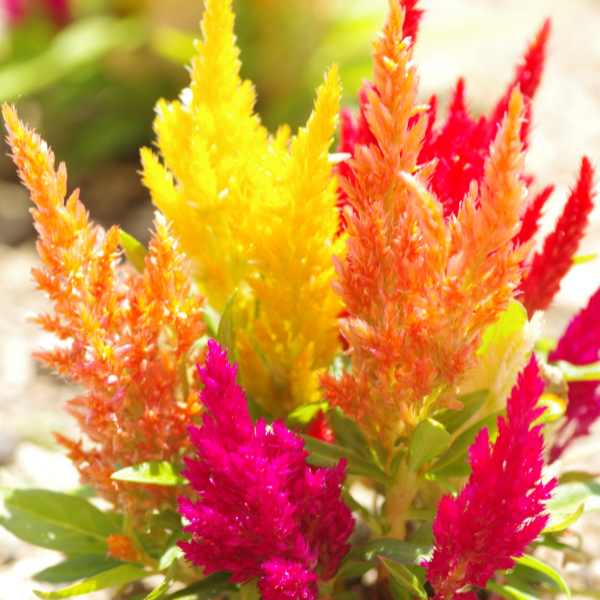
Celosia Pampas Plume with its feathery plumes in scarlet, orange, bright yellow, pink, and soft cream stands tall, colourful, and confident, adding height, texture, and movement wherever it is planted.
The plumes themselves are what most people fall in love with first. Each one rises proudly on stems that can reach up to 100 cm tall, creating a striking vertical element that works beautifully at the back of a flower bed. The feathery texture softens the look of mixed plantings, while the intense colour range ensures it never fades into the background. In a mass planting, the blend of colours creates a painterly effect that feels both lively and harmonious. In smaller numbers, individual plants still make a strong statement, especially when paired with more subdued foliage plants.It develops into a multi-branching plant with a generous, well-balanced form. Rather than producing just a single stem, it branches freely, resulting in multiple flower spikes per plant.
It copes with heat far better than many flowering annuals, holding its colour and form when other plants start to struggle. This makes it especially valuable in Australian gardens, where summer temperatures can be relentless. It is also fairly drought tolerant once established, which adds to its reputation as a dependable choice for gardeners who want strong results without constant fuss. It is a plant that understands resilience, standing tall even during hot, dry spells.
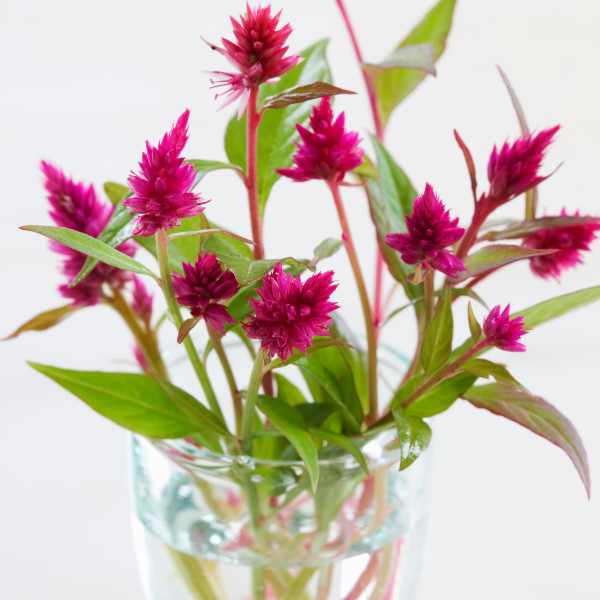
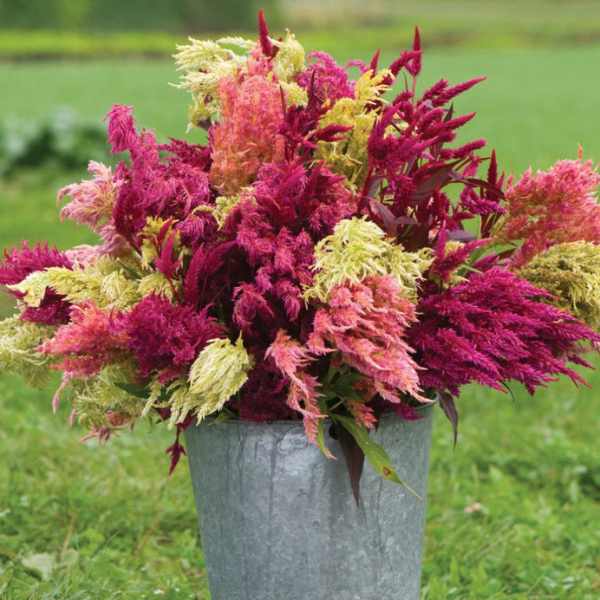
The tall stems and dramatic plumes translate effortlessly into floral arrangements, where they bring both colour and texture. and dried flowers are often used in everlasting arrangements and decorative displays.
In many parts of Africa, Celosia is grown not just for its flowers but also as a leafy vegetable, much like leaf amaranth. The leaves are tender and soften quickly when cooked, developing a flavour that is often compared to spinach. This dual-purpose nature gives the plant a rich cultural significance and reminds us that many ornamental plants have deep roots in traditional food systems.
| Method: Sow direct or seedlings | Soil Temp: 10°C - 25°C |
| Cool Mountain: Nov - Dec | Position: Part sun |
| Arid: Aug - Jan | Row Spacing: 30cm apart |
| Temperate: Sep-Nov, Mar-Jun | Planting Depth: 3 mm |
| Sub Tropical: May - Oct | Harvest: 70 days |
| Tropical: Jun - Aug | Plant Height: 1m |
🌼 Sowing in Trays vs Direct Sowing
Sowing in Trays
Growing Celosia in trays is the most reliable method, especially if you want strong, evenly spaced plants.
Use a fine seed raising mix and fill trays or punnets lightly, pressing the surface flat. Scatter the seed thinly over the surface. Do not bury the seed as Celosia needs light to germinate. Instead, gently press the seed into the mix and mist with water.
Place trays somewhere warm and bright but out of direct harsh sun. Ideal germination temperature is around 20 to 25°C. Keep the soil lightly moist, never wet. Germination usually occurs within 7 to 14 days.
Once seedlings have developed a few true leaves and are large enough to handle, transplant them into individual pots or directly into the garden after hardening them off gradually.
Direct Sowing
Direct sowing works best in warm regions where spring temperatures rise quickly.
Prepare a fine, weed-free seedbed. Scatter seed thinly over the surface and gently press it into the soil. Do not cover. Water with a fine mist to avoid washing seed away.
Keep the area consistently moist until seedlings appear. Thin seedlings early so plants are not competing for space. Direct sown plants often grow faster once established but are more vulnerable to cold snaps and uneven moisture early on.
🌿 Seed Pre Treatment
Celosia Pampas Plume does not require any seed pre treatment. No soaking, no chilling, no scarification.
Fresh seed, warmth and light are all that’s needed. The most common issue at this stage is overwatering, which can rot seed before it ever gets going.
🌞 Soil and Position
Celosia thrives in full sun. Aim for at least six hours of direct sunlight each day. More sun equals stronger stems and brighter plumes.
Soil should be well-draining but reasonably fertile. Heavy clay soils should be improved with compost and coarse organic matter to improve drainage. Sandy soils benefit from added compost to help retain moisture and nutrients.
A neutral to slightly acidic soil pH is ideal, though Celosia is fairly adaptable once established.
🌼 Care and Maintenance
Celosia is happiest when conditions are warm and consistent.
Water regularly, especially during hot weather, but allow the soil surface to dry slightly between watering. Constantly wet soil can cause root issues.
Feed lightly every two to three weeks with a balanced liquid fertiliser or seaweed solution. Too much nitrogen will result in lush leaves at the expense of flowers.
Tall varieties like Pampas Plume may need light staking in windy areas. Pinching out the growing tip when plants are young can encourage branching and more flower plumes, though it is optional.
Deadheading spent flowers keeps plants tidy and encourages continued blooming through summer and into early autumn.
🌻 Companion Planting Guide
Celosia fits beautifully into mixed flower and vegetable gardens.
Good companions include:
- Zinnias for similar sun and water needs
- Cosmos to attract pollinators
- Basil which enjoys the same warm conditions
- Amaranth for a dramatic, heat-loving combination
Avoid planting alongside:
- Shade-loving plants
- Crops that require constant moisture like lettuce
- Very tall, dense plants that will block airflow and sun
Good airflow is important to keep foliage healthy, especially in humid regions.
✂️ Harvesting Celosia Pampas Plume
For fresh flowers, harvest plumes when they are fully coloured and firm, but before any seed starts to form. Cut stems early in the morning for the longest vase life.
Celosia is also excellent as a dried flower. Harvest when plumes are mature and hang stems upside down in a warm, dry, dark place with good airflow. Once dried, the colour holds beautifully for months.
Regular harvesting encourages the plant to keep producing new blooms.
🐛 Common Issues and Fixes
| Problem | Likely Cause | Fix |
|---|---|---|
| Poor germination | Cold soil or buried seed | Sow on surface and wait for warmer conditions |
| Seedlings collapsing | Overwatering or poor airflow | Reduce watering and improve ventilation |
| Lots of leaves but few flowers | Too much nitrogen | Reduce feeding and switch to balanced fertiliser |
| Floppy stems | Insufficient sunlight or wind exposure | Move to full sun and stake if needed |
| Aphids | Warm weather and soft growth | Hose off or use insecticidal soap |
Most problems with Celosia trace back to too much water or not enough warmth.
🌾 Seed Saving Guide
Saving seed from Celosia Pampas Plume is straightforward and very satisfying.
Allow flowers to remain on the plant until they begin to dry and fade. You will notice tiny black seeds forming within the dried flower heads.
Cut the spent plumes on a dry day and place them upside down in a paper bag or on a tray indoors. As they dry further, gently rub or shake the flower heads to release the seed.
Separate seed from chaff by gently blowing or sifting. Store clean, dry seed in a labelled paper envelope or glass jar.
Keep seed in a cool, dry, dark place. Properly stored Celosia seed remains viable for around three to five years.
🌼 Final Thoughts
Celosia Pampas Plume is one of those flowers that brings instant drama to the garden with very little fuss once established. It loves heat, rewards consistency and shines in both garden beds and floral arrangements.
If your first attempt isn’t perfect, that’s okay. Celosia is a great teacher plant. Each season you’ll get a better feel for timing, watering and spacing, and before long it will become a summer staple you look forward to growing every year 🌱
Once you’ve grown it from seed, it’s hard not to save a little space for it again next season.
2 reviews for Celosia Pampas Plume
| 5 star | 100% | |
| 4 star | 0% | |
| 3 star | 0% | |
| 2 star | 0% | |
| 1 star | 0% |

Postage Charge
Orders under $35 attract a $4.95 shipping charge. Orders $35 and above have free shipping.
Order Times
Seed orders are normally dispatched within three business days. You will receive an email when seeds are mailed out.
Postage Days
Seeds are mailed out Tuesday to Friday at 1pm. Except for the Friday of long weekends.
Postage Times
WA 2-3 Days: SA,NT 3-5 Days: NSW, ACT, QLD, VIC: 5-7 Days
Carrier
We use Australia Post Letter Postage for the majority of orders
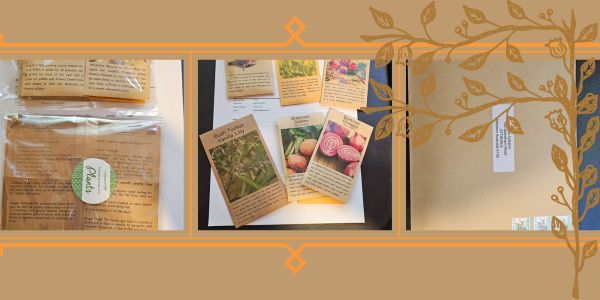
Not only are our seeds packed in recycled paper envelopes, we keep the theme going when we post out website orders. To protect your seeds from moisture and the letter box munchers (snails), we use a very special plastic free material made from plants. They are then put into recycled mailing envelopes. Green all the way 💚🌿
Delivery Guarantee
We take great care to make sure your seeds arrive safely. If your order is lost or damaged in transit, we’ll happily send a replacement. Unfortunately, we can’t replace or refund orders that arrive later than the estimated delivery date, as delays can sometimes occur that are outside our control.
Please note that all dispatch and delivery times listed are estimates only. While we do our best to post promptly, delivery timeframes can vary due to postal service delays, weather events, or other unforeseen circumstances. We’re unable to take responsibility for any loss, damage, or cost that results from a late delivery.
An order is not considered missing until at least 20 business days have passed from the postage date. You’ll receive an email once your seeds have been posted, letting you know they’re on their way. If you don’t see it in your main inbox, please check your Spam or Promotions folders as sometimes our emails like to hide there.

See all our verified customer reviews on our official CusRev profile.
See all our verified customer reviews on our official CusRev profile.