





Bergamot, Wild
$4.95
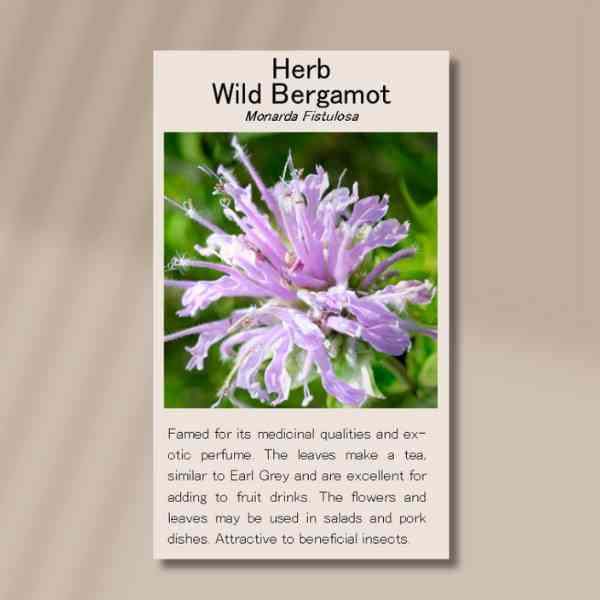
Monarda Fistulosa
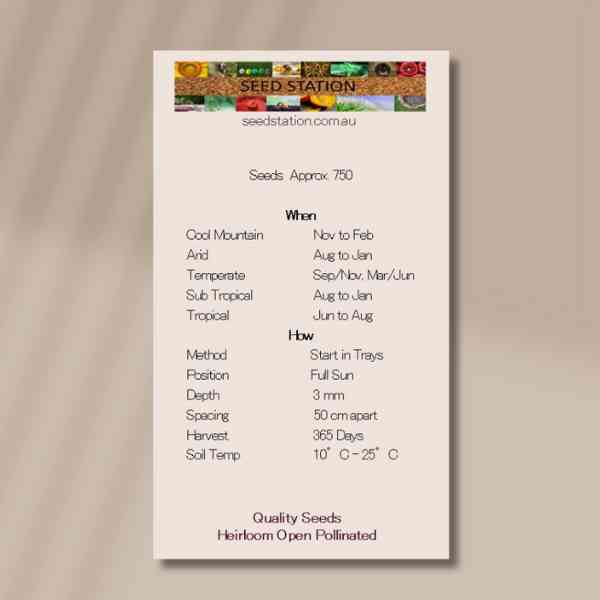
- Seed Count 750
- Highly Perfumed
- Perennial
- Height 90 cm
In stock
Description
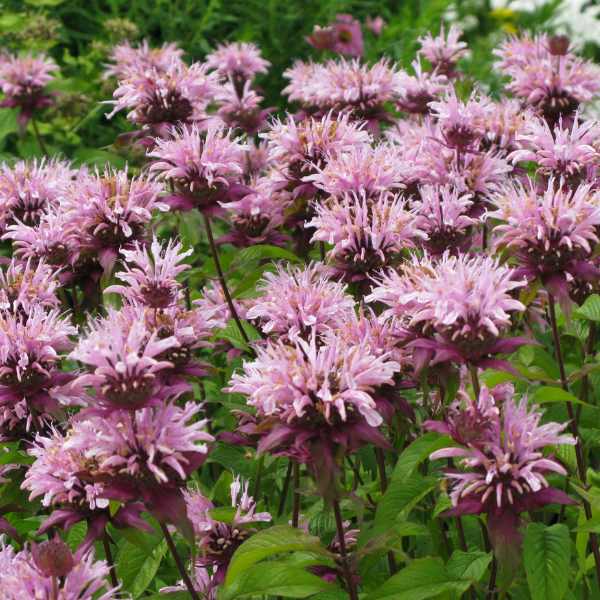
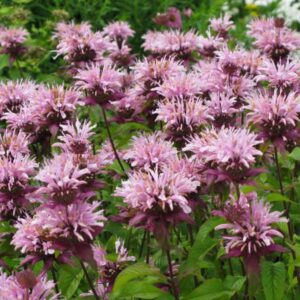
There are plants we grow for flavour, others for beauty, and some simply because they make the whole garden feel a little more alive. Wild Bergamot, also known as Wild Bee Balm, happily ticks all three boxes. With its lush green clumps, abundant mauve-purple blooms, and a heady, herbaceous perfume that lingers on the breeze, this is one of those truly versatile herbs that’s just as at home among your tomatoes as it is weaving through the edges of a flower border.
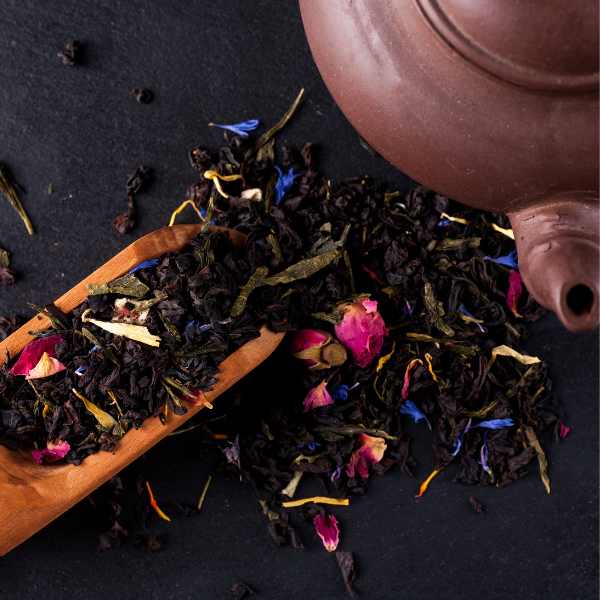
The foliage gives off a sweet, spicy scent, something like oregano, citrus peel, and a hint of thyme all rolled into one. If you’ve ever had a cup of Earl Grey tea, the familiar bergamot aroma will ring a bell. Although this species doesn’t contain the exact oil used in the traditional blend, its leaves make a beautiful herbal tea with a similarly uplifting flavour.
Beyond the teapot, Wild Bergamot’s leaves and flowers bring a lovely touch to fresh summer cooking. The young leaves are often used sparingly in salads or as a garnish for pork and poultry dishes, where their slightly citrusy, peppery flavour adds a welcome kick.
The edible flowers, with their vibrant colour and delicate spice, make an eye-catching addition to drinks, desserts, and savoury plates alike. Try floating a few petals in lemonade, freezing them into ice cubes for a fancy twist, or sprinkling them over grilled vegetables just before serving.
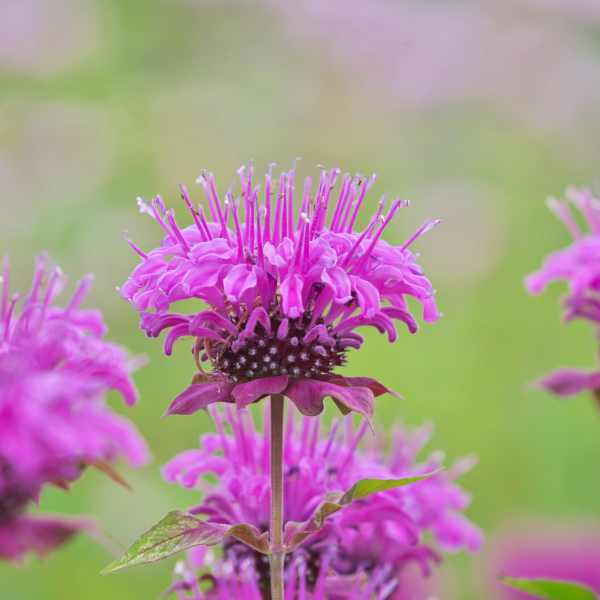
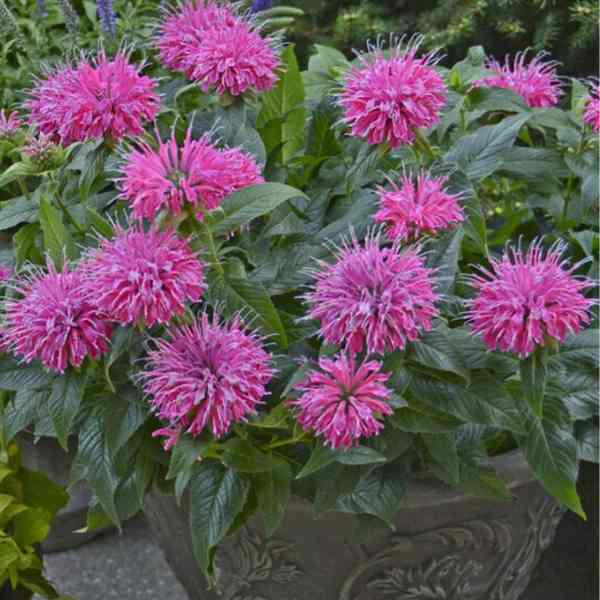
Wild Bergamot is a member of the mint family, and you’ll notice it shares that fresh, clean quality both in the way it grows and the way it smells. The plants form upright clumps of toothed, aromatic green foliage, with each stem topped by a generous display of shaggy, lavender-mauve blooms through the warmer months. This loose, natural shape makes it perfect for cottage gardens, pollinator strips, or wildflower-inspired plantings.
It’s a hardy, dependable grower that stands tall even through hot, dry summers. Once it’s settled in, it becomes a self-sufficient, bouncing back from winter with ease and flowering reliably year after year. It grows well in full sun to part shade and handles a wide range of soil types—from poor, sandy beds to rich loamy soils, and even clay if the drainage is halfway decent.
Wild Bergamot isn’t just lovely to look at and pleasant to smell, it’s also one of the best plants you can grow to support beneficial insects in your garden. The name ‘Bee Balm’ is no accident; bees absolutely adore it, and you’ll often find bumblebees, honeybees, and solitary bees buzzing around its flowers on warm days.
But it’s not just bees. Butterflies, hoverflies, and all manner of tiny garden allies are drawn to it too, which can make a noticeable difference in the health and productivity of your veggie patch. Tucked in beside your tomatoes, squash, or beans, Wild Bergamot acts like a living lure, helping ensure good pollination while distracting pests from more vulnerable plants.
For gardeners who like to keep things as natural as possible, this kind of plant is pure gold. You don’t need to spray when your garden is humming with natural pest patrol.
| Method: Start in trays | Soil Temp: 10°C - 25°C |
| Cool Mountain: Nov - Feb | Position: Full sun |
| Arid: Aug - Jan | Row Spacing: 50 cm |
| Temperate : Sep/Nov - Mar/June | Planting Depth: 3 mm |
| Sub Tropical: May - Oct | Harvest: 365 Days |
| Tropical: Jun - Aug | Plant Height: 90 cm |
🥄 Sowing Wild Bergamot: In Trays vs Direct in the Ground
Sowing in Trays (Recommended)
Wild Bergamot is best started in seed trays or small pots, especially in areas with variable rainfall or heavy clay soils. Starting in trays gives you control over moisture, heat, and protection from curious birds or slugs.
Sow in late winter to early spring in cooler regions, or late summer to autumn in warmer climates to avoid intense heat.
Use a free-draining seed raising mix. Scatter seeds thinly on the surface — they need light to germinate, so don’t bury them. Instead, gently press them onto the surface and mist to settle. Keep moist, not wet.
Germination can take 10–30 days, and patience is key — wild bergamot doesn’t like to be rushed.
Once seedlings are a few centimetres tall and have two or more true leaves, pot them on or harden off before transplanting.
Direct Sowing (Possible, but Riskier)
Direct sowing is possible in well-prepared, weed-free beds, especially in areas with lighter soils and mild climates. As the seeds are tiny and light-sensitive, sow on the surface and water in gently. Keep consistently moist until germination — a tricky ask in full sun or dry weather.
🛁 Seed Pre-Treatment: Is It Needed?
Yes — but it’s easy.
Wild Bergamot has natural dormancy, and germination improves with a simple cold stratification. This mimics winter conditions and encourages more even sprouting.
Here’s how:
- Mix seeds with damp sand or vermiculite in a zip-lock bag.
- Pop it in the fridge for 2–4 weeks.
- Then sow as usual.
You can also sow seeds into trays, leave them outside in a sheltered spot over winter, and let nature do the work. This “passive stratification” often works just as well.
🧱 Soil & Position
Wild Bergamot prefers light, well-draining soil with good fertility, but it’s forgiving. If you’ve got loam or sandy loam, you’re set. In clay or boggy soils, improve drainage with compost and coarse sand, or grow in a raised bed.
Choose a full sun to part shade position — full sun encourages better flowering and oil production, but in hotter inland areas, light afternoon shade will protect against scorching.
Wild Bergamot thrives on moderate watering. Once established, it’s reasonably drought-tolerant, but too much water or humidity can bring on mildew.
🛠️ Care & Maintenance
Watering: Moderate and regular while young, tapering off as it matures. Mulch helps retain moisture and keeps weeds down.
Feeding: A yearly top-up of compost or a handful of organic slow-release fertiliser in spring is all it needs. Too much nitrogen can lead to leafy growth at the expense of flowers.
Pruning: Deadhead regularly to keep flowers coming. In late autumn, cut stems back to just above ground level.
Airflow is key. Space plants at least 40–50cm apart, especially in humid climates. Good air circulation helps prevent powdery mildew.
🌻 Companion Planting Guide
Wild Bergamot is the ultimate team player. It attracts pollinators, deters pests, and looks gorgeous doing it.
Great Companions:
- Tomatoes & Capsicums – improve pollination.
- Basil & Dill – enhance herbal diversity and bee traffic.
- Lettuce or leafy greens – enjoy dappled shade from taller plants.
- Native flowers or Echinacea – stunning visual and ecological match.
Avoid: Crowding it near mildew-prone plants like zucchini or cucumbers in humid areas — airflow is important.
✂️ Harvesting
Flowers can be picked when just opened for the best colour and flavour. They dry beautifully for tea or potpourri.
Leaves are best harvested in the morning before flowering, when oils are at their peak. Use fresh in herbal teas or dry quickly in the shade.
A single well-grown plant can give multiple harvests over a season.
🐞 Common Issues & Fixes
| Issue | Symptom | Fix |
|---|---|---|
| Powdery mildew | White powdery film on leaves | Improve airflow, water at soil level, apply milk spray or neem. |
| Aphids | Sticky leaves, distorted new growth | Spray with soap solution or blast with water. Encourage ladybirds. |
| Poor germination | Few or no seedlings appear | Use cold stratification, maintain consistent moisture. |
| Leggy seedlings | Spindly growth, leaning | More light. Move to brighter position or use grow lights. |
| Rust or leaf spots | Discoloured leaves, early die-back | Remove affected foliage, avoid overhead watering. |
🌱 Seed Saving Guide
Wild Bergamot is a prolific seed producer, and saving seed is easy once you know how.
When to Harvest:
Seed heads mature late summer to early autumn. Wait until the flower heads dry on the stem, and seeds rattle when shaken.
How to Collect:
- Cut dried seed heads and place in a paper bag.
- Allow to dry further indoors for a week.
- Gently crush the heads to release seeds.
- Winnow or use a sieve to separate seed from chaff.
Storage Tips:
- Store seeds in a cool, dark place in a labelled envelope or jar.
- Use within 2–3 years for best germination.
Wild Bergamot is mostly self-pollinating but can cross with other Monarda species, so if you’re saving seed for true-to-type plants, avoid growing different varieties too close together.
🌼 Final Thoughts
Wild Bergamot is one of those deeply generous plants — the more love you give it, the more it gives back. Whether you’re planting for the bees, the beauty, or the brews, it’s a low-maintenance, high-reward perennial herb that belongs in every garden.
So if you’re looking for something a little different, a little tougher, and a whole lot lovely — give Wild Bergamot a go. It just might become one of your favourites too.
6 reviews for Bergamot, Wild
| 5 star | 100% | |
| 4 star | 0% | |
| 3 star | 0% | |
| 2 star | 0% | |
| 1 star | 0% |

Postage Charge
Orders under $35 attract a $4.95 shipping charge. Orders $35 and above have free shipping.
Order Times
Seed orders are normally dispatched within three business days. You will receive an email when seeds are mailed out.
Postage Days
Seeds are mailed out Tuesday to Friday at 1pm. Except for the Friday of long weekends.
Postage Times
WA 2-3 Days: SA,NT 3-5 Days: NSW, ACT, QLD, VIC: 5-7 Days
Carrier
We use Australia Post Letter Postage for the majority of orders
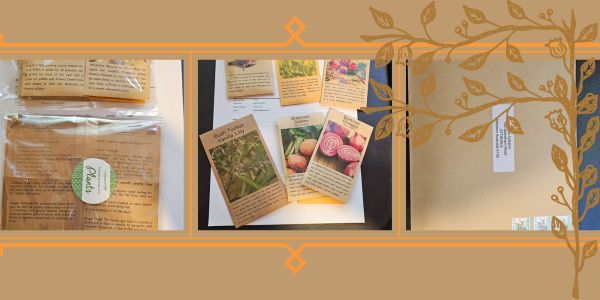
Not only are our seeds packed in recycled paper envelopes, we keep the theme going when we post out website orders. To protect your seeds from moisture and the letter box munchers (snails), we use a very special plastic free material made from plants. They are then put into recycled mailing envelopes. Green all the way 💚🌿
Delivery Guarantee
We take great care to make sure your seeds arrive safely. If your order is lost or damaged in transit, we’ll happily send a replacement. Unfortunately, we can’t replace or refund orders that arrive later than the estimated delivery date, as delays can sometimes occur that are outside our control.
Please note that all dispatch and delivery times listed are estimates only. While we do our best to post promptly, delivery timeframes can vary due to postal service delays, weather events, or other unforeseen circumstances. We’re unable to take responsibility for any loss, damage, or cost that results from a late delivery.
An order is not considered missing until at least 20 business days have passed from the postage date. You’ll receive an email once your seeds have been posted, letting you know they’re on their way. If you don’t see it in your main inbox, please check your Spam or Promotions folders as sometimes our emails like to hide there.
See all our verified customer reviews on our official CusRev profile.
See all our verified customer reviews on our official CusRev profile.
See all our verified customer reviews on our official CusRev profile.
See all our verified customer reviews on our official CusRev profile.
See all our verified customer reviews on our official CusRev profile.