
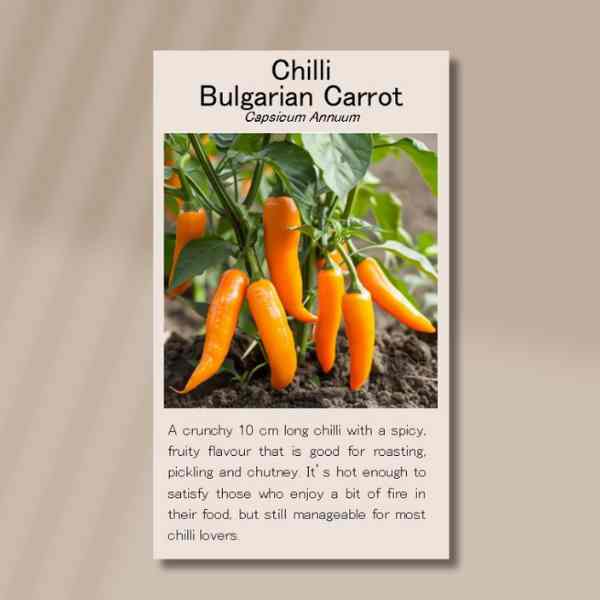






Chilli Bulgarian Carrot
$4.95
Capsicum Annuum
- Seed Count 15
- Heat: 10,000 Scoville
- Perennial
In stock
Description
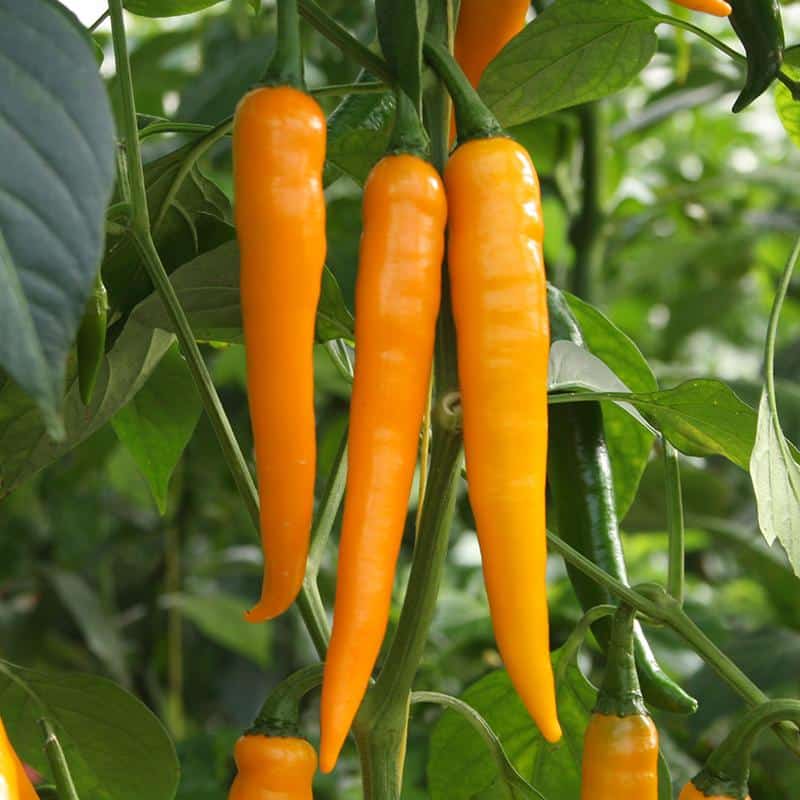
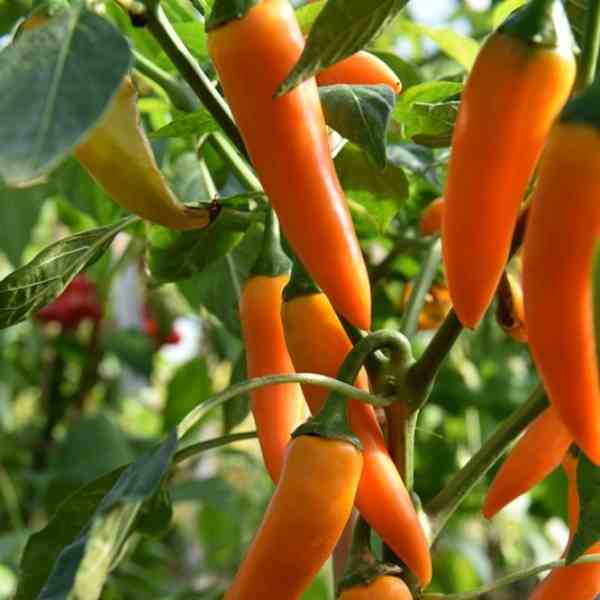
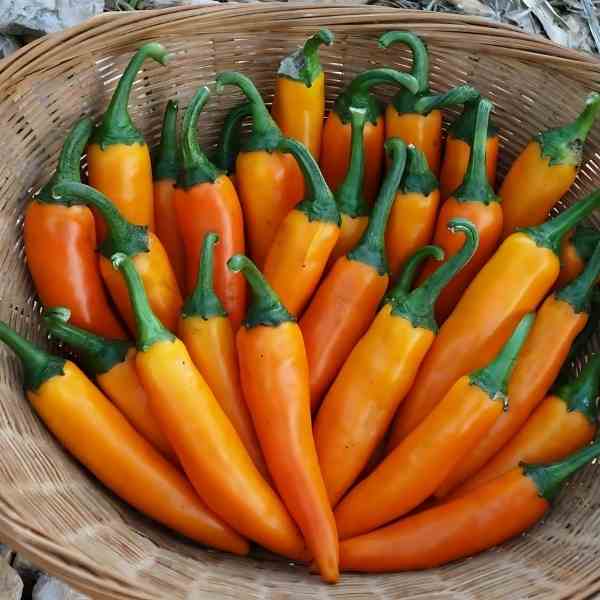
The Chilli Bulgarian Carrot has glowing orange skin, a long tapered shape, and an upright, compact. Growing to around 10 cm in length, each chilli tapers to a soft point. In its early stages, the fruit starts out green and gradually shifts to a rich, glossy orange as it ripens. In a world where chilli varieties range from mild and mellow to eye-wateringly volcanic, the Bulgarian Carrot sits in that happy middle ground. It’s hot enough to satisfy those who enjoy a bit of fire in their food, but still manageable for most chilli lovers.
It’s the kind of chilli you’ll find yourself using in more ways than you expected. Toss it into a stir-fry, slice it raw into salsa, roast it whole with garlic and oil, or let it shine in a homemade chilli chutney. It also holds up remarkably well to pickling, retaining both its crunch and that characteristic pop of heat.
It’s excellent in pickling jars, where the firm skin and vibrant colour hold up well over time. It also makes a very good base for chilli sauces and pastes—particularly those that benefit from a slightly sweet, fruity note. In a cooked sauce, the citrusy undertone mellows just slightly, adding complexity without overwhelming the rest of the ingredients. For home cooks who enjoy experimenting, this is a chilli that offers a lot of scope.
It also dries fairly well. While its flesh is a bit thicker than some traditional drying chillies, the pods can be strung up and left to cure naturally or popped into a dehydrator. Once dry, they grind down into a lovely orange-red powder that’s great for seasoning everything from roasted veggies to marinades and rubs.
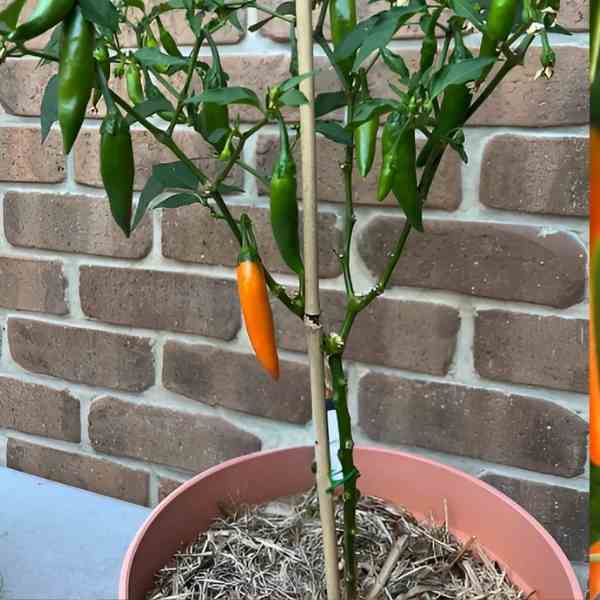
The plant itself is tidy and compact, growing to around 60 cm in height with a robust, upright habit. It’s a reliable producer with the fruits growing in clusters, making for a colourful display as they ripen. It grows exceptionally well in pots and containers, which makes it a standout choice for balconies, courtyards, or smaller backyard setups. A sunny position and a medium-sized pot are all it really needs to produce a generous crop. It’s also a good fit for those looking to add edible plants to a mixed ornamental garden.
| Method: Start in trays | Soil Temp: 18°C - 35°C |
| Cool Mountain: Sep - Dec | Position: Full sun |
| Arid: Jul - Dec | Row Spacing: 1 m |
| Temperate: Aug - Dec | Planting Depth: 5mm |
| Sub Tropical: Aug - Mar | Harvest: 90 Days |
| Tropical: Apr - Jul | Frost Sensitive |
🧺 Starting from Seed: Trays vs. Direct Sowing
Sowing in Trays (Recommended)
Chillies are best started in trays or punnets, especially in cooler parts of Australia. They’re slow to germinate and love consistent warmth—conditions that are easier to control in a protected spot.
- Timing: In warm regions, you can start seed in late winter. In cooler zones, wait until early spring or use a heat mat to kickstart germination indoors.
- Method: Sow seeds 0.5cm deep into a fine seed-raising mix. Keep moist but not soggy. Ideal germination temp: 24–30°C.
- Tip: A heated propagator or sunny windowsill can shave a week or more off germination time.
- Transplanting: Once seedlings have 4–6 true leaves and the weather has warmed, harden them off gradually before planting out.
Direct Sowing (Not Ideal, but Possible)
If you’re in the far north or have a long, hot growing season, you can sow directly—but be prepared for lower germination rates and slower starts.
- Wait until soil temps stay above 20°C day and night.
- Choose a sheltered, sunny position and enrich the soil beforehand.
- Protect seedlings from slugs, snails, and early pests.
💧 Seed Pre-treatment
Chilli seeds have a tough coat and can be slow to germinate. While not strictly necessary, soaking seeds can help:
- Soak in warm water for 6–8 hours before sowing.
- For older seed or stubborn varieties, a weak chamomile tea soak can help soften the seed coat and reduce fungal risk.
🌞 Soil and Position
Chillies love a warm, sunny spot and rich, free-draining soil.
- Soil Prep: Work in plenty of compost and aged manure. A sprinkle of blood and bone or a balanced organic fertiliser adds extra oomph.
- pH Range: Slightly acidic to neutral (6.0–7.0).
- Spacing: 40–60cm apart depending on the variety.
- Sunlight: Minimum 6 hours direct sun—more is better!
🛠️ Care and Maintenance
Once in the ground, chillies are fairly low fuss—but they do need consistent love to fruit heavily.
Watering
- Keep soil evenly moist but never waterlogged.
- Avoid watering the leaves—water at the base to reduce fungal issues.
Feeding
- Feed fortnightly with a seaweed tonic or compost tea.
- Once flowering starts, switch to a potassium-rich feed to support fruiting.
Mulching
- Use sugarcane mulch or straw to retain moisture, regulate temperature, and keep weeds down.
Staking
- Taller or heavily laden plants benefit from gentle staking to avoid snapped stems.
🌿 Companion Planting Guide
Chillies enjoy the company of these garden friends:
| Good Companions | Why? |
|---|---|
| Basil | Enhances flavour and repels aphids |
| Marigold | Deters thrips and nematodes |
| Spring onion & chives | Confuse pests and boost nearby growth |
| Nasturtium | Attracts aphids away from chillies |
| Carrots | Make use of lower root space |
Avoid planting near beans or fennel—these can inhibit growth.
✂️ Harvesting
- Timing: Chilli fruits are ready 8–12 weeks after transplanting, depending on variety and weather.
- Technique: Use scissors or snip by hand with care. Don’t yank—this can damage branches.
- Pick Often: Regular harvesting encourages more fruit to set.
- Ripening Tip: If cool weather hits before full ripening, pick and let them colour up indoors on a sunny windowsill.
🐛 Common Issues and Fixes
| Problem | Symptoms | Fix |
|---|---|---|
| Aphids | Clusters of green or black insects on tips and leaves | Spray with neem oil or insecticidal soap; encourage ladybugs |
| Blossom End Rot | Sunken, blackened ends on fruit | Inconsistent watering or calcium deficiency—mulch and water regularly |
| Powdery Mildew | White powdery coating on leaves | Improve airflow, avoid overhead watering, treat early with milk spray or bicarb solution |
| Leaf Curl or Yellowing | Can be viral or pest-related | Remove affected leaves, isolate plant, check for pests under leaves |
| Chilli Thrips | Silvery streaks, curled deformed new leaves, scarring on fruit | Remove affected tips, spray with neem oil or insecticidal soap every 3–5 days |
| Encourage predatory insects like lacewings; avoid broad-spectrum pesticides | ||
| Root Knot Nematodes | Stunted growth, swollen roots | Practice crop rotation, solarise soil, add organic matter and marigolds |
| Sunscald | Pale, leathery patches on fruit exposed to direct sun | Use shadecloth or companion plants to protect during heatwaves |
🌱 Seed Saving Guide
Saving chilli seed is wonderfully straightforward and a great way to preserve your favourite varieties year after year.
- Choose Open-Pollinated Varieties: Hybrids may not grow true to type.
- Select the Best Fruit: Let a few chillies ripen fully on the plant until they wrinkle slightly.
- Harvest Seeds:
- Cut open and scrape seeds onto a plate.
- Dry in a warm, well-ventilated spot out of direct sun for 5–7 days.
- Storage:
- Once crisp-dry, store in an envelope or airtight container in a cool, dry spot.
- Label with variety and date—seeds remain viable for up to 3 years.
- Isolation Tip:
- If you’re growing multiple varieties, be aware of cross-pollination. Hand-pollinating or spacing 10m+ apart helps maintain purity.
🌟 Final Thoughts
Chillies are a garden delight, offering colour, heat, and flavour to your kitchen. From fiery birds eyes to smoky jalapeños, there’s a chilli for every palate. Starting them from seed might test your patience early on, but once they take off, they’re prolific and rewarding. A bit of warmth, a touch of care, and a watchful eye on pests like chilli thrips will set you up for a long and spicy harvest season.
💡 Pro tip from my own patch: start your chilli seeds a few weeks earlier than tomatoes, and you’ll hit the ground running come spring. Even a handful of early fruit makes the extra effort worthwhile.

Postage Charge
Orders under $35 attract a $4.95 shipping charge. Orders $35 and above have free shipping.
Order Times
Seed orders are normally dispatched within three business days. You will receive an email when seeds are mailed out.
Postage Days
Seeds are mailed out Tuesday to Friday at 1pm. Except for the Friday of long weekends.
Postage Times
WA 2-3 Days: SA,NT 3-5 Days: NSW, ACT, QLD, VIC: 5-7 Days
Carrier
We use Australia Post Letter Postage for the majority of orders
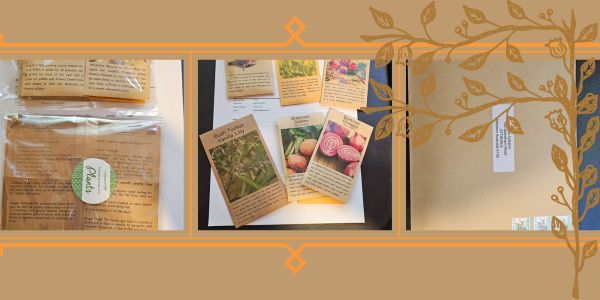
Not only are our seeds packed in recycled paper envelopes, we keep the theme going when we post out website orders. To protect your seeds from moisture and the letter box munchers (snails), we use a very special plastic free material made from plants. They are then put into recycled mailing envelopes. Green all the way 💚🌿
Delivery Guarantee
We take great care to make sure your seeds arrive safely. If your order is lost or damaged in transit, we’ll happily send a replacement. Unfortunately, we can’t replace or refund orders that arrive later than the estimated delivery date, as delays can sometimes occur that are outside our control.
Please note that all dispatch and delivery times listed are estimates only. While we do our best to post promptly, delivery timeframes can vary due to postal service delays, weather events, or other unforeseen circumstances. We’re unable to take responsibility for any loss, damage, or cost that results from a late delivery.
An order is not considered missing until at least 20 business days have passed from the postage date. You’ll receive an email once your seeds have been posted, letting you know they’re on their way. If you don’t see it in your main inbox, please check your Spam or Promotions folders as sometimes our emails like to hide there.

Reviews
There are no reviews yet