

Hamburg Root Parsley
$4.95
Petroselinum Tuberosum
- Seed Count 300
- Parsnip Like Roots
- Biennial
In stock
Description
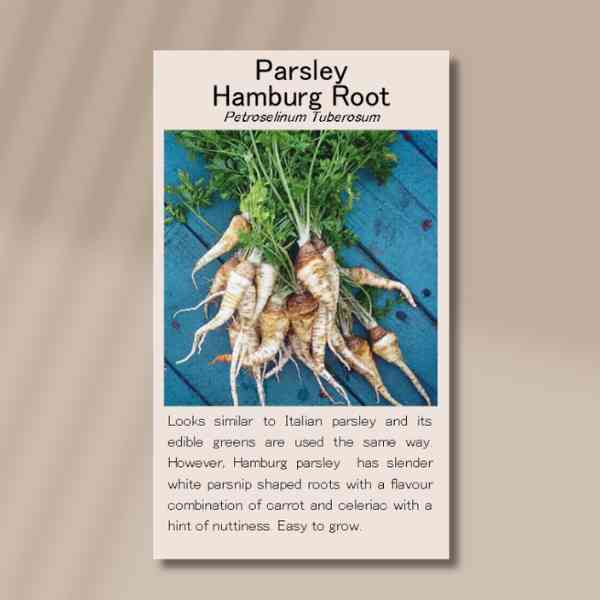
Hamburg Root Parsley is an unusual vegetable. Although not as common as other root veggies, parsley root is extremely delicious and deserves to be better known.
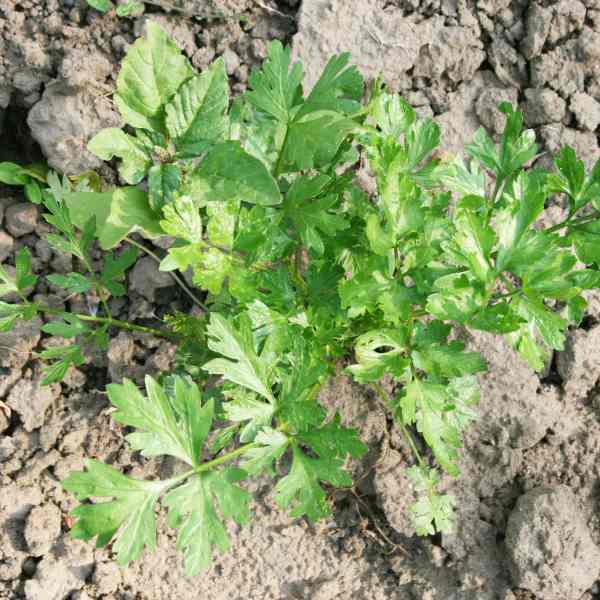
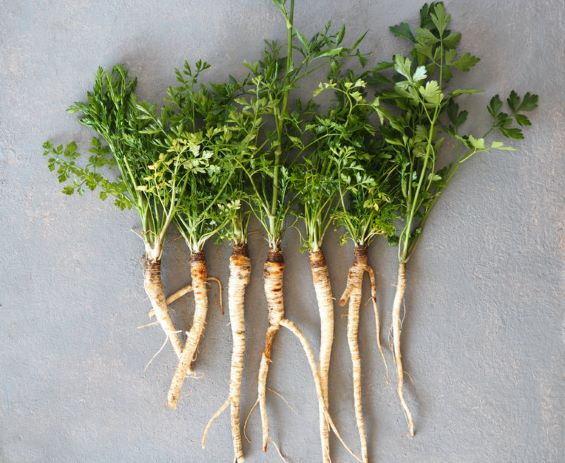
This unique plant serves a dual purpose, offering both flavourful roots and aromatic leaves and is ideal for gardeners eager to explore new flavours and textures.
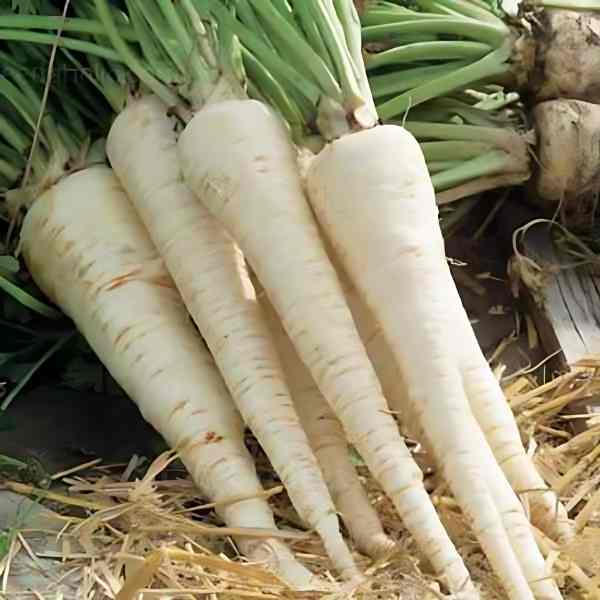
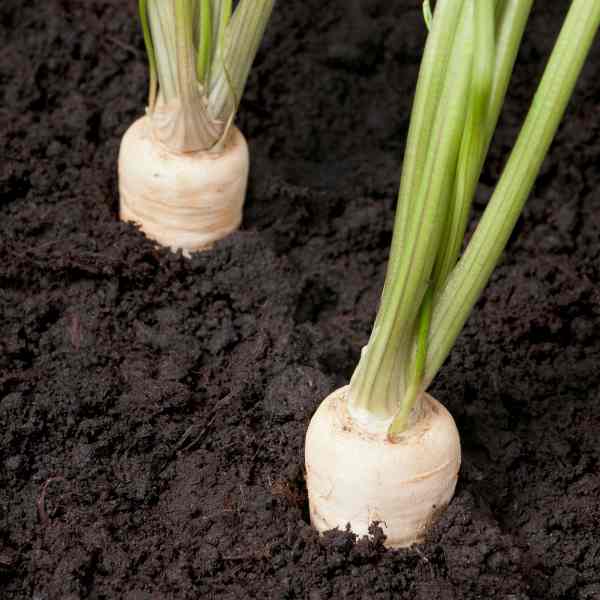
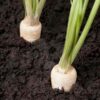
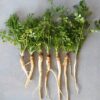
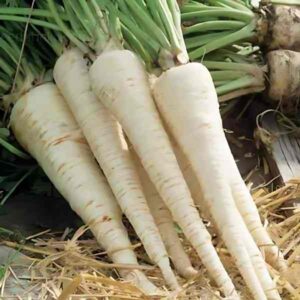
The roots look like parsnips, and are about 15cm long and 5cm wide in muted tones of white with a furrowed texture; however looks is where the similarities end.
Its taste is quite different from parsnip, it is sweet, tender, without any of the earthiness of a parsnip – rather like a carrot that’s been cooked with parsley for flavouring. It’s intriguingly, deliciously different.
Parsley Root is very common in Central and Eastern European cuisines, particularly in winter recipes. The root is snappy, yet tender when raw, and smooth and creamy once cooked.
It works particularly well in combination with other roots and tubers such as carrots, potatoes, turnips, and onions.
The root can be used like other root vegetables, and it can be raw in salads or cooked in soups, stews, and casseroles.
Its leaves can also be used as a fresh herb, adding flavor to dishes similarly to flat-leaf parsley.
Once harvested, the roots can be stored in a cool, dry place for several weeks. They can also be kept in the refrigerator for longer freshness.
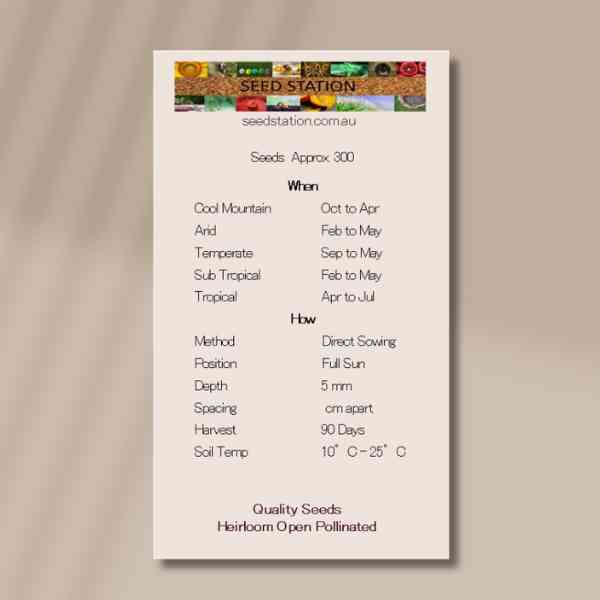
| Method: Start in trays | Soil Temp: 10°C - 30°C |
| Cool Mountain: Oct -Apr | Position: Full sun |
| Arid: Feb - May | Row Spacing: 25 cm apart |
| Temperate: Sep - May | Planting Depth: 5mm |
| Sub Tropical: Feb - May | Harvest: 120 Days |
| Tropical: Apr - Jul | Plant Height: 60cm |
🌿 Hamburg Root Parsley Grow Guide
Hamburg root parsley, also called root parsley or turnip-rooted parsley, is a biennial parsley grown mainly for its pale, parsnip-like root rather than its leaves. It grows a rosette of parsley foliage above ground while building a long edible root below, so the whole crop does best when it can develop steadily, without checks to growth or root disturbance. It is usually treated as an annual for eating, though it can be carried through its second year if you want seed.
🌱 Sowing in trays vs direct sowing
For this crop, direct sowing is the better method. Because Hamburg root parsley is grown for its taproot, anything that bends, constricts, or disturbs that root early can lead to forked, misshapen, or stunted roots. General parsley can be transplanted with care, but extension guidance notes parsley has a taproot and that germination is often slow and uneven, which is why many growers are tempted to raise seedlings first. For Hamburg root parsley, however, that convenience usually comes at the cost of root quality.
Direct sowing suits it best because the seedling can send its root straight down from the start. Sow into a fine, stone-free seedbed, cover only lightly because parsley seed is small, and keep the surface consistently moist until seedlings appear. Once they are up, thin them so each plant has room to form a full root. RHS specifically notes that Hamburg parsley seedlings should be thinned to about 20 cm apart.
Tray sowing is only worth doing if conditions outside are difficult or you need tighter pest control at the seedling stage. If you go this route, sow one seed per deep cell or tube, avoid pricking out, and transplant very young before roots circle the pot. Even then, expect a higher chance of forked roots than with direct sowing. That is why, for this particular seed, direct sowing wins.
🛠️ Seed pre-treatment
Parsley seed is well known for slow and uneven germination, but a true pre-treatment is not essential. The seed can simply be sown fresh into evenly moist soil and given patience. Some gardeners like to soak seed briefly before sowing to speed water uptake, but the core requirement is moisture consistency rather than any special treatment. In other words, no mandatory pre-treatment is required for Hamburg root parsley.
A more useful “pre-treatment” than soaking is preparation of the bed itself: remove clods and stones, rake to a fine tilth, and make sure the soil does not crust over after watering. Purdue notes that small parsley seed should be covered very lightly, and that in heavier soils a lighter covering such as peat, sand, or leaf mould can help prevent crusting.
🪴 Soil and position
Hamburg root parsley grows best in fertile, moist but well-drained soil in full sun or partial shade. A root crop needs soil that is both nourishing and open enough for the root to expand cleanly. Rich organic matter helps with moisture retention and root health, but the bed should not be freshly loaded with coarse, undecomposed material that can cause branching. Good drainage matters because wet, stagnant ground encourages rot and weak growth.
The ideal soil is deep, friable, and stone-free. Heavy or compacted ground can still grow the plant, but roots are more likely to be short, twisted, or forked. If your soil is dense, grow on a raised bed or mound and break up the ground well before sowing. Container growing is possible, but only in deep containers so the root has room to develop downward.
💧 Care and maintenance
The biggest job with Hamburg root parsley is consistent moisture. RHS notes that the roots put on much of their growth over summer and should be kept well watered during active bulking. Deep watering is better than frequent splashing because it encourages the root to travel downward and prevents stop-start growth. Allowing the bed to swing from bone dry to soggy is one of the easiest ways to end up with disappointing roots.
Once seedlings are established, thin carefully and avoid repeatedly disturbing the soil around them. Keep the bed weed-free, especially while plants are small, because early competition slows the root before it has a chance to size up. A light mulch can help steady moisture and suppress weeds, but keep it loose around the crown so the top of the root does not stay constantly wet.
Feeding should be moderate rather than excessive. A fertile bed with compost already incorporated is usually enough. High nitrogen pushes soft leafy growth, while the aim here is balanced top growth supporting a strong root. If the foliage looks pale and growth stalls in poor soil, a gentle side-dressing is enough.
🤝 Companion planting guide
Hamburg root parsley belongs to the carrot family, so companion planting is most useful for pest management and beneficial insect support. Because parsley and carrots share several pests, avoid packing Hamburg root parsley right beside large plantings of carrots, parsnips, celery, or celeriac if carrot fly is a problem in your garden. Gardeners’ World specifically notes that parsley is among the crops that attract carrot fly, and growing multiple susceptible relatives close together can make the pest’s job easier.
Helpful companions include onions, garlic, and other strongly scented alliums, which are traditionally paired with carrot-family crops in attempts to confuse pests, and coriander, which RHS notes has been found to sometimes deter unwanted insects in parsley plantings. Parsley is also often tucked near tomatoes, where it can help attract beneficial insects, though that is more of a whole-garden biodiversity strategy than a direct growth booster.
A practical companion guide for Hamburg root parsley looks like this:
- Good nearby partners: onions, garlic, chives, coriander, tomatoes
- Use caution nearby: carrots, parsnips, celery, celeriac, dill
- Reasoning: reduce shared pest pressure, increase beneficial insect activity, and avoid concentrating all carrot-family crops in one spot.
🧺 How to harvest
Harvest when the root is well sized and firm, lifting carefully with a fork rather than pulling hard on the leaves. Hamburg root parsley can be used much like parsnip or celeriac, and the foliage can also be used sparingly as parsley. RHS notes the roots can be harvested through autumn and early winter, and can also be left in the ground and lifted as needed, with flavour improving after frosts as starches convert to sugars.
To harvest cleanly, loosen the soil beside the row first, then lever the roots upward gently to avoid snapping them. Brush off loose soil rather than washing immediately if you plan to store them. Damaged or cracked roots should be used first. Sound roots can remain in the bed for staged harvests provided the soil does not become impossible to dig. (RHS)
🐛 Common issues and fixes
Hamburg root parsley can suffer from the same pest and disease group as parsley, carrots, and celery, especially carrot fly, aphids, slugs, celery leaf miner, and leaf spot. Septoria leaf spot is specifically noted by Wisconsin as the most common parsley disease, and RHS lists carrot fly, aphids, celery leaf miner, slugs, leaf spot, and virus among likely problems.
| Issue | What you may notice | Likely cause | Fix |
|---|---|---|---|
| Poor germination | Patchy or very slow emergence | Parsley seed naturally germinates slowly and unevenly | Keep the seedbed evenly moist, sow shallowly, and prevent crusting on the soil surface. |
| Forked or misshapen roots | Split, twisted, or branched roots | Transplant shock, root disturbance, stones, compact soil | Direct sow where possible and prepare a deep, loose, stone-free bed. |
| Carrot fly damage | Rusty tunnels, scarring, yellowing foliage, secondary rot | Larvae feeding in the root | Use insect-proof mesh or barriers, avoid growing beside other heavily susceptible carrot-family crops, and rotate beds. |
| Slug or snail damage | Ragged holes, seedlings disappearing overnight | Slugs/snails feeding on young plants | Protect seedlings early, reduce hiding spots, hand-pick, and consider deep pots or raised setups where pressure is severe. |
| Aphids | Clusters on soft growth, curling leaves, sticky residue | Sap-feeding insects | Wash off with water, tolerate light infestations, and encourage predators such as hoverflies and ladybirds. |
| Leaf spot | Dark spotting, yellowing, declining foliage | Often Septoria or related leaf spot disease | Remove affected foliage, avoid overhead crowding and poor airflow, and start with clean seed. |
| Weak roots with lots of leaf | Lush tops but poor root size | Overfeeding with nitrogen or repeated growth checks | Use balanced fertility, steady watering, and avoid pushing excess leaf growth. |
🌼 Detailed seed saving guide
Saving seed from Hamburg root parsley is very doable, but it takes patience because parsley is a biennial. In the first year it makes leaves and a storage root. In the second year it sends up flowering stalks, then sets seed. Illinois Extension notes that parsley overwinters and then bolts the following season, producing a seed stalk and much tougher foliage. That second-year flowering phase is exactly what you need for seed saving.
Start by selecting the best roots at harvest time. Choose roots that are true to type: straight, healthy, well formed, and free of disease. These are your parent plants. Replant or leave a group of them to continue into their second year. Do not save seed from weak, forked, or diseased roots, because you will carry those traits forward. This is the heart of good seed stewardship: save from the plants you would happily grow again.
Isolation matters. Parsley is listed by Seed Savers Exchange as an insect-pollinated biennial with a recommended isolation distance of roughly 800 feet to 1/2 mile for proper variety maintenance and genetic preservation. For a home garden, the practical takeaway is simple: do not let another parsley variety flower nearby if you want seed that stays true. If you cannot isolate by distance, use caging or blossom bagging strategies to reduce crossing.
Population size matters too. Seed Savers Exchange lists 5 plants as enough for viable seed, but 20 to 50 plants as better for maintaining variety quality, with larger numbers best for true genetic preservation. In a home setup, saving from at least several healthy roots is far better than saving from only one survivor.
When flowering begins, let umbels mature fully on the plant. Seed is ready when the heads dry down and the seed changes from green toward brown. Harvest the drying umbels into paper bags before they shatter too badly. Iowa State’s herb drying guidance also supports collecting browning seed heads into paper bags, then allowing them to finish drying before cleaning.
To clean the seed, rub or crumble the dry umbels gently so the seed falls free, then sieve or winnow out the chaff. Spread cleaned seed in a thin layer and let it dry thoroughly before storage. Store in a cool, dark, dry place in a labelled envelope or jar. Seed Savers Exchange notes parsley seed is relatively short lived, so it is best used sooner rather than treated as a long-term archive.
One final note: only save seed from open-pollinated stock if your goal is reliable repeat performance. Keep careful labels so you know which roots were selected and which seed came from them. Over a few generations, this lets you shape a strain that handles your own soil and conditions better each cycle.
✨ Final thoughts
Hamburg root parsley rewards a patient grower. It is not difficult, but it does ask for the right start: direct sowing, loose soil, even moisture, and minimal disturbance. Treat it like a root crop first and a parsley second, and the results improve dramatically. The foliage is a bonus, but the real prize is the smooth, aromatic root beneath the soil.
Among the two sowing methods, the strongest recommendation for this seed is clear: sow direct whenever possible. That one choice does more than anything else to preserve root shape, crop quality, and overall ease of growing.
3 reviews for Hamburg Root Parsley
| 5 star | 100% | |
| 4 star | 0% | |
| 3 star | 0% | |
| 2 star | 0% | |
| 1 star | 0% |
Postage Charge
Orders under $35 attract a $4.95 shipping charge. Orders $35 and above have free shipping.
Order Times
Seed orders are normally dispatched within three business days. You will receive an email when seeds are mailed out.
Postage Days
Seeds are mailed out Tuesday to Friday at 1pm. Except for the Friday of long weekends.
Postage Times
WA 2-3 Days: SA,NT 3-5 Days: NSW, ACT, QLD, VIC: 5-7 Days
Carrier
We use Australia Post Letter Postage for the majority of orders
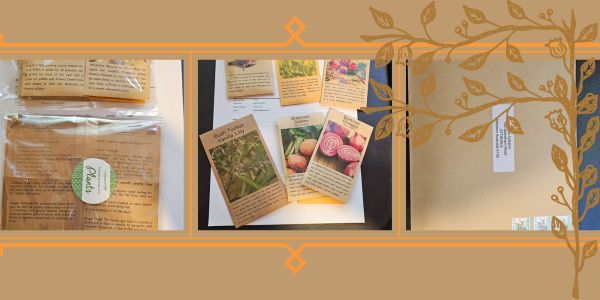
Not only are our seeds packed in recycled paper envelopes, we keep the theme going when we post out website orders. To protect your seeds from moisture and the letter box munchers (snails), we use a very special plastic free material made from plants. They are then put into recycled mailing envelopes. Green all the way 💚🌿
Delivery Guarantee
We take great care to make sure your seeds arrive safely. If your order is lost or damaged in transit, we’ll happily send a replacement. Unfortunately, we can’t replace or refund orders that arrive later than the estimated delivery date, as delays can sometimes occur that are outside our control.
Please note that all dispatch and delivery times listed are estimates only. While we do our best to post promptly, delivery timeframes can vary due to postal service delays, weather events, or other unforeseen circumstances. We’re unable to take responsibility for any loss, damage, or cost that results from a late delivery.
An order is not considered missing until at least 20 business days have passed from the postage date. You’ll receive an email once your seeds have been posted, letting you know they’re on their way. If you don’t see it in your main inbox, please check your Spam or Promotions folders as sometimes our emails like to hide there.
See all our verified customer reviews on our official CusRev profile.
Very happy with purchase and price
See all our verified customer reviews on our official CusRev profile.
See all our verified customer reviews on our official CusRev profile.