

Chives Garlic
$4.95
Allium Tuberosum
- Seed Count 200
- Culinary Herb
- Perennial
In stock
Description
Garlic chives are a relatively new vegetable to the English-speaking world, they’ve long been a staple in Asian kitchens. Known as Ku Chai in Chinese cooking, garlic chives bring a flavour that sits somewhere between garlic and onion, yet softer, gentler, and far more versatile than either. Their taste is often described as more like garlic than chives, though it’s distinctly milder, making them perfect for dishes where garlic’s bite might overwhelm. Both the flat green leaves and the stalks of the flowers are used much like chives, green onions, or garlic, lending depth and richness without dominating the plate.
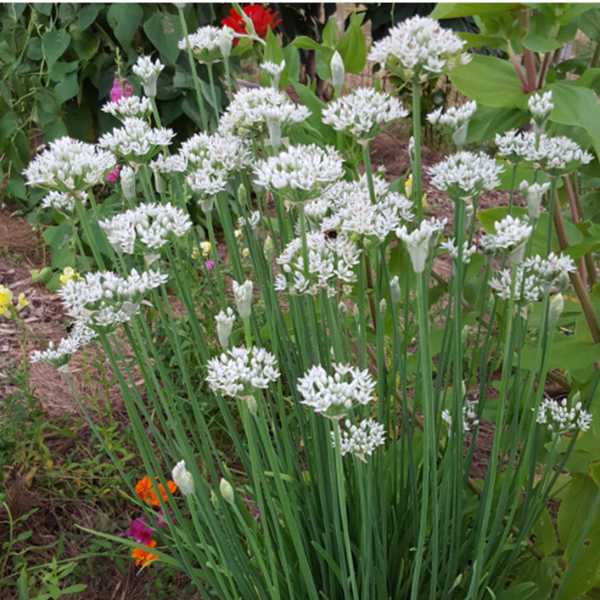
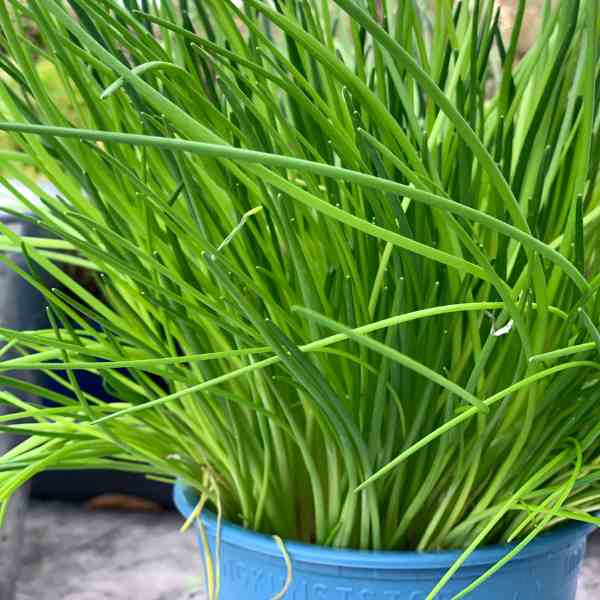
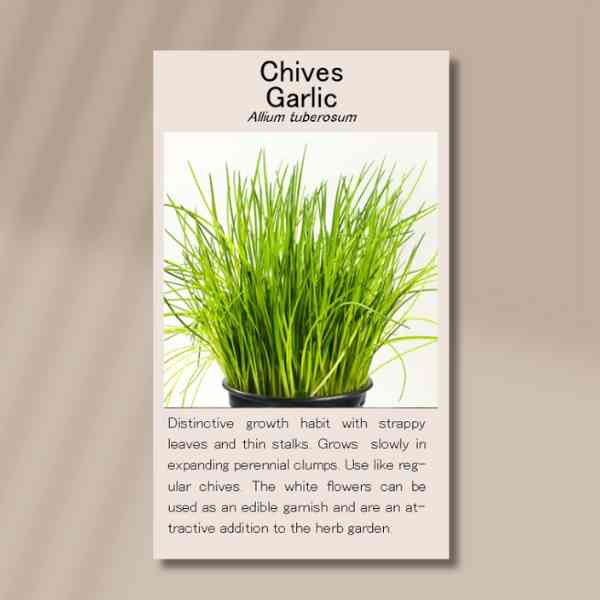
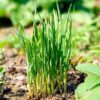
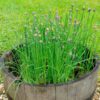
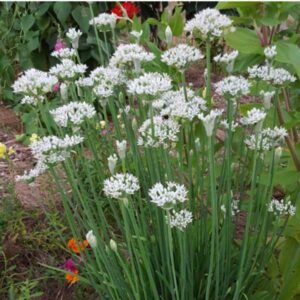
Garlic chives grow in neat, slowly expanding clumps, making them a tidy addition to a garden bed or even a large pot. Their strap-shaped leaves are flat and broad compared to the hollow stems of regular chives, and from these clumps rise tall, straight flowering stalks topped with clusters of fine white blossoms. The effect is quite striking: a soft mound of green anchored below, with elegant stems rising well above the leaves, crowned with flowers that attract bees and other pollinators in abundance. In full bloom, garlic chives add a gentle, airy beauty to the garden, as well as a steady supply of edible flowers.
Unlike many herbs that are valued only for their leaves, garlic chives are generous in every part. The bulbs, though small, can be used much like shallots, offering another layer of versatility to the plant. The leaves provide everyday cooking value, the flowers double as spice and garnish, and even the flower stalks themselves can be cooked and enjoyed.
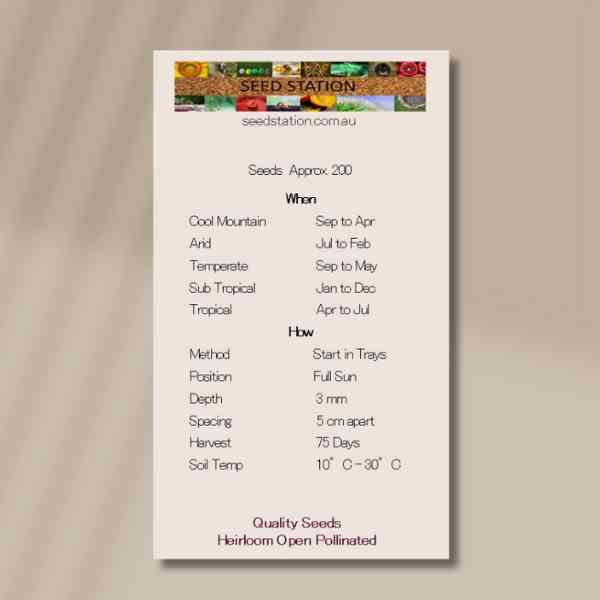
| Method: Sow direct | Soil Temp: 10°C - 30°C |
| Cool Mountain: Sep - Apr | Position: Full sun |
| Arid: Jul - Feb | Row Spacing: 15 cm |
| Temperate: Sep - May | Planting Depth: 3 mm |
| Sub Tropical: Jan - Dec | Harvest: 75 Days |
| Tropical: Apr - Jul | Plant Height: 30cm |
🌱 Sowing Chives: Trays vs. Direct Sowing
Chives can be grown from seed either by starting in trays or by sowing direct into the garden, depending on your space, climate, and personal rhythm in the garden.
Sowing in Trays
Starting chives in trays gives you more control—particularly over temperature and watering—during the early stages. It’s great for cooler regions or when you want to get a jump-start on the season.
- When to sow: Late winter to early spring in temperate areas, or autumn in subtropical zones. They’ll germinate best in soil temperatures around 15–21°C.
- How to sow: Sow very thinly into seed trays or punnets filled with quality seed-raising mix. Chives are slow to germinate (often 10–14 days), so patience is key here.
- Tip: Cover seeds lightly—just a dusting of soil is enough—and keep trays moist, not soggy. A misting spray works well.
Once seedlings are around 5–7cm tall and have at least two sets of true leaves, you can transplant them out into the garden.
Direct Sowing
Direct sowing is best suited to gardeners in warmer regions or during the warmer months. Just remember, they take their time to emerge, so mark your rows!
- How to sow direct: Choose a weed-free, well-prepared bed. Sow very thinly in shallow furrows around 6mm deep, spaced 15cm apart.
- Watering: Gently water and keep soil moist until germination. Thin seedlings to around 10–15cm apart once established.
🌾 Is Seed Pre-Treatment Required?
No special pre-treatment is needed for chive seeds. They don’t need soaking or stratification—just a little time and steady moisture to wake them up.
🌞 Soil & Position
Chives are easy-going, but they do have preferences that’ll help them thrive:
- Soil: Well-drained, fertile soil with plenty of organic matter. Slightly alkaline to neutral pH (around 6.0–7.0) is ideal.
- Sunlight: Chives love the sun—aim for a full sun spot (6+ hours a day), though they’ll tolerate light shade, especially in hotter climates.
- Drainage matters: Wet, boggy soils can cause bulb rot. If your soil holds water, consider planting chives in raised beds or large pots.
🌿 Care & Maintenance
Once your chive plants are established, they’ll pretty much look after themselves—but a bit of attention goes a long way.
Watering
Chives like even moisture, especially in dry spells. Water deeply once or twice a week in summer. In containers, they’ll need more frequent watering.
Feeding
A light application of liquid seaweed or compost tea every few weeks keeps them growing lush and green. Avoid high-nitrogen fertilisers—they’ll promote too much leaf growth at the expense of flavour.
Trimming
Regular cutting not only gives you herbs for the kitchen, but it also keeps the plant compact and prevents it from flowering too early. Once they flower, growth slows down.
Mulching
Mulch around the base to conserve moisture and keep weeds down—just keep the mulch clear of the crown to prevent rot.
🌼 Companion Planting Guide
Chives are team players in the garden! Their strong scent can repel aphids, carrot fly, and even mildew, making them wonderful companions.
| Grows Well With | Why it Works |
|---|---|
| Carrots | Helps deter carrot fly. |
| Tomatoes | Repels aphids and boosts flavour. |
| Strawberries | May reduce fungal disease. |
| Roses | Reduces black spot and aphids. |
| Cabbage family | Deters cabbage moth. |
Avoid planting with: Beans and peas—chives may stunt their growth.
✂️ Harvesting Chives
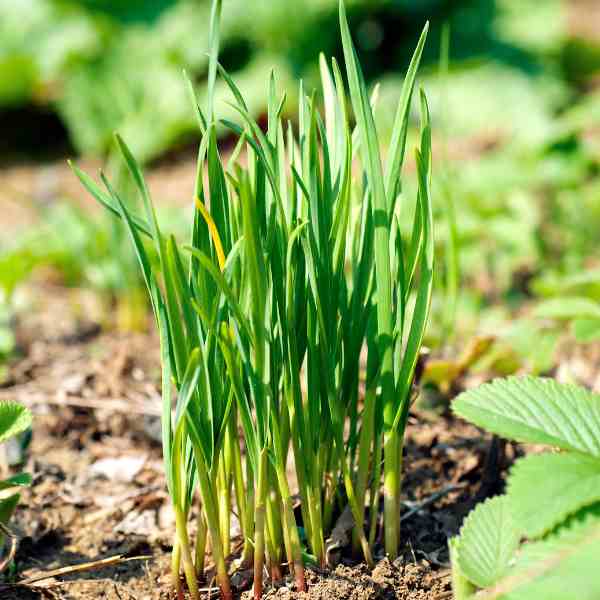
Harvest as soon as plants are about 15cm tall. The more you cut, the more they grow—think of them like a living herb fountain!
- How to harvest: Use clean scissors to cut leaves down to 2–3cm above the soil.
- Best time: Morning is best, when the leaves are crisp and full of moisture.
- Flowers: The blooms are edible, too—mild onion flavour with a peppery finish. Snip them young and toss into salads or dry them for later use.
🐛 Common Issues & Fixes
| Problem | Symptoms | Fix |
|---|---|---|
| Damping off | Seedlings collapse and die | Improve air flow, don’t overwater. Use sterile mix. |
| Slugs & snails | Ragged holes in young seedlings | Use beer traps, crushed eggshells, or copper tape. |
| Aphids | Clusters on new growth | Spray with soapy water or neem oil. Introduce ladybirds. |
| Rust fungus | Orange pustules on leaves | Improve spacing, remove affected leaves, avoid overhead watering. |
| Leaf yellowing | Poor drainage or nutrient imbalance | Check watering, improve soil with compost or balanced fertiliser. |
🌾 Saving Chive Seeds
Chives are open-pollinated and self-seeding, making them ideal for seed saving if you want to build up your own seed stock.
How to Save Seeds:
- Let some flower heads mature—don’t deadhead all of them.
- The flowers will fade and develop into small round seed pods.
- Wait until the seed heads turn brown and papery.
- Cut the whole stem, place upside-down in a paper bag, and allow it to dry completely indoors.
- Shake or rub the heads to release the tiny black seeds.
- Store in a cool, dry, dark place in an envelope or jar. Label with the date!
💡 Chive seeds have a relatively short viability—aim to use them within 1–2 years for the best germination rates.
🌱 Final Thoughts
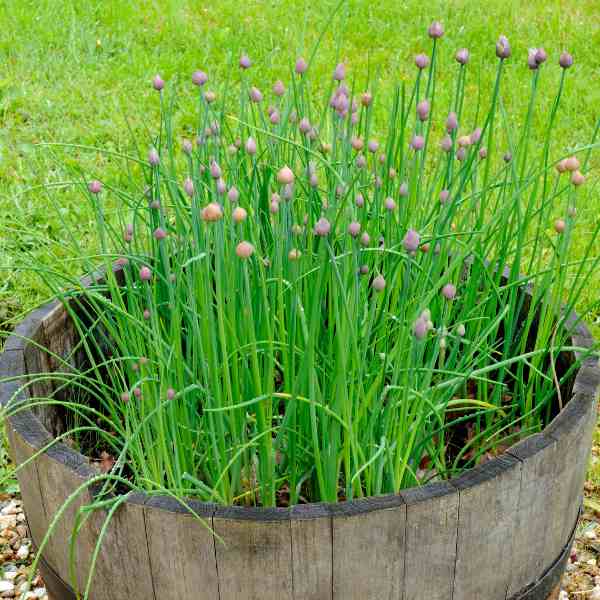
Chives are the sort of herb that fits into any garden—big or small, beginner or expert. They ask for so little but give so much. From fresh omelettes to brightening up the garden with their purple pom-pom blooms, they’re a joyful, useful addition to any patch.
Whether you’re filling a few pots on the patio or building out your perennial herb garden, chives deserve a spot. And once they’re in, you’ll wonder how you ever did without them.
Happy sowing—and don’t forget to keep a bunch by the back door for easy snipping! 🌿✂️
2 reviews for Chives Garlic
| 5 star | 100% | |
| 4 star | 0% | |
| 3 star | 0% | |
| 2 star | 0% | |
| 1 star | 0% |

Postage Charge
Orders under $35 attract a $4.95 shipping charge. Orders $35 and above have free shipping.
Order Times
Seed orders are normally dispatched within three business days. You will receive an email when seeds are mailed out.
Postage Days
Seeds are mailed out Tuesday to Friday at 1pm. Except for the Friday of long weekends.
Postage Times
WA 2-3 Days: SA,NT 3-5 Days: NSW, ACT, QLD, VIC: 5-7 Days
Carrier
We use Australia Post Letter Postage for the majority of orders
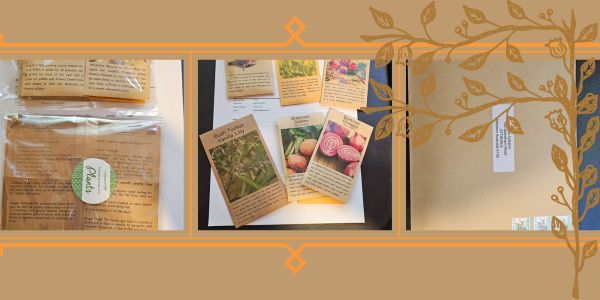
Not only are our seeds packed in recycled paper envelopes, we keep the theme going when we post out website orders. To protect your seeds from moisture and the letter box munchers (snails), we use a very special plastic free material made from plants. They are then put into recycled mailing envelopes. Green all the way 💚🌿
Delivery Guarantee
We take great care to make sure your seeds arrive safely. If your order is lost or damaged in transit, we’ll happily send a replacement. Unfortunately, we can’t replace or refund orders that arrive later than the estimated delivery date, as delays can sometimes occur that are outside our control.
Please note that all dispatch and delivery times listed are estimates only. While we do our best to post promptly, delivery timeframes can vary due to postal service delays, weather events, or other unforeseen circumstances. We’re unable to take responsibility for any loss, damage, or cost that results from a late delivery.
An order is not considered missing until at least 20 business days have passed from the postage date. You’ll receive an email once your seeds have been posted, letting you know they’re on their way. If you don’t see it in your main inbox, please check your Spam or Promotions folders as sometimes our emails like to hide there.
Looking forward to planting this
See all our verified customer reviews on our official CusRev profile.
Haven’t planted as I’m moving house
See all our verified customer reviews on our official CusRev profile.