Tamarillo: A Full Seed-to-Table Growing Guide
If you’re looking to grow something a little different this season—something that adds a touch of the exotic to your patch but still plays nicely with the Aussie climate—the Tamarillo might just be your next garden adventure. Also known as the “tree tomato,” the Tamarillo isn’t your run-of-the-mill fruit. It’s striking, productive, and surprisingly versatile in the kitchen. And the best part? You can grow it from seed at home.
This guide is your one-stop-shop for everything you need to know about Tamarillo—from its fascinating botanic history, to how it thrives in Australia, a step-by-step seed growing guide, why it’s a brilliant addition for curious gardeners, and finally, how you can transform your harvest into mouthwatering dishes in the kitchen.
🌱 A Quick Botanic History of the Tamarillo
The Tamarillo (Solanum betaceum), is part of the Solanaceae family which makes it a cousin of tomatoes, potatoes, and eggplants. Originating in the cool highland regions of South America, particularly Ecuador, Peru and Colombia, the Tamarillo has been cultivated for centuries. Indigenous Andean communities have prized it not only for its bright, tangy fruit but also for its ease of growth and impressive yield.
The fruit was introduced to New Zealand in the late 19th century, where it thrived so well that Kiwis began breeding it into new cultivars. Fun fact: the name “Tamarillo” was actually coined by a New Zealand nurseryman in the 1960s to make the fruit sound more exotic and appealing to export markets. Before that, it was simply known as the “tree tomato.”
While it’s been quietly making appearances in Australian gardens for some time, it’s still a bit of a hidden gem among backyard growers—making it the perfect fruit for those wanting to grow something off the beaten track.
🌞 How Well Does Tamarillo Grow in Australia?
In short? Exceptionally well—if you give it the right spot.
Tamarillo trees thrive in many parts of Australia, particularly in temperate, subtropical, and tropical climates. Think coastal NSW, QLD, northern VIC and the Perth region in WA. In cooler areas, like the southern highlands or Tasmania, you’ll need to protect young plants from frost, especially during their first few winters.
What’s great is that Tamarillo trees are relatively compact. They usually top out around 2 to 3 metres in home gardens, making them perfect for suburban backyards or even large containers. They’re fast growers too, often fruiting in their second year when started from seed which, in tree terms, is pretty speedy!
Like tomatoes, they love a sunny position, regular feeding, and protection from harsh wind. The tree’s soft wood and shallow root system make it vulnerable in exposed spots, so pick a spot with shelter, or give it a little support as it matures.
🌱 Growing Tamarillo from Seed: A Step-by-Step Guide
Growing Tamarillo from seed is a rewarding experience—and it’s surprisingly simple once you get the hang of it. Here’s how to get started:
🧺 1. Start With Fresh Seed
Like many Solanaceae family plants, Tamarillo seeds germinate best when they’re fresh. If you’ve saved seed from a ripe fruit, give them a gentle rinse to remove the surrounding gel which contains natural germination inhibitors. Allow them to dry for a day or two before sowing.
Or, if you’re buying from a reliable seed store (like ours 😉), you can be confident the seed has been stored correctly and is ready to go.
🪴 2. Sowing
- When to sow:
- Tropical and Subtropical zones: Anytime, though spring and early summer are ideal.
- Temperate zones: Late spring to early summer.
- Cool/mountain areas: Late spring—be cautious of frost.
- How to sow:
Use seedling trays or small pots filled with a good-quality seed raising mix. Sow seeds about 0.5cm deep. Keep moist but not soggy. - Germination:
Seeds usually sprout within 3–5 weeks, depending on temperature. A warm spot (around 21–27°C) speeds things up. If you’re sowing during cooler months, a heat mat can help.
🌱 3. Growing On
Once seedlings are around 10–15cm tall and have several true leaves, they’re ready to be potted up or planted out.
- Potting up:
Use a premium potting mix with good drainage. A 30–40cm diameter pot will keep your tree happy for at least a year. - Planting out:
Choose a warm, sunny, wind-protected position with well-draining soil. Enrich the soil with compost or aged manure before planting. Mulch well and water deeply.
🧡 4. Care and Maintenance
- Water:
Tamarillos don’t like drying out—regular watering is key, especially during fruiting. - Feeding:
A slow-release fertiliser in spring, plus a liquid feed every few weeks during the growing season will keep things moving. - Pruning:
Prune in late winter or early spring to shape the tree and encourage branching (which equals more fruit). Tamarillo fruits on new wood, so a yearly prune is actually beneficial. - Pests:
Keep an eye out for aphids and whiteflies. Neem oil or a homemade soap spray usually does the trick. - Frost:
In cool zones, protect young trees with fleece or bring them into a sheltered space.
🌿 Growing Something a Bit Different
Let’s face it—there’s a certain joy in growing something your neighbours aren’t. Tamarillo fits that bill beautifully. It’s unusual, striking, and a brilliant talking point when you’re giving friends a garden tour.
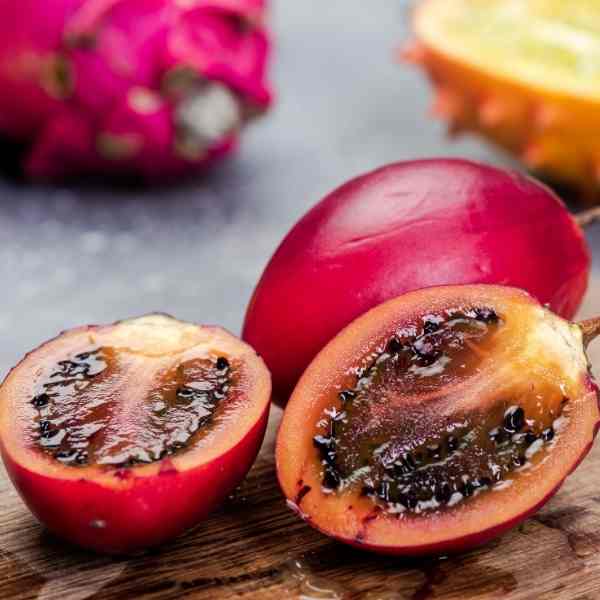
The fruit itself is a bit of a curiosity—egg-shaped, deep red or golden, with a smooth skin and rich, tangy flesh that’s unlike anything else. Some say it’s like a cross between passionfruit and tomato; others compare it to guava or even plum. The point is: it’s unique.
And if you’re trying to grow more food at home, Tamarillo offers a surprisingly generous harvest for the space it takes up. One healthy tree can produce kilos of fruit in a single season, with minimal fuss.
🍴 What Can You Do With Tamarillo in the Kitchen?
Here’s where things get really fun.
Tamarillo’s bold flavour isn’t for everyone straight off the tree—but with a little kitchen magic, it becomes the star of all sorts of sweet and savoury dishes. Here are a few favourites to try:
🧁 1. Tamarillo Jam or Chutney
Tamarillos make an exceptional jam—rich, tart, and just sweet enough. Add spices like cinnamon or cloves for a warming twist. Tamarillo chutney is another winner, pairing beautifully with cheese boards, roasts, or cold meats.
🍧 2. Poached Tamarillo
Poaching the fruit in sugar syrup mellows out the tang and turns it into a silky, jewel-coloured treat. Serve it with yoghurt, custard, or ice cream.
🥧 3. Baking & Desserts
Use Tamarillo like you would rhubarb or plum—great in crumbles, tarts, or upside-down cakes. It adds a lovely contrast in flavour to sweet dishes.
🥗 4. Salads
For the adventurous cook, sliced fresh Tamarillo adds a punch to summer salads. Try it with goat cheese, rocket, and toasted walnuts.
🌮 5. Savoury Dishes
Because of its tart-savoury notes, Tamarillo shines in salsas and relishes. You can also use it as a base for BBQ sauces or blend into a marinade for grilled meats.
🍹 6. Drinks
Blend it into smoothies, mocktails, or even homemade cordial. Tamarillo pairs beautifully with lime, mint, or ginger.
Tip: The skin of a Tamarillo is bitter, so it’s usually peeled before eating. Just dunk in boiling water for a few seconds, then peel like a tomato.
🛒 Final Thoughts: A Worthwhile Grow for Curious Gardeners
Growing Tamarillo from seed is one of those projects that feels a bit special—like you’ve got a secret stash of tropical treasure growing in your backyard. It’s not just productive and delicious; it’s also a conversation starter, a space-saver, and a joy to watch as it transforms from tiny seedling to fruit-laden tree.
Whether you’re an experienced gardener looking to try something new, or a beginner wanting a bit of a challenge with a big reward, this is one plant that’s well worth your time.
So go ahead—order some Tamarillo seed, pop them into trays, and get ready for something a bit unexpected. That’s gardening at its best, isn’t it?
🔁 Quick Summary
- Botanic name: Solanum betaceum
- Family: Solanaceae
- Common name: Tamarillo, tree tomato
- Native to: South America
- Great for: Subtropical, temperate, and tropical Australian climates
- Harvest time: 18–24 months from seed
- Kitchen uses: Jam, chutney, poached fruit, salsa, salads, desserts
🌱 Ready to grow your own Tamarillo tree?
You’ll find premium Tamarillo seed in our online store, ready to be tucked into trays or pots. Each packet comes with detailed sowing instructions, and we’re always here with a comprehensive grow guide if you need a hand along the way.
Happy growing and enjoy the journey from seed to harvest!