
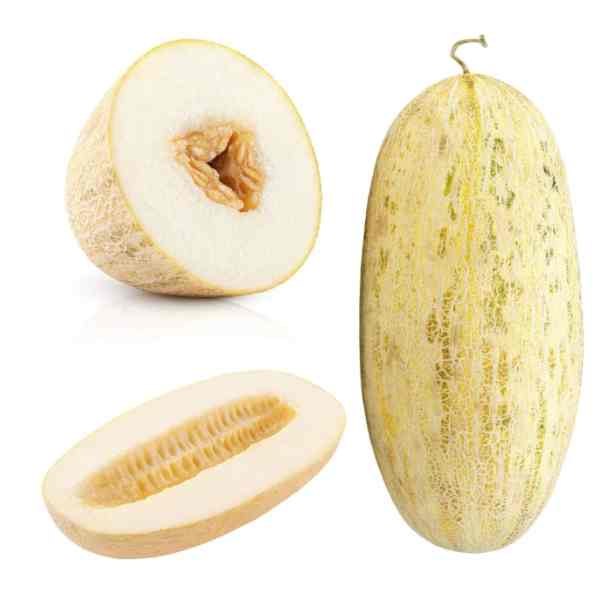
Rockmelon Cream Cobra
$4.95
Cucumis Melo
- Seed Count 20
- Something Different
- Annual
In stock
Description
Rockmelon Cream Cobra is one of those old-fashioned heirloom varieties that produces large, elongated fruits with smooth, creamy yellow skin that splits naturally as it ripens, curling back to reveal the pale flesh beneath. When the fruit opens, the split resembles the hood of a cobra, which is how this unusual variety earned its name. When the fruit begins to crack open at the ends, it’s a sure sign that the melon is ready to be enjoyed.
Inside, the flesh is firm, pale cream to light orange, and the flavour is delicate, not as sugary as the typical rockmelon, but still rich and intriguing, with subtle floral and spicy undertones. Some describe it as musky or perfumed, others as having a faint nuttiness that pairs beautifully with sweet accompaniments. It’s especially good served in slices with a drizzle of honey or paired with a scoop of vanilla ice-cream for a simple summer dessert. Its distinctive texture also makes it ideal for salads, where it holds its shape rather than collapsing into mush. Combined with mint, lime, or even prosciutto, it brings a surprising sophistication to the plate. It’s a fruit that invites creativity, one that bridges the gap between sweet and savoury with ease.
In the garden, Cream Cobra is a talking point. Its unusual ripening habit, with the skin splitting back on its own, makes it fascinating to watch as the fruit matures. The vines are vigorous and sprawling, producing a generous number of melons under good conditions. The vines are hardy and well-adapted to warm Australian climates. Like most melons, they love full sun and reward patience with reliable yields once established. Interplanting with marigolds is a practical and traditional tip worth noting, as marigolds naturally deter insects and pests, keeping the garden healthy without the need for sprays. The bright orange marigold blooms look beautiful beside the yellow-skinned melons too, making for a cheerful and productive patch.
The Cream Cobra also has excellent keeping qualities. Despite its unusual texture, it stores surprisingly well compared to softer-fleshed melons. The thick, smooth skin protects the fruit, allowing it to remain fresh for longer periods when kept cool.
| Method: Set seedlings | Soil Temp: 20°C - 32°C |
| Cool Mountain: Oct - Dec | Position: Full Sun to Part Shade |
| Arid: Sep - Mar | Row Spacing: 50 cm |
| Temperate: Sep - Dec | Planting Depth: 5 mm |
| Sub Tropical: Aug - Jan | Harvest: 100 Days |
| Tropical: Apr - Jul | Plant Height: 30 cm |
A hands-on guide from seed to harvest (and back again!)
There’s nothing quite like the sweet, fragrant reward of a homegrown rockmelon. Known more broadly as cantaloupe, this sun-loving summer vine brings both flavour and abundance to the warm-season garden. Whether you’re growing in the dry heat of inland WA or the humid edges of Queensland, rockmelon has a place in the Australian veg patch—if you time it right and give it room to sprawl.
This guide covers all the practical steps to get started from seed, including tips for sowing, site selection, care, companions, pest fixes, seed saving, and more.
🥚 Sowing Rockmelon from Seed
✅ Seed Pre-Treatment?
No fancy prep needed—rockmelon seeds are ready to sow straight from the packet. That said, if your soil is still on the cooler side (especially in southern zones), a brief soak in warm water for 6–12 hours can help speed up germination by softening the outer coat.
🌱 Sowing in Trays vs. Direct in the Ground
Like many cucurbits (pumpkin family), rockmelon prefers not to have its roots disturbed, but it also loves warm soil—so choosing your sowing method depends on your local climate and season.
👉 Starting in Trays
If you’re in a cool or temperate zone, trays are a great way to get a head start before the soil warms up outside. Sow one seed per cell in biodegradable pots or larger cells filled with a good-quality seed raising mix. Keep them in a warm, sunny spot—greenhouse, sunny windowsill, or cold frame.
⏳ Germination: 5–10 days in soil temps of 20–30°C.
🌱 Transplant: When seedlings have 2–3 true leaves and the risk of frost is past (soil should be 18°C+). Be gentle—try not to disturb the roots.
👉 Direct Sowing
If you’re in a subtropical or tropical area, or it’s late spring in southern zones and your soil is toasty, you can sow seeds straight into the ground. Sow 2–3 seeds per mound, about 2cm deep, and thin to the strongest one once they’ve sprouted.
🌏 Soil and Position
Rockmelon thrives in free-draining, fertile soil with lots of sun—at least 6–8 hours a day. Avoid shady corners.
🪱 Soil should be:
- Sandy loam or well-conditioned clay
- Rich in organic matter (dig in compost and aged manure before planting)
- pH between 6.0 and 6.8
- Free-draining to avoid root rot
Plant on raised mounds to improve drainage and help warm the soil—especially important in cooler regions.
🌿 Care and Maintenance
Once your melons are settled in, they’re fairly low-fuss—just sun, space, and water. But regular attention helps you get the best out of them.
Watering
- Keep soil evenly moist during flowering and fruit set.
- Cut back slightly as fruit matures to concentrate the sweetness.
- Avoid overhead watering to reduce fungal risk.
Feeding
- Add a liquid seaweed feed or compost tea every few weeks.
- Once fruit is forming, give a boost of potassium (like wood ash or tomato feed) to sweeten the crop.
Training
- Let vines sprawl if you have space.
- Or, train vertically on a sturdy trellis for airflow and ease of harvest—just support ripening fruit with slings (old stockings work a treat!).
🌸 Companion Planting Guide
Let’s build a little neighbourhood in your veg patch! Rockmelon enjoys good company.
| Companion Plants | Why They Work |
|---|---|
| Corn | Offers dappled afternoon shade |
| Radish | Helps deter cucumber beetles |
| Nasturtiums | Attract aphids away from vines |
| Marigolds | Deter root-knot nematodes |
| Basil & Oregano | Antifungal + pollinator friendly |
Avoid planting near: Potatoes (they compete for space and can encourage blight), or other cucurbits too close (cross-pollination and pest sharing).
✂️ Harvesting Rockmelon
Timing the perfect pick is all part of the fun—and the fragrance will often give it away!
Signs It’s Ready:
- Colour change: Skin turns from green to golden-beige.
- Slip test: Fruit slips easily from the stem with gentle pressure.
- Smell: A sweet, musky aroma at the blossom end.
- Feel: Slight softness at the base when gently pressed.
⏰ Harvest usually happens 12–16 weeks after sowing, depending on conditions.
🐛 Common Issues and Fixes
Here’s a quick-reference table to keep your crop on track:
| Problem | Symptoms | Fix/Prevention |
|---|---|---|
| Powdery mildew | White dust on leaves | Improve airflow, spray with milk/water solution (1:9) |
| Fruit splitting | Cracks in mature fruit | Water consistently, mulch well |
| Poor fruit set | Flowers but no fruit | Hand pollinate, attract bees with flowers |
| Aphids | Sticky residue, curled leaves | Spray with neem oil or insecticidal soap |
| Downy mildew | Yellow/brown leaf patches | Avoid wetting leaves, ensure spacing |
| Root rot | Wilting despite moist soil | Improve drainage, don’t overwater |
🏵️ Seed Saving Guide
Saving seed from rockmelons is rewarding, but there’s a catch—cantaloupes cross-pollinate easily with other melons and cucurbits. So if you’re after true-to-type seed, grow only one variety at a time, or separate by at least 1km (or bag the flowers to hand-pollinate).
How to Save Seeds:
- Choose a fully mature, overripe fruit from your healthiest plant.
- Scoop out seeds and pulp into a jar.
- Add water and let ferment 2–3 days (this breaks down germination inhibitors).
- Stir daily and scoop off floating debris.
- Rinse and spread the viable seeds (which sink) on paper or mesh to dry.
- Store in a labelled paper envelope in a cool, dry spot.
💡 Viability: Properly dried seeds can remain viable for 4–5 years.
🌻 Final Thoughts
Growing rockmelon from seed in Australia is a deeply satisfying seasonal project. From the first warm-day sowing to the day you slice open that golden, fragrant globe—it’s a real taste of summer. With just a little planning and care, your garden can deliver sweet rewards and plenty to share.
And if this season doesn’t go perfectly? That’s okay—it’s all part of the learning. Try again next year, tweak your timing, and trust that your gardening instincts will grow right alongside your plants.
Happy sowing—and here’s to a patch full of promise! 🍈🌿

Postage Charge
Orders under $35 attract a $4.95 shipping charge. Orders $35 and above have free shipping.
Order Times
Seed orders are normally dispatched within three business days. You will receive an email when seeds are mailed out.
Postage Days
Seeds are mailed out Tuesday to Friday at 1pm. Except for the Friday of long weekends.
Postage Times
WA 2-3 Days: SA,NT 3-5 Days: NSW, ACT, QLD, VIC: 5-7 Days
Carrier
We use Australia Post Letter Postage for the majority of orders
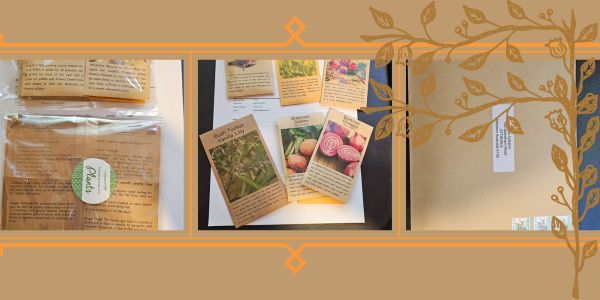
Not only are our seeds packed in recycled paper envelopes, we keep the theme going when we post out website orders. To protect your seeds from moisture and the letter box munchers (snails), we use a very special plastic free material made from plants. They are then put into recycled mailing envelopes. Green all the way 💚🌿
Delivery Guarantee
We take great care to make sure your seeds arrive safely. If your order is lost or damaged in transit, we’ll happily send a replacement. Unfortunately, we can’t replace or refund orders that arrive later than the estimated delivery date, as delays can sometimes occur that are outside our control.
Please note that all dispatch and delivery times listed are estimates only. While we do our best to post promptly, delivery timeframes can vary due to postal service delays, weather events, or other unforeseen circumstances. We’re unable to take responsibility for any loss, damage, or cost that results from a late delivery.
An order is not considered missing until at least 20 business days have passed from the postage date. You’ll receive an email once your seeds have been posted, letting you know they’re on their way. If you don’t see it in your main inbox, please check your Spam or Promotions folders as sometimes our emails like to hide there.
Reviews
There are no reviews yet