





Beetroot Early Wonder
$4.95
Beta Vulgaris
- Seed Count 70
- Leaves Good As A Salad Green
- Annual
Only 1 left in stock
Description
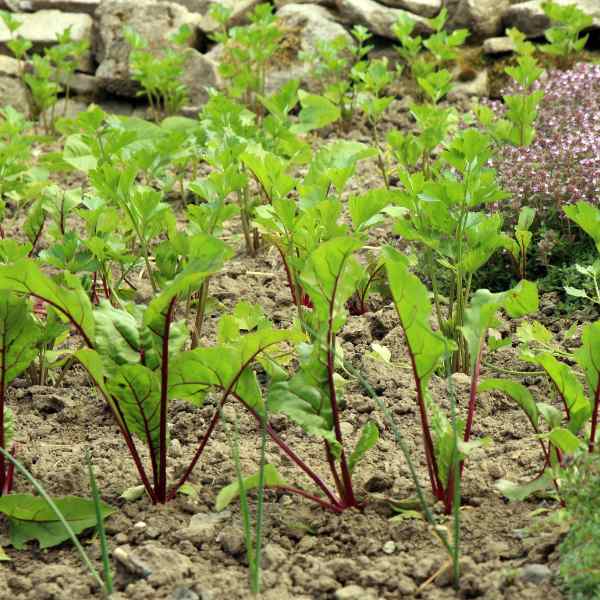
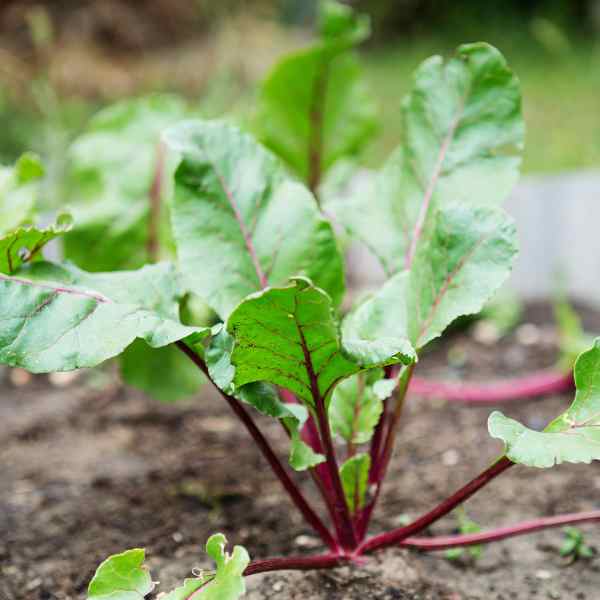
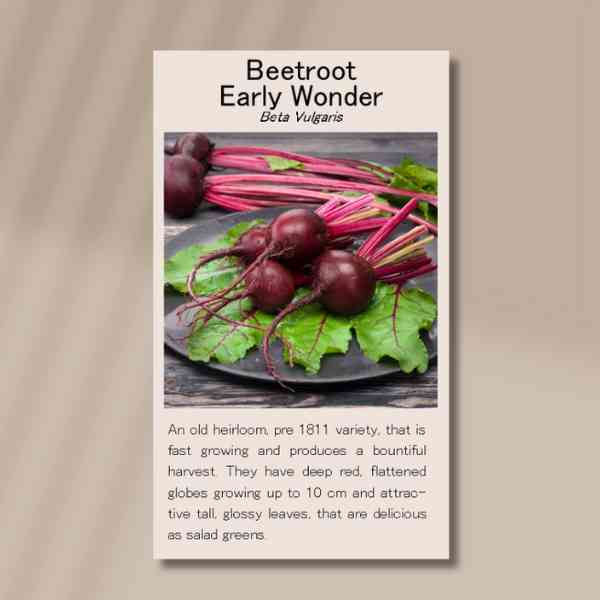
Beetroot Early Wonder is an old heirloom, pre 1811 variety, that is fast growing and produces a bountiful harvest. They have deep red, flattened globes growing up to 10 cm and attractive tall, glossy leaves, that are delicious as salad greens.
Beetroot can be grown all year-round in most climates. Avoid planting in extremely hot or cold weather which can affect germination and growth. They are best started as seeds in situ as beetroot is a taproot plant that suffers from transplant shock. The plot should be kept well weeded to discourage competition which can result in a less than peak harvest.
They have a good tolerance for poor soil, and too much nitrogen can encourage top growth which will detract from root development. If soil was well prepared no extra fertiliser should be necessary. In poor soil use a fertiliser low in nitrogen and high in phosphorus, such as blood and bone, applied at the recommended rate. If you want a continuous harvest all season long, stagger your plantings about 3 weeks from each other so they will be ready to harvest at different points during the season.
The best color and flavour for beetroots develops under cool conditions and bright sun. It is best to harvest after 55 days as larger roots can be tough and fibrous. When harvesting, beets should be separated from their tops, leaving about 2cm of stem on the root. Beetroot greens should be stored separately as greens stored intact with the root will continue to draw moisture from the root, and will result in a shriveled and flavorless beetroot. Fresh beetroots can be stored in the refrigerator for several weeks.
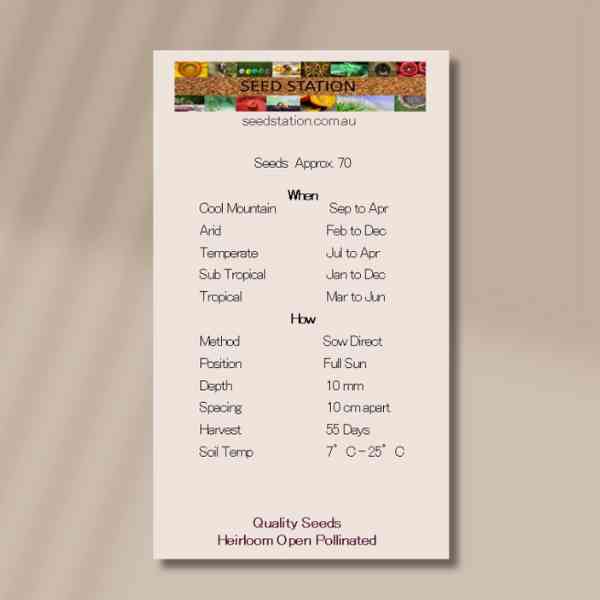
| Method: Sow direct | Soil Temp: 7°C - 25°C |
| Cool Mountain: Sep - Apr | Position: Full sun |
| Arid: Feb - Dec | Harvest: 55 Days |
| Temperate: Jul - Apr | Row Spacing: 10cm |
| Sub Tropical: Jan - Dec | Planting Depth: 10 mm |
| Tropical: Mar - Jun | Plant Height: 13cm |
🌱 Beetroot Grow Guide
Beetroot is a reliable, productive root vegetable grown for both its sweet swollen roots and nutritious leafy tops. It is a good choice for garden beds, raised beds, and large containers, provided the soil is loose, fertile, and not allowed to dry out. Beetroot grows best when it can develop steadily without stress, because uneven watering, compacted soil, or overcrowding can lead to small, woody, or misshapen roots.
One important thing to understand is that what we call a beetroot “seed” is usually a seed cluster. This means one piece of seed can produce more than one seedling. Thinning is therefore essential if you want well-shaped roots.
🌿 Sowing in Trays Versus Direct Sowing
Beetroot can be started in trays, but direct sowing is usually the best method. The roots dislike being disturbed, and direct sowing allows them to grow straight down into the soil from the beginning. This gives the best chance of smooth, round, evenly sized roots.
To direct sow, prepare the soil finely and remove stones, hard clods, and old roots. Sow the seed shallowly into moist soil, then cover lightly and firm the surface gently. Keep the soil consistently damp while the seed is germinating. Once seedlings appear, thin them gradually so each plant has enough space to form a proper root.
Tray sowing can still be useful if you have pests in the garden, heavy rain, poor soil, or limited space. Use deep cells rather than shallow trays, and transplant while seedlings are still young. Handle each seedling carefully by the leaves, not the root. Transplanting older seedlings can cause bent roots, stunting, or poor root shape.
For most home gardeners, direct sowing into a prepared bed is the better option.
💧 Seed Pre-Treatment
Beetroot seed does not need complicated pre-treatment. However, because the seed cluster has a corky outer coating, germination can be improved by soaking the seed in clean water for a few hours before sowing.
This soaking step is optional but helpful, especially if conditions are dry or the seed is older. After soaking, sow the seed straight away. Do not leave soaked seed sitting around, as it can spoil.
Because each seed cluster may produce several seedlings, thinning is more important than pre-treatment. Even with perfect germination, crowded beetroot will struggle to form good roots.
🌏 Soil and Position
Beetroot prefers loose, fertile, well-drained soil with steady moisture. The soil should be rich enough to support strong growth, but not overloaded with fresh manure. Too much fresh manure or heavy nitrogen feeding can encourage leafy growth at the expense of root development.
Before sowing, improve the bed with compost or well-rotted organic matter. Break up compacted soil and remove stones, as hard objects in the root zone can cause misshapen beetroot. A slightly crumbly soil texture is ideal.
The best position is full sun to light part shade. In very hot or dry conditions, a little afternoon protection can help prevent stress. Beetroot grown in too much shade may still produce leaves, but the roots are often smaller.
For containers, choose a pot that is at least 25 to 30 cm deep. Use a quality potting mix and keep moisture consistent, as pots dry out faster than garden beds.
🪴 Care and Maintenance
Beetroot needs steady, even care. The most important job is watering. Keep the soil moist but not waterlogged. Dry spells followed by heavy watering can cause splitting, rough texture, or uneven growth.
Thin seedlings carefully once they are large enough to handle. Since one seed cluster can produce several seedlings, remove the weaker extras and leave the strongest plants. Young thinnings can be eaten as baby leaves.
Mulch lightly once seedlings are established. Mulch helps hold soil moisture, keeps the root zone cooler, and reduces weed competition. Keep mulch slightly away from the crown of the plant so it does not encourage rot.
Feed with compost, worm castings, seaweed solution, or a balanced organic fertiliser. Avoid heavy nitrogen feeding. If the leaves are pale and growth is weak, a gentle liquid feed can help. If the leaves are huge but roots are small, reduce nitrogen and focus on steady watering and spacing.
Weed regularly, especially while plants are young. Beetroot does not compete well with weeds, and overcrowding can quickly reduce root size.
🌼 Companion Planting Guide
Beetroot is a flexible garden companion and fits well into mixed vegetable beds. It grows especially well with plants that do not crowd its roots or shade it too heavily.
Good companions include lettuce, onions, garlic, cabbage, broccoli, cauliflower, kohlrabi, radish, bush beans, peas, dill, coriander, and marigolds. Lettuce works well because it has shallow roots and can help shade the soil lightly. Onions and garlic make efficient neighbours because they grow upright and do not take up much space. Brassicas such as cabbage and broccoli can share a bed if spacing is generous.
Avoid planting beetroot too close to climbing beans, large sprawling pumpkins, vigorous potatoes, or dense root crops that compete heavily for space and nutrients. Tall crops that cast deep shade can also reduce root development.
Beetroot also pairs nicely with herbs and flowers that attract beneficial insects. Dill, coriander, alyssum, calendula, and marigolds can help bring pollinators and predatory insects into the garden.
🍽️ How to Harvest
Beetroot can be harvested at several stages. Baby leaves can be picked lightly once the plants are established. Take only a few outer leaves from each plant so the root can keep growing.
The roots are best harvested when they are still tender and smooth. Smaller to medium-sized roots usually have the best flavour and texture. Very large roots can become woody, fibrous, or earthy tasting.
To harvest, loosen the soil around the root with a hand fork, then gently lift the plant. Do not yank hard from compacted soil, as the tops may snap off. Twist or cut the leaves off, leaving a small amount of stem attached. This helps reduce bleeding from the root.
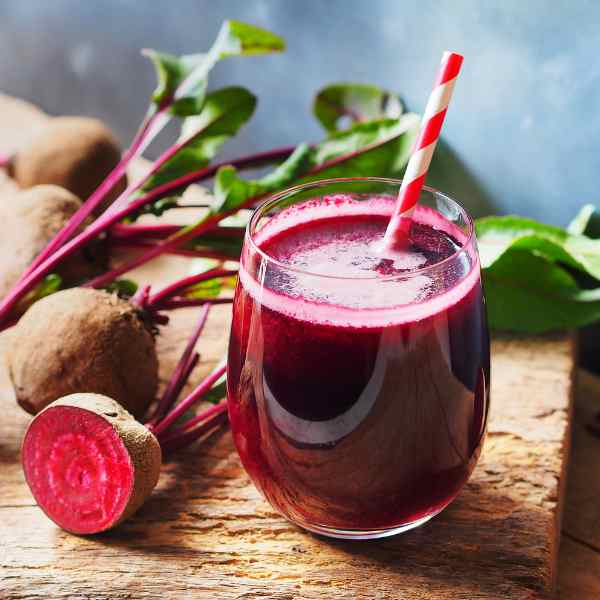
Fresh beetroot can be roasted, boiled, grated raw, pickled, juiced, or used in salads. The leaves can be cooked like silverbeet or spinach.
⚠️ Common Issues and Fixes
| Issue | Likely Cause | Fix |
|---|---|---|
| Poor germination | Dry soil, old seed, or crusted soil surface | Soak seed before sowing, keep soil evenly moist, and cover lightly with fine soil |
| Several seedlings growing from one seed | Beetroot seed is usually a seed cluster | Thin seedlings so each plant has enough room |
| Small roots with lots of leaves | Too much nitrogen or overcrowding | Reduce high-nitrogen feeding and thin plants properly |
| Woody or tough roots | Roots left too long, dry stress, or slow growth | Harvest younger roots and keep moisture steady |
| Split roots | Irregular watering | Water consistently and mulch to reduce moisture swings |
| Misshapen roots | Stones, compacted soil, or transplant damage | Prepare loose soil and direct sow where possible |
| Pale leaves | Low nutrients, poor soil, or water stress | Add compost and use a gentle balanced liquid feed |
| Leaf holes | Caterpillars, beetles, snails, or slugs | Inspect leaves, remove pests by hand, and protect young plants |
| Leaf spots | Fungal disease encouraged by humidity and poor airflow | Remove affected leaves, improve spacing, and water at soil level |
| Plants bolting | Stress, crowding, or temperature swings | Keep plants evenly watered, avoid crowding, and harvest promptly |
🌾 Seed Saving Guide
Beetroot is grown for its root in the first stage of life, but it produces seed later if allowed to continue growing. Saving seed requires patience because beetroot must flower before seed can be collected.
Choose healthy, strong plants with good root shape, rich colour, smooth skin, and strong leaves. Do not save seed from plants that were weak, diseased, woody too early, badly shaped, or quick to bolt under mild conditions.
To save seed, leave selected plants in the ground and allow them to continue their full life cycle. The plant will eventually send up tall flowering stems. These stems produce clusters of small flowers followed by seed clusters. Support the tall stems if they become top-heavy or exposed to wind.
Beetroot can cross with related leafy and root forms, including silverbeet, chard, sugar beet, and fodder beet. If you want seed that stays true to type, keep flowering beetroot well separated from those plants while they are flowering. Growing only one seed-saving type at a time is the simplest method for home gardeners.
Allow the seed stalks to dry as much as possible on the plant. When the seed clusters turn dry and brown, cut the stalks and place them somewhere airy and sheltered to finish drying. Once completely dry, rub the seed clusters from the stems by hand.
Clean out large pieces of stem and chaff. The seed does not need to look perfectly polished, but it should be dry and free from damp plant material. Store in a labelled paper envelope or jar in a cool, dry, dark place. Label with the variety name, colour, and collection year.
Before storing a large batch, test a small sample by sowing a few seeds in moist mix. This gives you an idea of how strong the seed is. Beetroot seed stores reasonably well when kept dry, but fresh seed usually performs better.
🌿 Final Thoughts
Beetroot is one of the most rewarding vegetables to grow from seed because it gives both edible leaves and sweet roots. The keys to success are direct sowing, loose soil, steady moisture, proper thinning, and timely harvesting.
Although tray sowing can be useful in difficult conditions, direct sowing is the best approach for most gardens. Give beetroot space to swell, avoid heavy nitrogen, and do not let the soil dry out. With simple, consistent care, beetroot will produce colourful roots, useful greens, and plenty of kitchen value from a small amount of space.
3 reviews for Beetroot Early Wonder
| 5 star | 100% | |
| 4 star | 0% | |
| 3 star | 0% | |
| 2 star | 0% | |
| 1 star | 0% |

Postage Charge
Orders under $35 attract a $4.95 shipping charge. Orders $35 and above have free shipping.
Order Times
Seed orders are normally dispatched within three business days. You will receive an email when seeds are mailed out.
Postage Days
Seeds are mailed out Tuesday to Friday at 1pm. Except for the Friday of long weekends.
Postage Times
WA 2-3 Days: SA,NT 3-5 Days: NSW, ACT, QLD, VIC: 5-7 Days
Carrier
We use Australia Post Letter Postage for the majority of orders
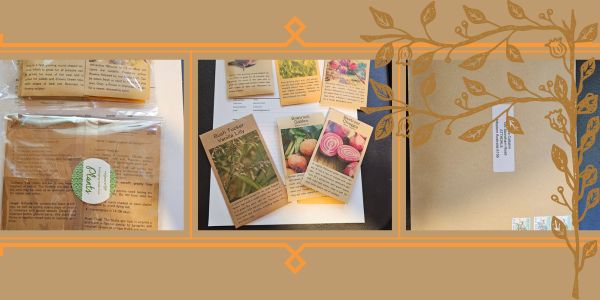
Not only are our seeds packed in recycled paper envelopes, we keep the theme going when we post out website orders. To protect your seeds from moisture and the letter box munchers (snails), we use a very special plastic free material made from plants. They are then put into recycled mailing envelopes. Green all the way ????????
Delivery Guarantee
We take great care to make sure your seeds arrive safely. If your order is lost or damaged in transit, we’ll happily send a replacement. Unfortunately, we can’t replace or refund orders that arrive later than the estimated delivery date, as delays can sometimes occur that are outside our control.
Please note that all dispatch and delivery times listed are estimates only. While we do our best to post promptly, delivery timeframes can vary due to postal service delays, weather events, or other unforeseen circumstances. We’re unable to take responsibility for any loss, damage, or cost that results from a late delivery.
An order is not considered missing until at least 20 business days have passed from the postage date. You’ll receive an email once your seeds have been posted, letting you know they’re on their way. If you don’t see it in your main inbox, please check your Spam or Promotions folders as sometimes our emails like to hide there.

See all our verified customer reviews on our official CusRev profile.
See all our verified customer reviews on our official CusRev profile.
See all our verified customer reviews on our official CusRev profile.