Few things will lift a backyard, balcony, or courtyard quite like flowers in bloom. And while it’s easy to grab a bunch from the florist, there’s something deeply satisfying about growing your own from seed. It’s more affordable, more personal, and honestly, a lot more fun.
If you’re new to growing flowers, it’s completely normal to feel unsure about where to start. Questions tend to pile up quickly, and that can be enough to stop people before they’ve even sown their first seed.
That’s okay. Everyone starts somewhere. The most important step is simply getting started.
One of the easiest ways to set yourself up for success is to begin with flowers that are forgiving, reliable, and happy to grow without fuss. Below are some of the best flower seeds for beginners, along with a little insight into why they tend to do so well.
What Makes Some Flower Seeds Ideal for Beginners? 🌱
While every plant has its own quirks, beginner-friendly flowers tend to share a few helpful traits.
Easy-to-handle seeds
Some flower seeds are dust-fine and tricky to manage, especially on a breezy day. Very small seeds can be hard to space evenly and are easily lost. Larger seeds are easier to pick up, easier to sow, and much less intimidating for new gardeners.
No special germination tricks
Some seeds need soaking or stratification before they will sprout. While soaking is fairly simple, it is still an extra step. Stratification, which mimics seasonal temperature changes, can be confusing even for experienced gardeners. Beginner-friendly flowers usually germinate without any of this extra preparation.
Easy-going plants
Flowers that thrive without perfect conditions are ideal when you are learning. Some plants need very specific soil, light, and watering to survive. Others are much more forgiving and will bounce back from the occasional mistake. Those are the ones worth starting with.
Fewer pest and disease issues
Most plants will encounter a pest or two, but some are far more prone to problems than others. Beginners are best off choosing flowers that are generally resilient and not magnets for disease.
Not every flower below ticks every box perfectly, but most meet the majority of these criteria, which is why they are so well loved by new gardeners.
Ten of the Best Flower Seeds for Beginners 🌼
It’s easy to be drawn to dramatic, exotic flowers when you’re starting out. But many of those show-stoppers require patience and precision. The good news is that there are plenty of beautiful, satisfying flowers that are much easier to grow.
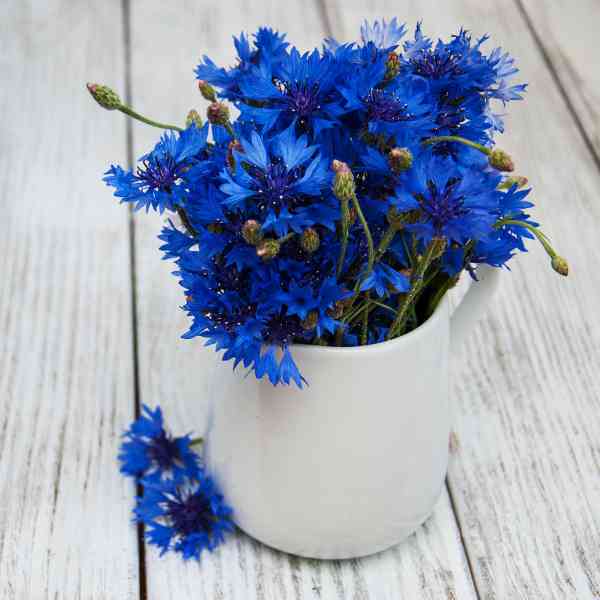
1. Cornflower
Cornflowers are a wonderful first flower. Their seeds are easy to handle, quick to germinate, and don’t need any soaking or chilling before sowing.
They prefer a sunny position and are happiest when sown directly into the garden. Once established, they are surprisingly tough and will cope with dry conditions better than many other flowers.
Cornflowers are loved for their clear blue colour, but they also come in black, white, and red. They make excellent cut flowers and attract pollinators in droves. As a bonus, they often self-seed, so you may find them popping up again next season without any extra effort.
2. Zinnia
If colour is what you’re after, Zinnias are hard to beat. They come in almost every shade imaginable and are famously easy to grow. They’re often recommended for children’s gardens for good reason.
Zinnia seeds are large enough to handle comfortably and can be sown directly into the soil. They also grow well in pots and raised beds. These warm-season annuals love sunshine and will reward you with flowers right through summer.
They make fantastic cut flowers and are a magnet for bees and butterflies. While they can attract aphids or whiteflies, a strong spray of water is often enough to keep things under control.
3. Cosmos
Cosmos are one of those flowers that seem to thrive no matter what. They come in a wide range of colours and flower shapes, from classic daisy-style blooms to cup-shaped and anemone-centered varieties.
The seeds are easy to manage and do not need soaking or stratification. You can sow them individually or scatter them across prepared soil and let them do their thing.
Cosmos are drought tolerant, happy in poor soil, and generous bloomers. Many varieties self-seed readily, so choose a spot where you won’t mind them returning year after year. They are also excellent cut flowers, best picked before pollination for the longest vase life.
4. Nasturtium
Nasturtiums are a joy in the garden. Their round, lily-pad-like leaves add texture, and their bright flowers bring instant cheer.
They are incredibly easy to grow and often enthusiastic self-seeders. If you want to keep them in check, regular deadheading will help and will encourage more flowers at the same time.
The seeds are large and easy to sow. They do not require soaking, though some gardeners like to soak them overnight to speed things up. Nasturtiums are also edible. The leaves and flowers are peppery and delicious in salads, and even the seeds can be used as a pepper substitute.
5. Alyssum
If you love dainty flowers, Alyssum is a beautiful choice. These low-growing plants are covered in tiny four-petalled flowers and are perfect for edging paths, filling gaps, or softening the edges of beds.
The seeds are small, so a gentle hand is needed, but they are otherwise very easy to grow. No soaking or stratification required, and they can be scattered directly onto the soil surface.
Alyssum is generally trouble free. Occasional snails or slugs may appear, but problems are usually minimal. They also attract beneficial insects, which is always a win.
6. Aster
Asters are classic cottage garden flowers and wonderful for beginners. They are reliable, generous bloomers and excellent cut flowers.
The seeds are easy to handle and do best when started indoors in trays. Once established, they can be transplanted outside after the risk of frost has passed. Using biodegradable pots helps reduce root disturbance.
Asters are fairly resilient, though taller varieties may need staking. They are not especially prone to pests, though aphids and slugs can appear from time to time.
7. Calendula
Calendula is one of those plants that quietly does it all. It is easy to grow, cheerful in appearance, and useful in the kitchen and medicine cabinet.
The seeds are unusual in shape, easy to handle, and happy to grow without soaking or stratification. Calendula can be sown directly or started in trays, and it self-seeds readily.
It tolerates partial shade better than many flowers and blooms in shades of orange, yellow, peach, and soft russet. The petals are edible and often used as garnish, in herbal preparations, or even to colour cheese.
8. Marigold
Marigolds are a garden favourite for good reason. They are easy to grow, reliable, and known for helping deter unwanted garden visitors like rabbits.
The seeds can be scattered directly onto prepared soil and do not need any pre-treatment. Marigolds grow well in the ground or in containers and come in a wide range of colours.
There are three main types to choose from. African marigolds are tall and tolerant of dry conditions. French marigolds are compact and bushy and cope better with damp soil. Signet marigolds are smaller and thrive in hot, dry weather.
9. Poppy
If your soil is less than perfect, Poppies are a brilliant option. They thrive in poor soil, cope with drought, and are very low maintenance.
The seeds are small but manageable and do not require soaking or stratification. They can be sown directly into the garden or started in trays.
Poppies come in a beautiful range of colours, from soft apricot to deep red and purple. Some varieties stay compact, while others grow taller, so it’s worth checking the expected height before planting.
10. Sweet Peas
Sweet Peas are often one of the first flowers gardeners fall in love with, and for good reason. They’re generous bloomers, wonderfully fragrant, and surprisingly easy to grow once you understand their rhythm.
The seeds are large and easy to handle, which is always a confidence boost for beginners. Many gardeners like to soak sweet pea seeds overnight to soften the seed coat and speed up germination, though they will still grow without soaking if you forget. Either way, they’re very achievable for first-timers.
Sweet peas prefer cooler conditions to get started and do best when sown in late winter to early spring in most parts of Australia. They like full sun, good drainage, and something to climb. A simple trellis, fence, or even some garden twine is enough to keep them happy.
Regular picking is the secret to lots of flowers. The more you harvest, the more they bloom. Leave them too long and they’ll put their energy into seed instead of flowers. For beginners, they’re a lovely lesson in how gentle attention really does pay off in the garden.
General Flower-Growing Tips for Beginners 🌿
Choosing easy flowers is a great start, but a few simple habits will make the whole process smoother.
Invest in a few good tools
You don’t need everything at once, but decent shears, gloves, and a basic soil moisture meter will go a long way.
Get to know your soil
Understanding your soil helps you choose the right plants and troubleshoot problems more easily. Even simple observations can be useful.
Watch the sun
Spend time noticing how sunlight moves across your space. Some flowers want full sun, others prefer a little shade. Knowing where the light falls makes planting decisions much easier.
Learn common seed-sowing mistakes
Planting too deeply, sowing into cold soil, or using unclean containers can all stop seeds from germinating. A little preparation now saves a lot of disappointment later.
Above all, remember that gardening is learned by doing. Not every seed will sprout, and not every plant will thrive. That’s all part of it. Start with forgiving flowers, enjoy the process, and let your confidence grow alongside your garden.